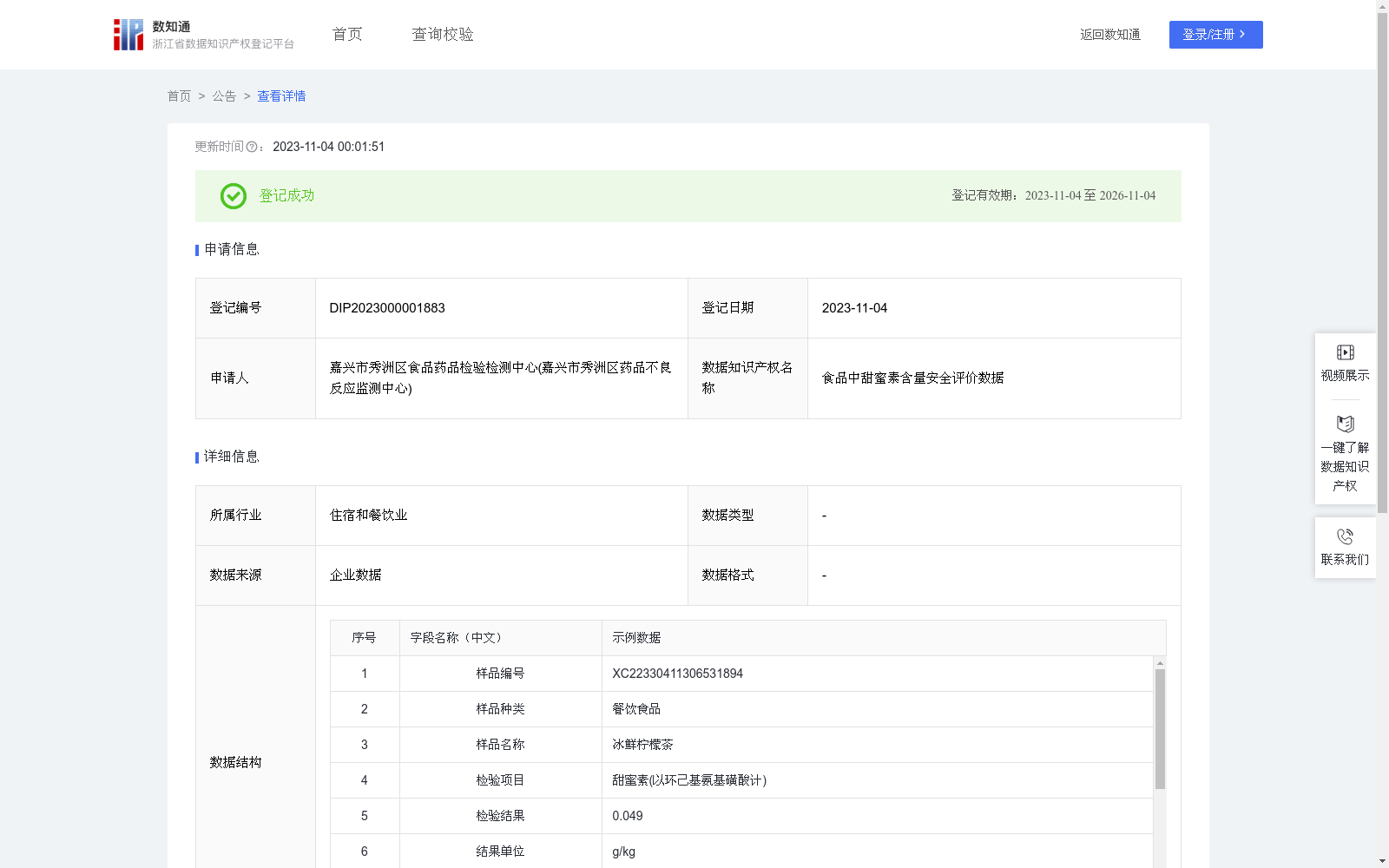
食品中甜蜜素含量安全评价数据
收藏资源简介:
甜蜜素是一种常见的食品添加剂,用于酱菜类、调味汁、糕点、配制酒和饮料等食品中。大量食用甜蜜素对人体有害,国家标准规定了不同种类食品中添加甜蜜素的限度,将其纳入监督范围。本数据针对秀洲区所抽检食品的甜蜜素检测情况进行分析评价,为政府在食品安全方面的监管提供参考数据和技术支撑。1.数据采集:采集样品相关数据,包括样品类别、名称、编号等;2.数据检测:根据GB 5009.97-2016《食品安全国家标准 食品中环己基氨基磺酸钠的测定》(第一法 气相色谱法)确定检测方法,通过气相色谱法对食品中甜蜜素的含量进行定量检测,获得相关数据结果;3.数据处理:按照不同食品种类对样品进行归集,将不同食品的甜蜜素检验结果与相应的甜蜜素最大允许限进行对比,判断其甜蜜素含量是否超标,筛选出甜蜜素含量不合格项,按不同品类计算不合格率,不合格率=该品类不合格项数量/该品类检测总数*100%,用于评估该类食品的安全性;4.数据应用:是食品安全性评价的依据,为政府监管部门进行风险分析,科学制定抽检计划,加大靶向抽检力度提供数据支撑。
Cyclamate is a common food additive used in various foods including pickled vegetables, sauces, pastries, prepared wines, beverages, etc. Excessive consumption of cyclamate is harmful to human health. National food safety standards have stipulated the maximum allowable limits of cyclamate in different types of foods, and included such additives into the scope of regulatory supervision. This dataset analyzes and evaluates the cyclamate testing results of food samples randomly sampled in Xiuzhou District, providing reference data and technical support for government food safety supervision. 1. Data Collection: Collect relevant sample data, including sample category, name, unique identification number and other related information; 2. Data Detection: The detection method is determined according to GB 5009.97-2016 National Food Safety Standard - Determination of Sodium Cyclamate in Foods (First Method: Gas Chromatography), and the content of cyclamate in foods is quantitatively detected via gas chromatography to obtain relevant test results; 3. Data Processing: Group the samples by different food categories, compare the cyclamate test results of different foods with their respective maximum allowable limits of cyclamate to judge whether the cyclamate content exceeds the standard, screen out unqualified items with excessive cyclamate content, calculate the unqualified rate for each category with the formula: Unqualified Rate = (Number of Unqualified Items in the Category / Total Number of Tested Samples in the Category) × 100%, which is used to evaluate the food safety of that category; 4. Data Application: Serve as the basis for food safety evaluation, providing data support for government regulatory departments to conduct risk analysis, scientifically formulate random inspection plans and strengthen targeted random inspection efforts.