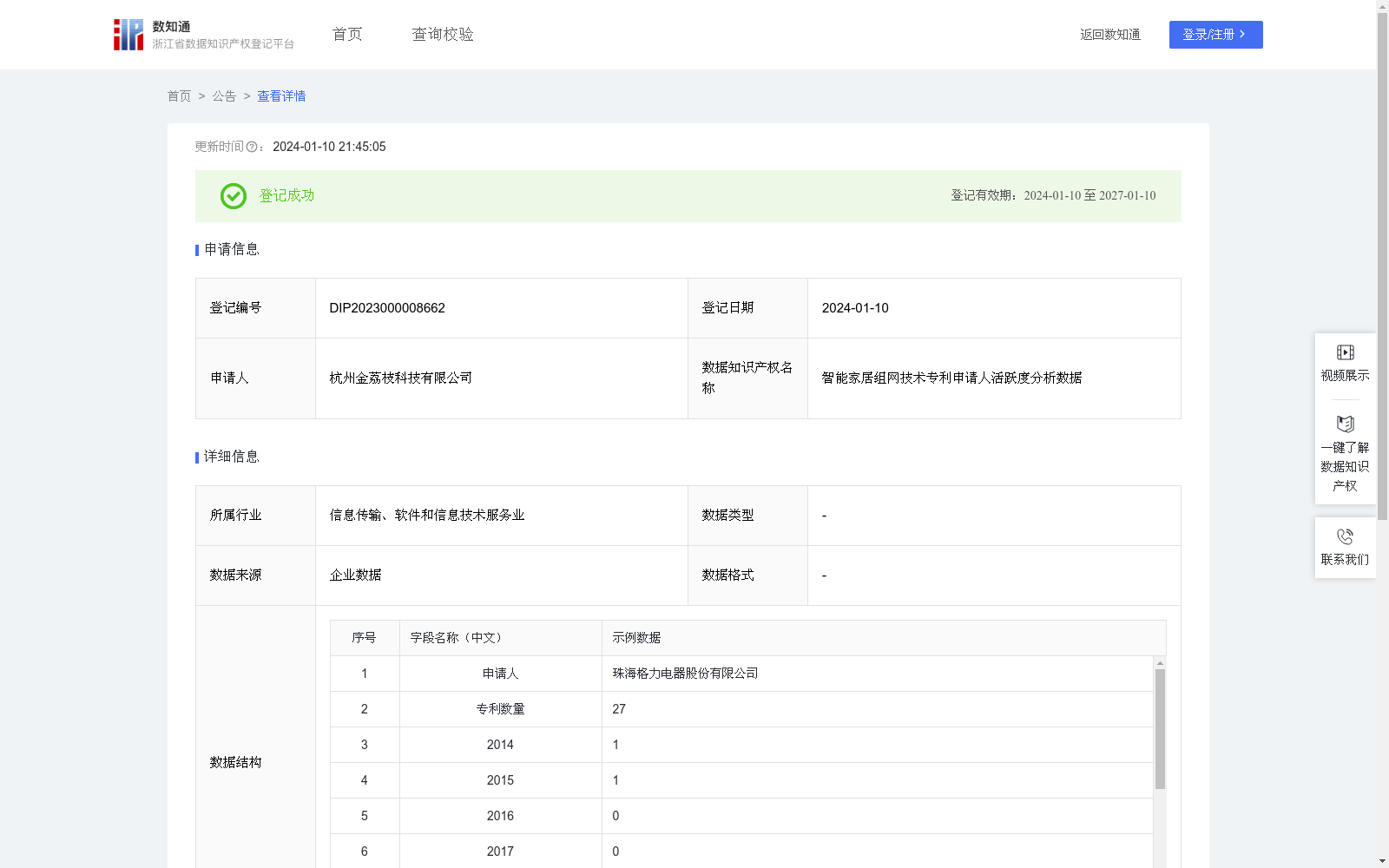
智能家居组网技术专利申请人活跃度分析数据
收藏资源简介:
数据包中主要包括了国内专利数据库中智能家居领域短距离无线通信与组网技术的专利数据,并根据自定算法对专利数据进行了计算,了解申请人的研发活跃度情况,有助于企业对竞争对手研发活跃度的了解。1.数据采集:通过第三方专利数据库检索网站,通过关键词、IPC对智能家居短距离无线通信与组网技术的专利数据进行检索采集建立数据库。 2.数据处理:对采集到的原始数据进行处理,通过去除重复和有缺失的数据,对数据进行清理分类。 3.重点筛选:申请人、专利申请量、不包括当年与去年的近8年分别专利申请量10个指标。 4.算法规则包括:X1=当年之前第2年-第5年4年的专利申请量之和/总专利申请量,X2=当年之前第6年-第9年的4年专利申请量之和/总专利申请量,X1与X2比较可以看出企业在该领域的的研发活跃度。 5.数据应用:有助于企业对竞争对手研发活跃度的了解。 *由于专利公开的延迟性,对近2年的专利数据不做分析
The dataset mainly includes patent data related to short-range wireless communication and networking technologies in the smart home field from domestic patent databases. We calculated the patent data using a self-defined algorithm to analyze the R&D activity of applicants, which helps enterprises understand the R&D activity of their competitors. 1. Data Collection: Retrieve and collect patent data for smart home short-range wireless communication and networking technologies via third-party patent database retrieval websites, using keywords and IPC classifications, to establish the database. 2. Data Processing: Process the collected raw data by removing duplicate and incomplete records, and perform data cleaning and classification. 3. Key Screening: 10 indicators including applicant, total patent application volume, and annual patent application counts over the most recent 8 years excluding the current year and the previous year. 4. Algorithm Rules: X1 = sum of patent application volumes over the 4-year period from the 2nd to 5th year prior to the current year / total patent application volume; X2 = sum of patent application volumes over the 4-year period from the 6th to 9th year prior to the current year / total patent application volume. Comparing X1 and X2 can reflect an enterprise's R&D activity in this field. 5. Data Application: It helps enterprises understand the R&D activity of their competitors. *Due to the delay in patent publication, patent data from the past two years will not be analyzed.