ES Outputs
收藏资源简介:
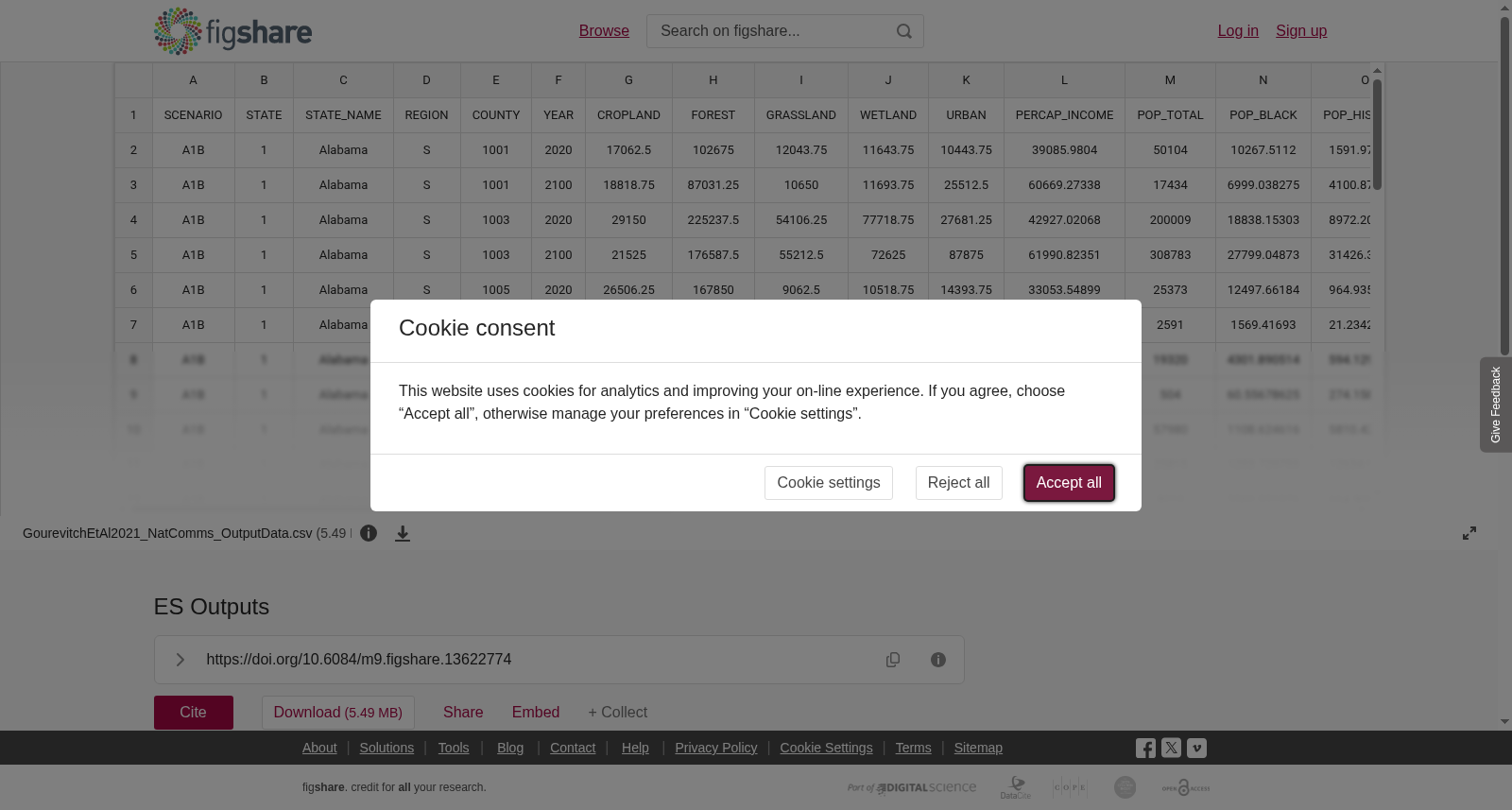
Addressing how ecosystem services (ES) are distributed among groups of people is critical for making conservation and environmental policy-making more equitable. Here, we evaluate the distribution and equity of changes in ES benefits across demographic and socioeconomic groups in the United States (US) between 2020 and 2100. Specifically, we use land cover and population projections to model potential shifts in the supply, demand, and benefits of the following ES: provision of clean air, protection against a vector-borne disease (West Nile virus), and crop pollination. Across the US, changes in ES benefits are unevenly distributed among socioeconomic and demographic groups and among rural and urban communities, but are relatively uniform across geographic regions. In general, non-white, lower-income, and urban populations disproportionately bear the burden of declines in ES benefits. This is largely driven by the conversion of forests and wetlands to cropland and urban land cover in counties where these populations are expected to grow. In these locations, targeted land use policy interventions are required to avoid exacerbating inequalities already present in the US.
探究生态系统服务(Ecosystem Services,ES)在不同人群中的分配格局,对于提升保护与环境政策的公平性至关重要。本研究针对2020年至2100年间美国(United States,US)境内不同人口统计学与社会经济群体的生态系统服务收益变化的分配与公平性展开评估。具体而言,本研究借助土地覆被与人口预测数据,对以下三类生态系统服务的供给、需求及收益的潜在变化进行建模:清洁空气供给、虫媒传染病(西尼罗河病毒,West Nile virus)防控、作物授粉。全美范围内,生态系统服务收益的变化在社会经济与人口群体间、城乡社区间均呈现非均衡分布特征,但不同地理区域间的差异相对较小。总体而言,非白人、低收入及城市人口不成比例地承担了生态系统服务收益下降带来的负面影响。这一现象主要由人口预计增长的郡县内森林与湿地向农田及城市用地的转化所驱动。针对此类区域,需实施针对性的土地利用政策干预,以避免加剧美国业已存在的不平等问题。