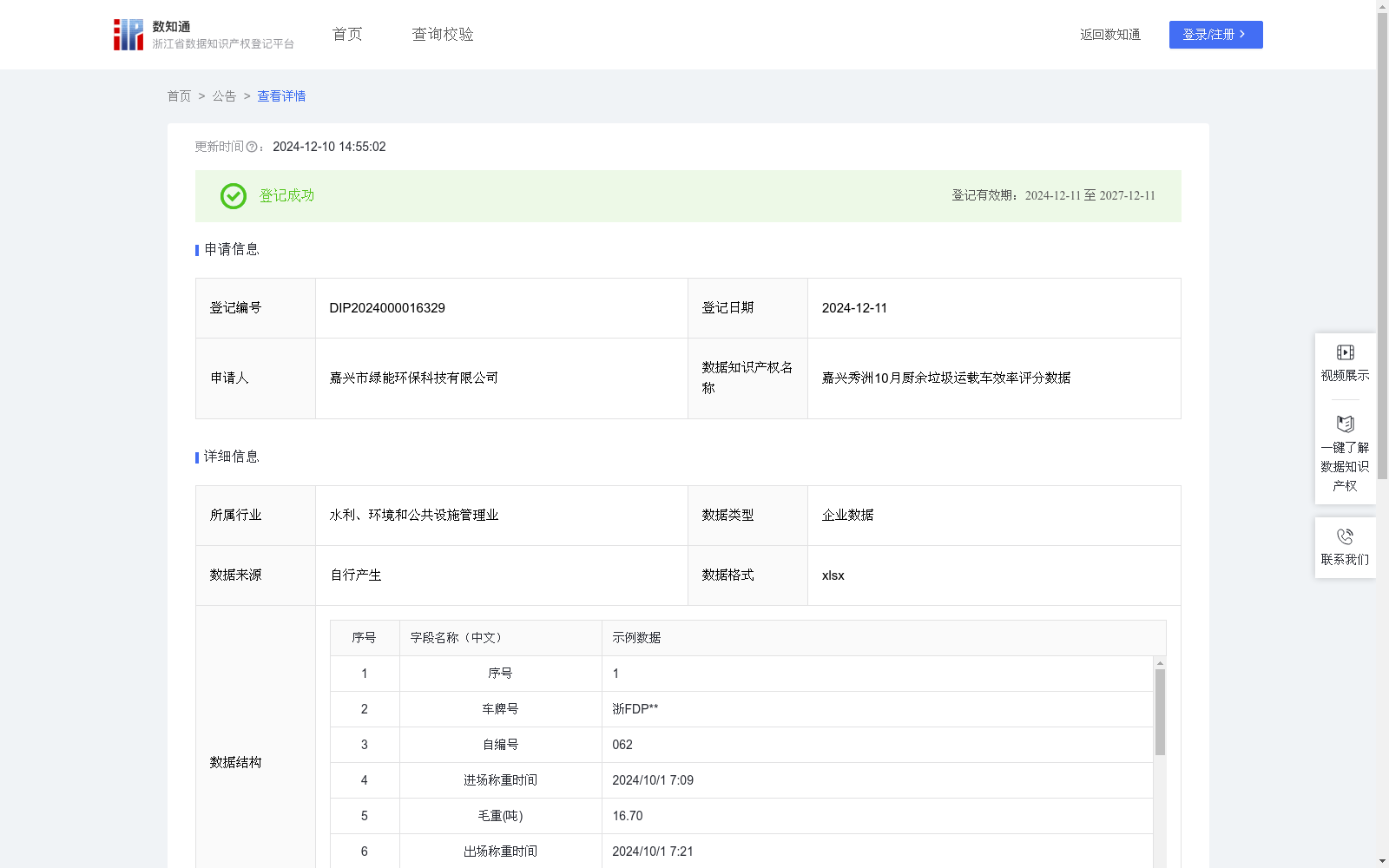
嘉兴秀洲10月厨余垃圾运载车效率评分数据
收藏资源简介:
随着城市化进程的加快,城市垃圾产生量急剧增加,对垃圾收运系统的效率提出了更高要求。垃圾运载车辆作为城市垃圾收运系统的核心组成部分,其运载效率直接影响到垃圾处理的及时性、成本以及环境影响。因此,通过引入运载效率评分这一指标,对城市垃圾运载车辆进行精细化管理,成为提升城市垃圾收运系统效率的重要途径。 提升收运效率:通过运载效率评分,可以快速识别出高效和低效的运载车辆。对于低效车辆,可以通过调整收运路线、增加收运频次或替换更高效能的车辆来提升整体收运效率,确保垃圾得到及时清理。 降低成本:高运载效率意味着在相同的垃圾收运量下,所需车辆数量减少,油耗和维修成本降低。这对于城市垃圾处理部门而言,是节约运营成本、提升经济效益的关键。 优化资源配置:运载效率评分还可以作为资源配置的依据。根据评分结果,可以合理调配车辆资源,避免车辆闲置或过度使用,实现资源的最优配置。 促进环境友好:提升运载效率有助于减少车辆在路上的行驶时间和次数,从而降低噪音污染和尾气排放,促进城市环境的可持续发展。一、数据采集:原始数据来自公司业务采集数据,包含车牌号、自编号、称重时间、毛重等原始数据字段,并对车牌号等敏感信息进行加密处理。 二、算法规则: 运载效率评分 :利用每辆车的装载率进行计算。采用线性转换公式将这一比例转化为评分。装载率:(毛重-皮重)/额定载重量。其中额定载重量根据车辆不同分为3、5、8吨三种型号。单车最大载重量,根据车型不同在运载效率评分=单车月均装载率*10;全区月均运载效率评分=全区月均装载率*10。 是否预警:设置单车运载预警规则,以运载评分7分为及格线,低于7分的进行预警,标记为需运载优化车辆。
With the accelerating pace of urbanization, the volume of urban municipal solid waste (MSW) generated has surged dramatically, posing more stringent requirements for the efficiency of urban waste collection and transportation systems. Waste collection and transportation vehicles constitute the core component of such systems, and their transportation efficiency directly affects the timeliness, cost, and environmental impact of waste treatment. Therefore, introducing the transportation efficiency score indicator to implement refined management of urban waste collection and transportation vehicles has become an important approach to improving the overall efficiency of urban waste collection and transportation systems. 1. Improving Collection and Transportation Efficiency: The transportation efficiency score allows for rapid identification of high-efficiency and low-efficiency collection vehicles. For low-efficiency vehicles, overall collection and transportation efficiency can be enhanced by adjusting collection routes, increasing collection frequency, or replacing vehicles with higher energy efficiency, ensuring timely waste clearance. 2. Reducing Operational Costs: High transportation efficiency means fewer vehicles are required for the same volume of waste collected, along with reduced fuel consumption and maintenance costs. This is a key measure for urban waste management departments to cut operating expenses and improve economic benefits. 3. Optimizing Resource Allocation: The transportation efficiency score can also serve as a basis for resource allocation. Based on the score results, vehicle resources can be reasonably deployed to avoid vehicle idling or overutilization, achieving optimal resource allocation. 4. Promoting Environmental Sustainability: Enhancing transportation efficiency helps reduce the driving time and trip frequency of vehicles on the road, thereby lowering noise pollution and exhaust emissions, and facilitating the sustainable development of the urban environment. 1. Data Collection The original data is sourced from the company's operational business collection data, which includes original data fields such as license plate number, self-assigned vehicle ID, weighing time, gross weight, etc. Sensitive information such as license plate numbers has been encrypted. 2. Algorithm Rules #### Transportation Efficiency Score Calculation The score is calculated using the loading rate of each vehicle, and a linear transformation formula is used to convert this ratio into a numerical score. Loading rate = (Gross Weight - Tare Weight) / Rated Load Capacity. The rated load capacity is divided into three vehicle types: 3 tons, 5 tons, and 8 tons. - Single-vehicle monthly average transportation efficiency score = Monthly average loading rate of individual vehicle * 10 - District-wide monthly average transportation efficiency score = District-wide monthly average loading rate * 10 #### Early Warning Mechanism A single-vehicle transportation early warning rule is established, with 7 points set as the passing threshold. Vehicles with a score lower than 7 points will trigger an early warning and be marked as vehicles requiring transportation optimization.