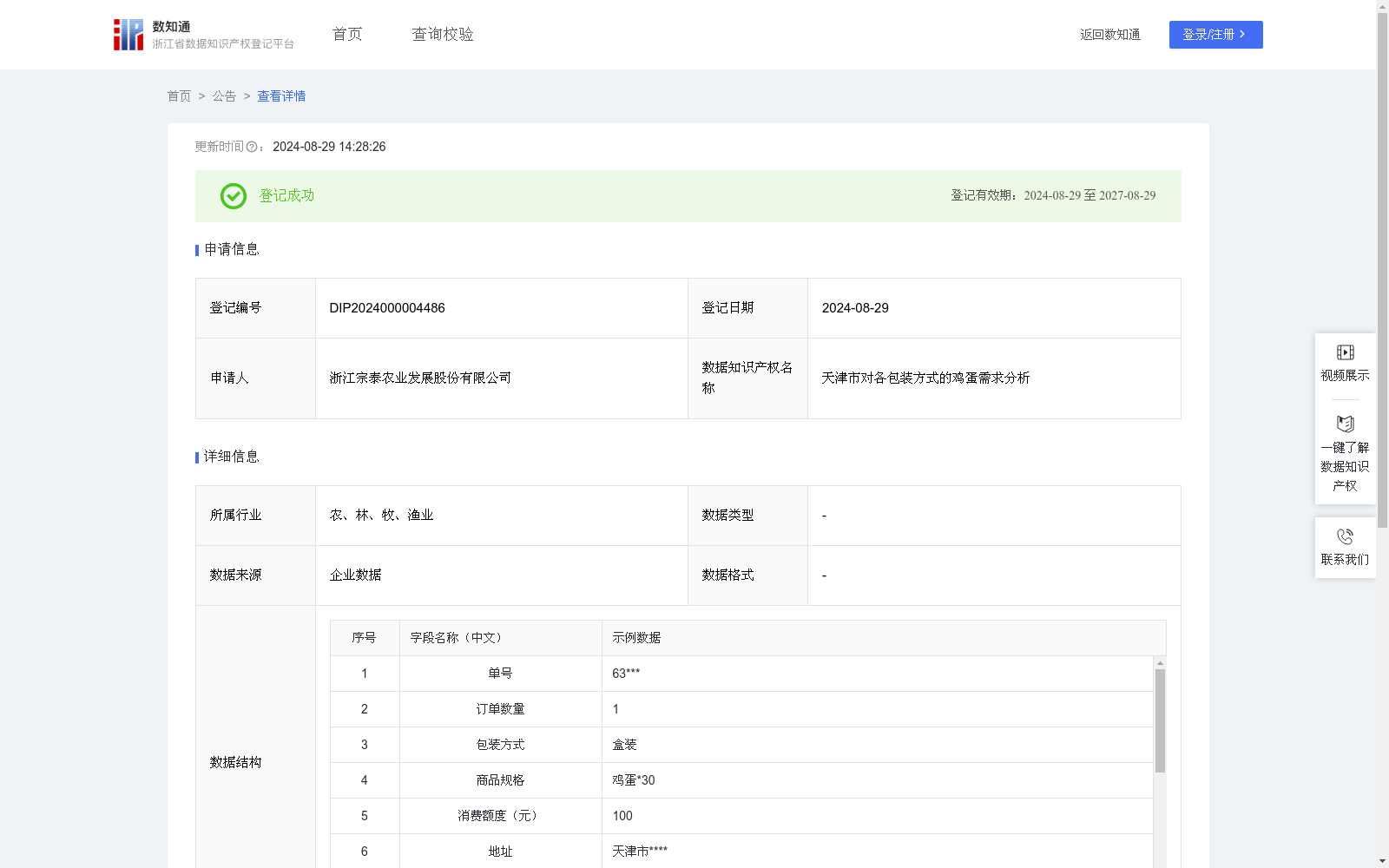
天津市对各包装方式的鸡蛋需求分析
收藏资源简介:
分析不同包装方式的鸡蛋在天津市的销售订单情况,通过收集和分析本区域客户对不同包装鸡蛋的消费相关数据,了解客户的购买力水平和消费偏好,通过对比不同包装鸡蛋销售量的排名,分析不同包装方式鸡蛋对于鸡蛋销售的影响,掌握何种包装方式最受消费者青睐,以及不同包装方式鸡蛋的受众群体。通过本数据的收集分析整理利用,帮助养殖户、商超等在鸡蛋销售方面提供个性化的营销策略,采取更受消费者青睐的包装方式,从而为本行业的企业制定生产策略,更好地为用户提供个性化的商品和服务。1、统计一段时间内各种包装方式的鸡蛋在天津市的销售情况,2、分析需求指数,下述各订单数量、消费额度均为同一种包装方式的数据:需求指数=(单笔最少订单数量/单笔最少消费额度+单笔最高订单数量/单笔最高消费额度+平均订单数量/平均消费额度)*k,权重k=90,3、将需求指数划分为“高、中、低”三种不同的级别,对各包装方式的需求指数进行排名,排名第一的包装方式级别为“高”,需求量最大,排名第2-3的包装方式级别为“中”,需求量一般,排名第9及以后的包装方式级别为“低”,需求量较少,商超、养殖户可以根据需求指数及排名来选择包装方式。
Conduct an analysis on the sales order performance of eggs with different packaging types in Tianjin. By collecting and analyzing consumption-related data of local customers in Tianjin for eggs with various packaging types, understand the purchasing power and consumption preferences of these customers. By comparing the sales volume rankings of eggs with different packaging types, analyze the impact of different packaging methods on egg sales, and identify which packaging type is most favored by consumers, as well as the target audience groups of eggs with different packaging types. Through the collection, analysis, organization and application of this dataset, provide personalized marketing strategies for egg sales for livestock farmers, supermarkets and other relevant entities, adopt packaging types that are more favored by consumers, so as to help enterprises in the egg industry formulate production strategies and better provide personalized products and services to end users. 1. Count the sales performance of eggs with various packaging types in Tianjin within a specified time period. 2. Analyze the demand index. The following order quantity and consumption amount data all correspond to the same packaging type: Demand Index = (minimum order quantity per transaction / minimum consumption amount per transaction + maximum order quantity per transaction / maximum consumption amount per transaction + average order quantity / average consumption amount) * k, where the weight k=90. 3. Classify the demand index into three levels: "High", "Medium" and "Low". Rank the demand indices of all packaging types: the packaging type ranked first is classified as "High" with the largest demand; those ranked 2nd to 3rd are classified as "Medium" with moderate demand; those ranked 9th and below are classified as "Low" with relatively low demand. Supermarkets, livestock farmers and other relevant entities can select appropriate packaging types based on the demand index and its ranking.