
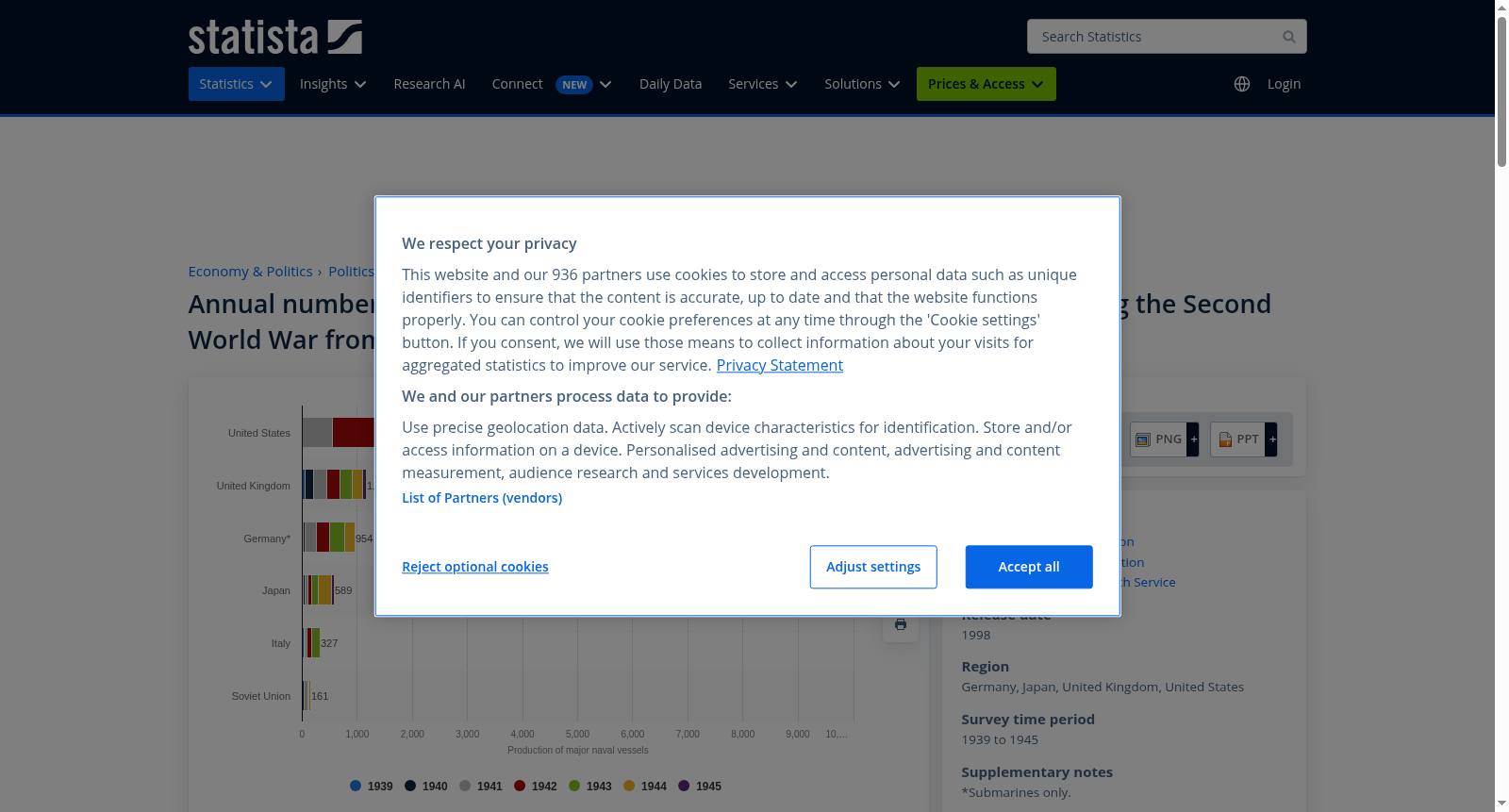
WWII: annual production of major naval vessels 1939-1945, by country
收藏www.statista.com2024-08-06 更新2025-03-21 收录
下载链接:
https://www.statista.com/statistics/1336932/wwii-major-naval-vessel-production-annual/
下载链接
链接失效反馈官方服务:
资源简介:
The first half of the 20th century saw a dramatic shift in naval warfare and the types of ships that were used in conflict at sea.Changing nature of naval warfareIn 1906, the HMS Dreadnought battleship revolutionized naval warfare, as it was steam powered, incredibly fast for its size, quickly built, and its primary battery of guns was mounted on the main deck. The HMS Dreadnought then inspired virtually all battleships that came after it, in what would become a naval arms race, but as technology advanced in the interwar period, some proposed that aircraft carriers should become the most important ships in the navy. While the attack on Pearl Harbor would highlight the effectiveness of naval air power, and battleships themselves were among the primary targets in the attack, it was not until 1942 at battles such as Midway or the Battle of the Coral Sea where the aircraft carrier established itself as the heart of the navy. Battleships, as well as cruisers or destroyers, largely played a supporting role for the remainder of the war, and (apart from two events) major naval battles became a thing of the past after WWII.Ascendancy of the U.S. Navy Another significant development of WWII was the emergence of the United States as the world's foremost naval power. During the war, the U.S. built almost 9,000 war vessels (not including landing vessels), which was more than three times the amount of all other powers combined. U.S. production capacity meant that it was able to continually produce and replace major vessels as the war waged on. In contrast, the Japanese did not have the ability to replace lost or damaged ships, which contributed to their eventual defeat in the Pacific. In Europe, the conflict was much more concentrated on land; however, the German Navy prioritized the production of submarines, which it used to great effect when attacking transatlantic shipping that supplied the UK - the Battle of the Atlantic would largely be settled by the end of 1943, with the Royal Navy and Commonwealth forces sinking over half of all German U-boats.
20世纪初叶,海战领域发生了翻天覆地的变革,用于海上冲突的舰艇类型也随之发生了巨大变化。海军战争性质的变化在1906年,HMS Dreadnought战列舰的出现彻底革新了海战模式,该舰以蒸汽为动力,尺寸巨大却速度极快,建造迅速,其主要火炮装备在主甲板上。HMS Dreadnought的成功激励了其后几乎所有战列舰的设计,从而引发了一场海军军备竞赛。然而,在战间期技术不断进步的背景下,有人提出航空母舰应成为海军最重要的舰艇。尽管珍珠港事件凸显了海军航空力量的有效性,战列舰也成为了攻击的主要目标之一,但直到1942年的中途岛战役或珊瑚海战役,航空母舰才确立了其在海军中的核心地位。战列舰、巡洋舰或驱逐舰在海战中的主要作用为辅助,而除两次事件外,重大的海战在二战后逐渐成为历史。美国海军的崛起二战期间,美国作为世界上最强大的海军力量的崛起也是一个显著的发展。战争期间,美国建造了近9000艘战舰(不包括登陆舰),是其他所有国家总和的三倍以上。美国的生产能力使其能够持续生产并替换主要舰艇,以支持持续的战争。相比之下,日本缺乏替换损失或损坏舰艇的能力,这最终导致了他们在太平洋战场上的失败。在欧洲,冲突主要集中在陆地上;然而,德国海军优先生产潜艇,并在攻击为英国提供物资的跨大西洋航运时发挥了巨大作用——大西洋战役在1943年底基本结束,皇家海军和英联邦部队击沉了所有德国U型潜艇的一半以上。
提供机构:
Statista
搜集汇总
数据集介绍
背景与挑战
背景概述
该数据集统计了二战期间(1939-1945年)主要参战国每年生产的主要海军舰艇数量,包括美国、英国、德国等国家。数据显示美国在战争期间的海军生产能力远超其他国家,成为世界领先的海军力量。
以上内容由遇见数据集搜集并总结生成


