
2022 年 SDGSAT-1 卫星 GIU 夜间灯光 指数产品 (40m)
收藏地球大数据科学工程2024-04-21 收录
下载链接:
https://data.casearth.cn/sdo/detail/653628da819aec33de894631
下载链接
链接失效反馈官方服务:
资源简介:
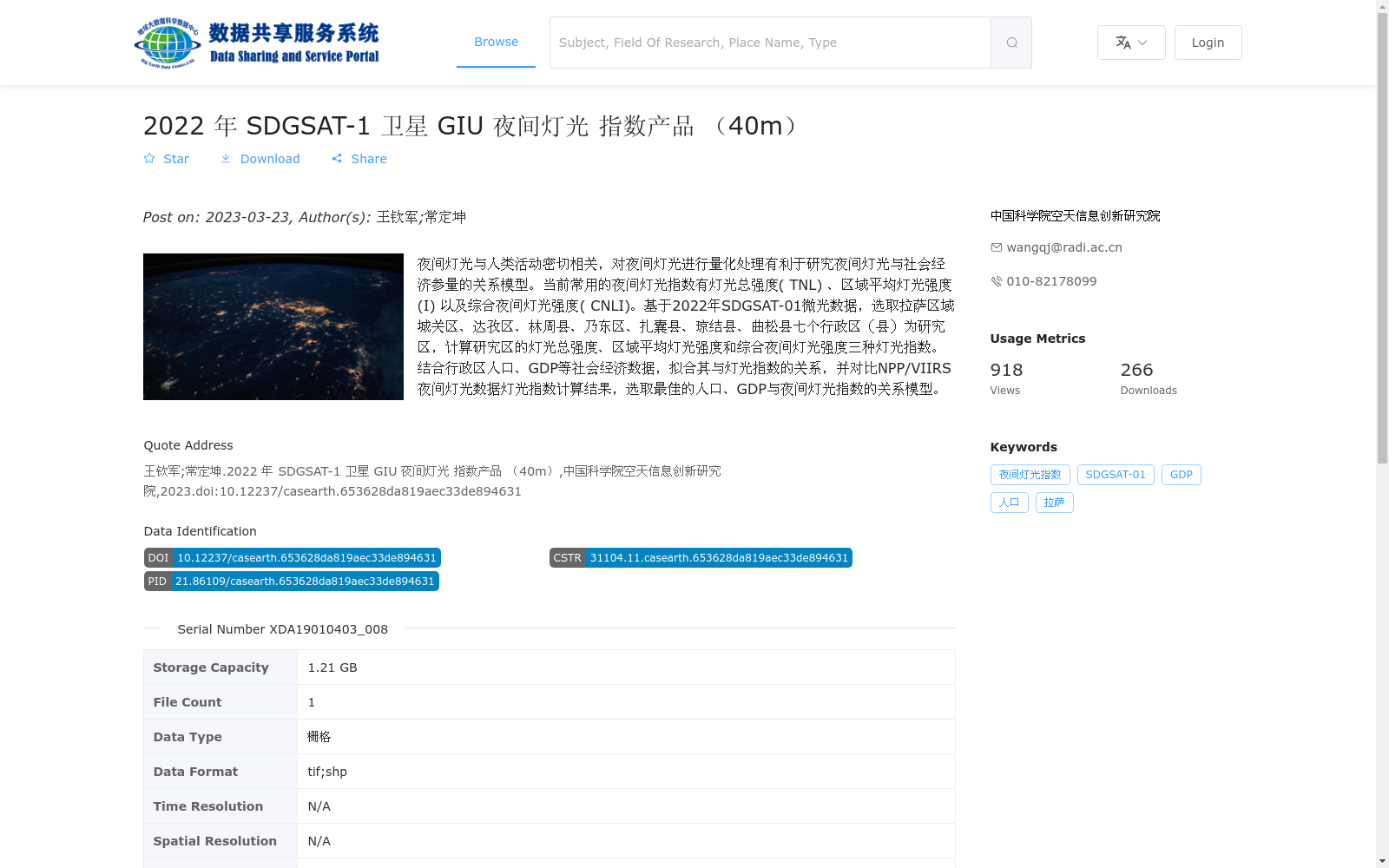
夜间灯光与人类活动密切相关,对夜间灯光进行量化处理有利于研究夜间灯光与社会经济参量的关系模型。当前常用的夜间灯光指数有灯光总强度( TNL) 、区域平均灯光强度(I) 以及综合夜间灯光强度( CNLI)。基于2022年SDGSAT-01微光数据,选取拉萨区域城关区、达孜区、林周县、乃东区、扎囊县、琼结县、曲松县七个行政区(县)为研究区,计算研究区的灯光总强度、区域平均灯光强度和综合夜间灯光强度三种灯光指数。结合行政区人口、GDP等社会经济数据,拟合其与灯光指数的关系,并对比NPP/VIIRS夜间灯光数据灯光指数计算结果,选取最佳的人口、GDP与夜间灯光指数的关系模型。
Nighttime light is closely correlated with human activities. Quantitative analysis of nighttime light data facilitates the establishment of relationship models between nighttime light and socioeconomic parameters. Currently, the commonly used nighttime light indices include Total Nighttime Light (TNL), Regional Average Light Intensity (I), and Comprehensive Nighttime Light Intensity (CNLI). Based on the 2022 SDGSAT-01 low-light remote sensing data, seven county-level administrative districts (counties) in Lhasa were selected as the study area, namely Chengguan District, Dazi District, Linzhou County, Naidong District, Zhanang County, Qunggar County and Qusum County. The three aforementioned nighttime light indices were calculated for the selected study area. Combined with socioeconomic data such as population and GDP of the administrative districts, the correlation models between these socioeconomic indicators and the nighttime light indices were fitted. Subsequently, the calculation results of light indices derived from NPP/VIIRS nighttime light data were compared, and the optimal relationship model between population/GDP and nighttime light indices was finally selected.
提供机构:
中国科学院空天信息创新研究院
搜集汇总
数据集介绍
背景与挑战
背景概述
该数据集是基于2022年SDGSAT-1卫星微光数据生成的夜间灯光指数产品,空间分辨率为40米,覆盖拉萨区域七个行政区(县),计算了灯光总强度、区域平均灯光强度和综合夜间灯光强度三种指数。它旨在通过拟合灯光指数与人口、GDP等社会经济数据的关系模型,并对比NPP/VIIRS数据,为研究夜间灯光与社会经济参量的关联提供量化支持。
以上内容由遇见数据集搜集并总结生成


