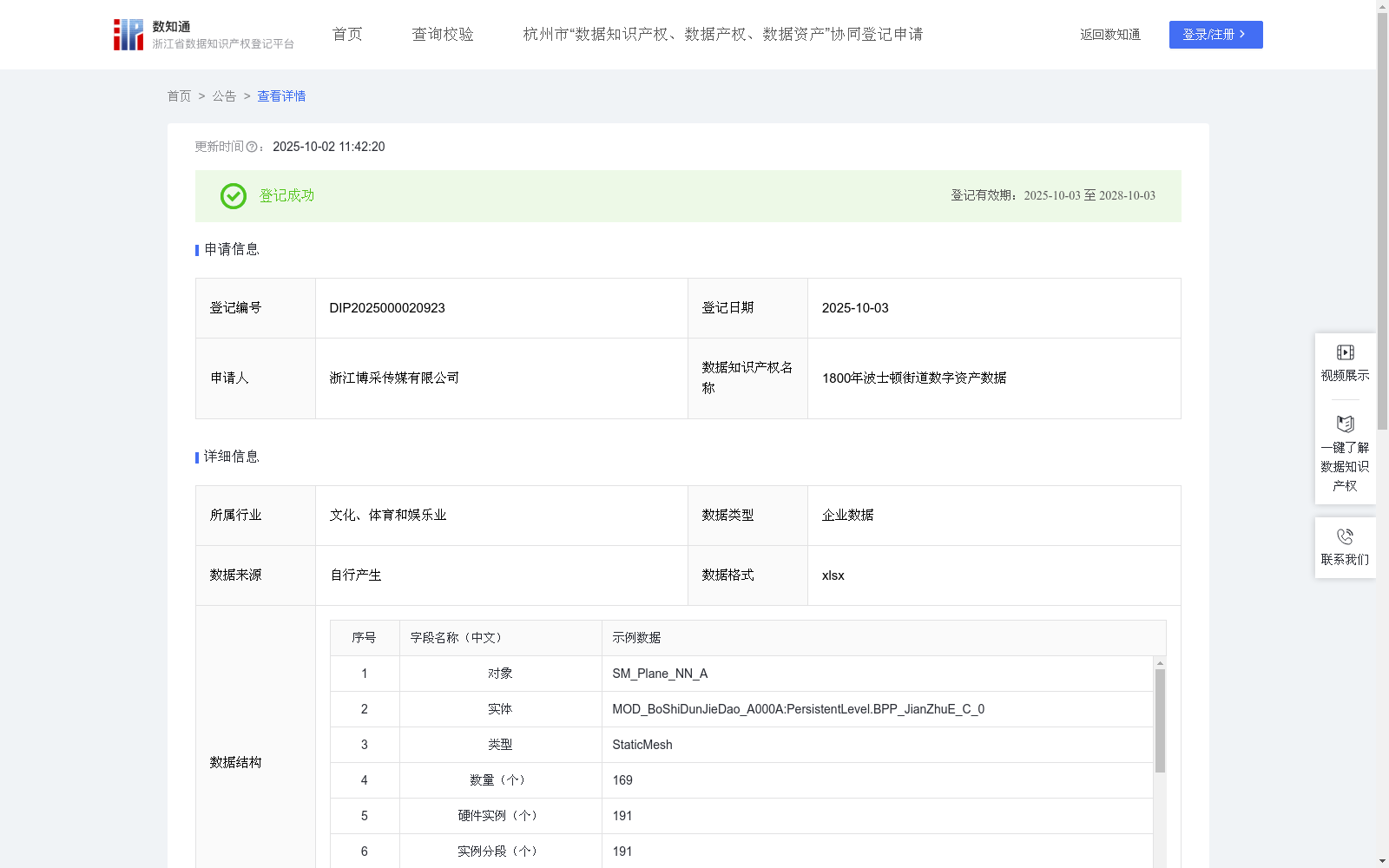
1800年波士顿街道数字资产数据
收藏资源简介:
应用领域:影视文化传播领域,比如电影、电视剧、广告、直播、发布会、VR/AR体验等文化传播介质。 使用方式: 1.在虚拟勘景、预演等拍摄阶段,通过计算机加载该数据,实时渲染出虚拟场景,导演在虚拟场景中对故事的表达方式进行预拍摄:包含镜头、光影、表演等。 2.通过虚拟影棚的计算机加载该数据,进行实时参数控制和渲染,投射最终的视觉画面,并结合真人,虚实景实时同步进行最终画面拍摄。 3.头戴式设备,加载该数据,实时宣传出虚拟场景,进行互动式的沉浸体验。 4.使用该数据渲染输出图片或视频画面,用于海报制作、成片剪辑输出等。(1)根据主创团队提供的参考图或概念设定图,由数字艺术家通过计算机在Maya等软件里制作StaticMesh类型的实体,涉及的数据包含:硬件实例、实例分段、三角形、三角形数、分辨率等。 (2)将实体导入UE中,成为UE里的对象,通过编辑对象的数量、光通量、贴图中实例包围球等参数,进行最终效果调试。 (3)在UE中,通过视觉效果审核工具,用默认参数渲染多角度和灯光旋转的序列,提交环节负责人以及导演审核。 (4)效果通过后,按照检测清单,自动去除或合并同类实体,将符合规范实体以及关联的符合分辨率标准的贴图入库。 (5)根据摄像机焦距和景别,对数字资产进行质量分级。 质量分级标准: S级:特写景别。摄像机焦距对准物品或角色,距离20cm进行拍摄。主要角色的数字人替身,特写景别(指人体肩部以上,用于突出细节或情绪表达,常用于拍摄面部表情或关键细节)。 A级:摄像机焦距对准角色,距离1m进行拍摄。主要角色数字人,近景景别(指人体胸部以上,展现人物上半身动作或局部特征,如手势、面部表情)。 B级:摄像机焦距对准角色,距离10m进行拍摄。次要角色数字人,中景景别(指人体膝部以上,呈现人物全身及动作过程,常用于叙事性拍摄)。 C级:摄像机焦距对准前景物品或角色,距离物品50m进行拍摄。群众类角色数字人,全景景别(指人体的全部和周围部分环境,展示人物与环境的关系,如人物在场景中的位置和动作)。 D级:摄像机焦距对准拍摄物品,距离物品50m以上进行拍摄。街道/军阵等人群的数字人,远景景别(被摄体所处环境,用于展现宏大场景或环境氛围,如自然风光或群体活动)。
Application Domain: Film and television culture communication sector, covering cultural communication media such as films, TV dramas, advertisements, live broadcasts, press conferences, VR/AR experiences, etc. Usage Methods: 1. During shooting stages such as virtual scene scouting and rehearsal, load this dataset into a computer to render virtual scenes in real time, allowing directors to pre-shoot storytelling expressions (including shots, lighting, performances, etc.) within the virtual scene. 2. Load this dataset into the computer of the virtual studio for real-time parameter control and rendering, project the final visual output, and conduct final shooting with real people and real-time synchronized virtual-real scenes. 3. Load this dataset into head-mounted devices to render virtual scenes in real time for interactive immersive experiences. 4. Use this dataset to render and output images or video footage for poster production, final clip editing, etc. Dataset Production Workflow: (1) Based on reference images or concept design drawings provided by the core creative team, digital artists create StaticMesh-type entities using software such as Maya. The involved data includes hardware instances, instance segments, triangles, triangle count, resolution, etc. (2) Import the entities into Unreal Engine (UE) to become objects within UE, and debug the final effect by adjusting parameters such as the number of objects, luminous flux, and instance bounding sphere in textures. (3) In UE, use the visual effect review tool to render sequences with multiple angles and rotating lighting using default parameters, and submit the results to the project leader and director for review. (4) After the effect passes the review, automatically remove or merge similar entities according to the inspection checklist, and store the compliant entities and their associated textures that meet the resolution standards into the database. (5) Perform quality grading on digital assets according to camera focal length and shot type. Quality Grading Standards: Level S: Extreme close-up shot. The camera is focused on an object or character, with a shooting distance of 20cm. For digital doubles of main characters, extreme close-up shot refers to the part above the shoulders of the human body, which is used to highlight details or emotional expression and is often used for shooting facial expressions or key details. Level A: Close-up shot. The camera is focused on the character, with a shooting distance of 1m. For digital doubles of main characters, close-up shot refers to the part above the chest of the human body, showing the upper body movements or local features of the character, such as gestures and facial expressions. Level B: Medium shot. The camera is focused on the character, with a shooting distance of 10m. For digital doubles of supporting characters, medium shot refers to the part above the knees of the human body, presenting the full body of the character and the action process, which is often used for narrative shooting. Level C: Full shot. The camera is focused on the foreground object or character, with a shooting distance of 50m from the object. For digital doubles of crowd characters, full shot refers to the entire human body and the surrounding environment, showing the relationship between the character and the environment, such as the position and movement of the character in the scene. Level D: Long shot. The camera is focused on the shooting object, with a shooting distance of more than 50m from the object. For digital doubles of crowds such as street scenes or army formations, long shot refers to the environment where the subject is located, which is used to show grand scenes or environmental atmosphere, such as natural scenery or group activities.