
Hydrogen, alcohols and volatile fatty acids from the co-digestion of coffee waste (coffee pulp, husk, and manufacturing wastewater) by applying autochthonous microorganisms
收藏NIAID Data Ecosystem2026-03-12 收录
下载链接:
https://www.ncbi.nlm.nih.gov/sra/ERP113731
下载链接
链接失效反馈官方服务:
资源简介:
Hydrogen production from coffee waste (pulp, husk, and manufacturing wastewater) is an attractive topic due to the potential for energy reuse in the sector (drying and roasting grains). However, the lack of information on co-digestion of coffee waste with autochthonous microorganisms (bacteria and fungus) limits its application. The objective of this study was to screen the factors that affect H2 production with coffee waste pretreated in a hydrothermal reactor and autochthonous microbial consortium, and the potential synthesis of intermediated products with commercial value. The effects of pH factors (4.0, 5.5 and 7.0), temperature (30-50 °C), agitation velocity (0-180 rpm), headspace (50-70%), bioaugmentation (0-20%), coffee pulp and husk (2-6 g/L), coffee manufacturing wastewater (7-30 gCOD/L) and yeast extract concentration (0-2 g/L) were evaluated using a Plackett-Burman design approach. The highest H2 production potential (82 ml H2) was obtained under the following conditions: 30 °C, 180 rpm, 50% headspace, without bioaugmentation, 2 g/L pulp and husk coffee, 30 gCOD/L coffee manufacturing wastewater and 2 g/L yeast extract. The main soluble metabolite products were acetic acid (1956 mg/L), lactic acid (7294 mg/L) and ethanol (1816 mg/L). Lactobacillus sp., Clostridium sp., Saccharomyces sp. and Kazachstania sp. were the primary autochthonous microorganisms identified in the batch reactors. By means of metagenome functional analysis the enzymes related to lignin, phenol, cellulose, lignocellulose, and pectin degradation were identified, as well as acidogenesis, acetogenesis, and hydrogen production.
以咖啡废弃物(果肉、果壳及生产废水)为基质制备氢气,因可在咖啡产业内部实现能源回用(用于咖啡豆的干燥与烘焙工序)而成为颇具吸引力的研究方向。然而,目前关于咖啡废弃物与土著微生物(autochthonous microorganisms,细菌与真菌)共消化处理的相关研究数据匮乏,制约了该技术的规模化应用。本研究的目标为:筛选经水热反应器(hydrothermal reactor)预处理的咖啡废弃物结合土著微生物菌群产氢的影响因素,并探究具有商业价值的中间产物合成潜力。本研究采用普拉凯特-伯曼设计(Plackett-Burman design)方法,考察了pH(4.0、5.5和7.0)、温度(30~50℃)、搅拌速率(0~180 rpm)、顶空体积占比(50%~70%)、生物强化比例(0~20%)、咖啡果肉与果壳投加浓度(2~6 g/L)、咖啡生产废水COD浓度(7~30 gCOD/L)以及酵母提取物投加浓度(0~2 g/L)对产氢过程的影响。在以下最优工艺条件下可获得最高产氢潜力(82 ml H₂):30℃、180 rpm、顶空体积占比50%、未进行生物强化、咖啡果肉与果壳投加浓度2 g/L、咖啡生产废水COD浓度30 gCOD/L,以及酵母提取物投加浓度2 g/L。体系主要可溶性代谢产物为乙酸(1956 mg/L)、乳酸(7294 mg/L)与乙醇(1816 mg/L)。分批式间歇反应器中鉴定出的主要土著微生物为乳杆菌属(Lactobacillus sp.)、梭菌属(Clostridium sp.)、酵母菌属(Saccharomyces sp.)以及卡兹酵母属(Kazachstania sp.)。通过宏基因组功能分析,本研究鉴定出与木质素、苯酚、纤维素、木质纤维素及果胶降解相关的酶类,同时也检测到与产酸发酵、产乙酸以及产氢相关的功能通路。
创建时间:
2021-02-04
搜集汇总
数据集介绍
背景与挑战
背景概述
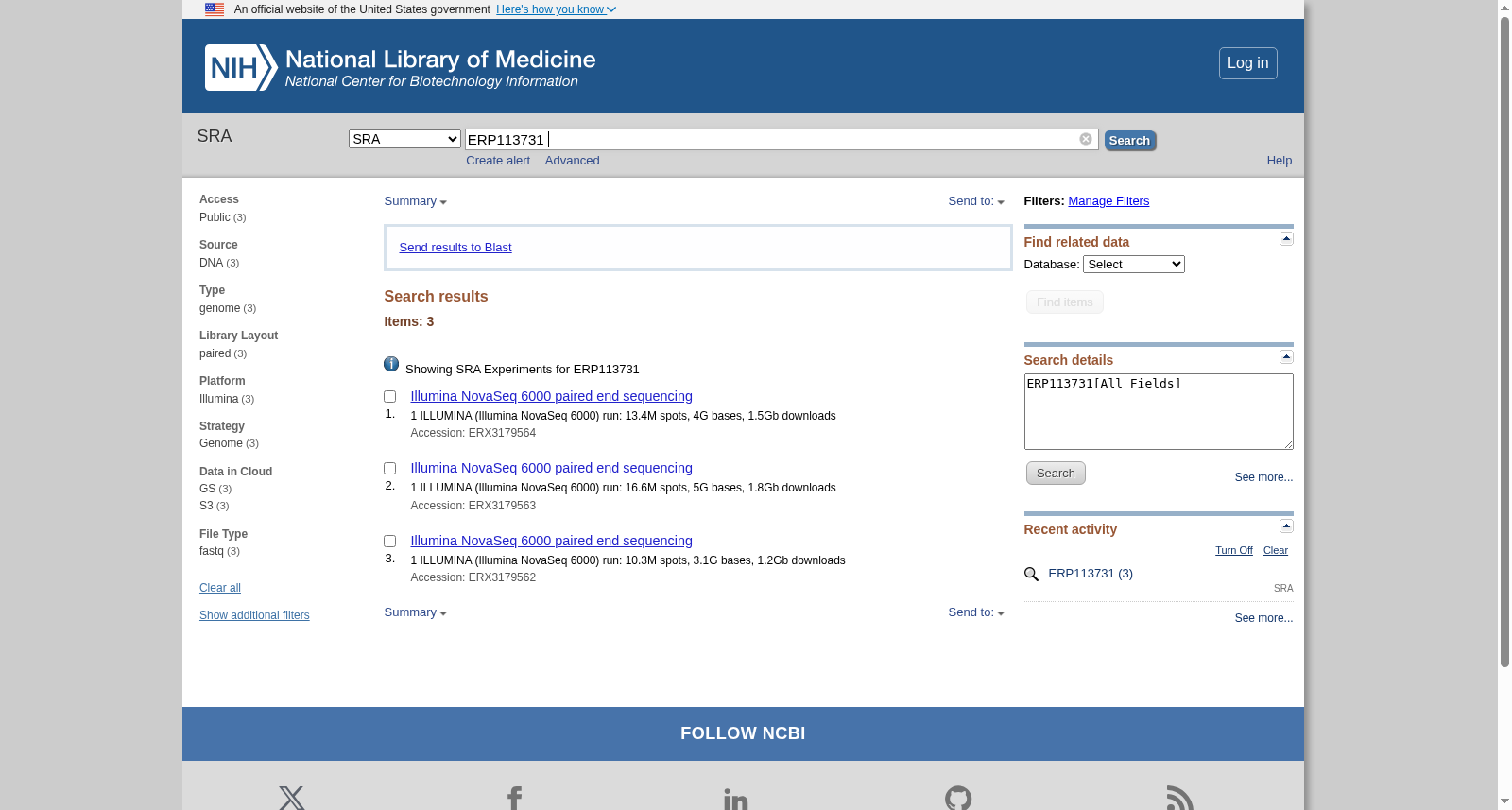
该数据集包含三个公开的基因组测序实验,使用Illumina NovaSeq 6000平台生成配对末端测序数据,总数据量约为12.2G bases,可通过NCBI SRA数据库访问。数据集涉及序列读取档案,但未在提供内容中明确说明其具体研究主题或样本来源。
以上内容由遇见数据集搜集并总结生成


