正弦规
收藏资源简介:
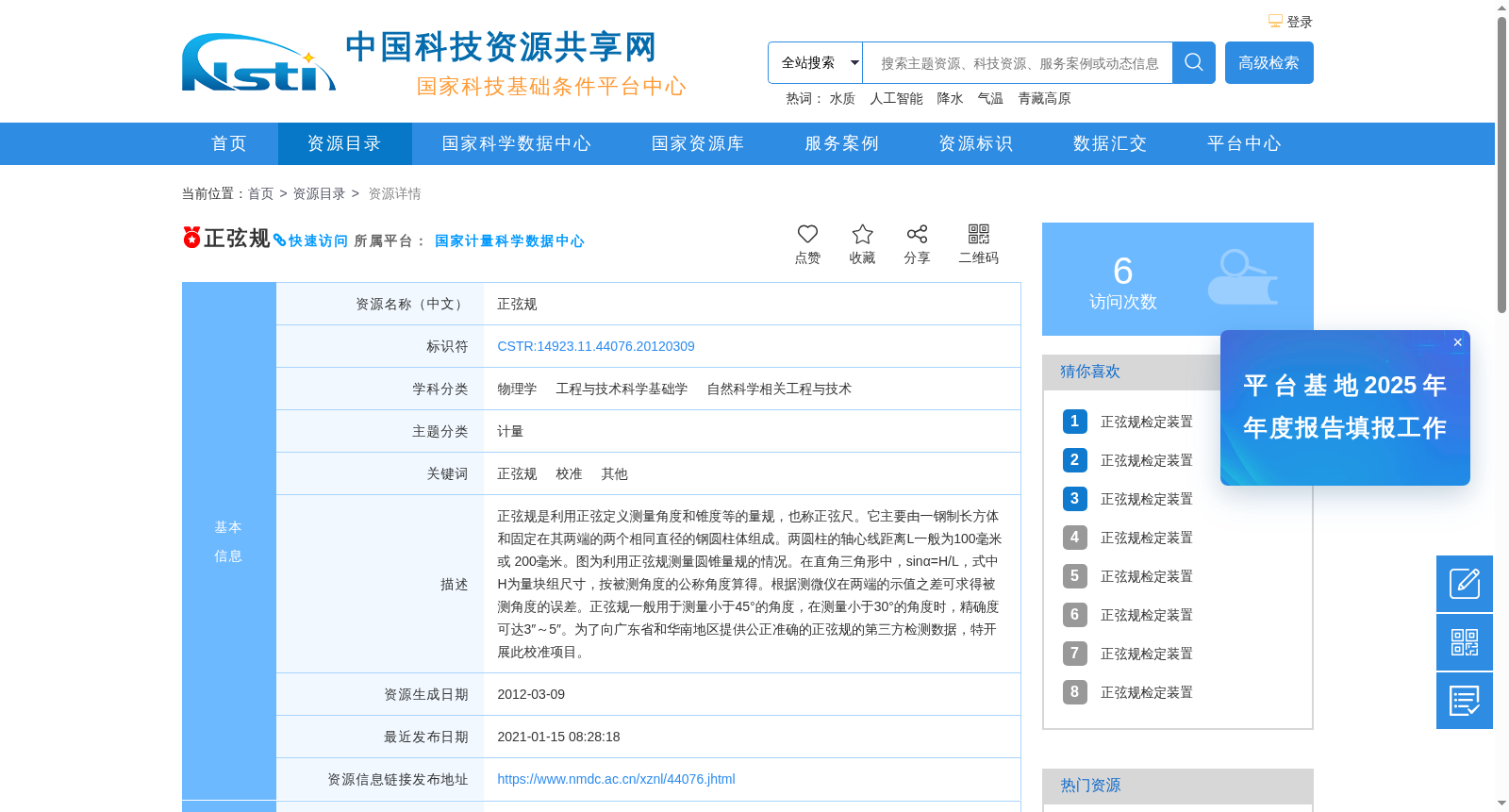
正弦规是利用正弦定义测量角度和锥度等的量规,也称正弦尺。它主要由一钢制长方体和固定在其两端的两个相同直径的钢圆柱体组成。两圆柱的轴心线距离L一般为100毫米或 200毫米。图为利用正弦规测量圆锥量规的情况。在直角三角形中,sinα=H/L,式中H为量块组尺寸,按被测角度的公称角度算得。根据测微仪在两端的示值之差可求得被测角度的误差。正弦规一般用于测量小于45°的角度,在测量小于30°的角度时,精确度可达3″~5″。为了向广东省和华南地区提供公正准确的正弦规的第三方检测数据,特开展此校准项目。
A sine gauge, also known as a sine bar, is a measuring instrument used to determine angles and tapers based on the definition of the sine function. It mainly consists of a steel rectangular block and two steel cylinders with identical diameters fixed at its two ends. The center-to-center distance L between the two cylinders is typically 100 mm or 200 mm. The accompanying figure illustrates the process of measuring a conical gauge using a sine gauge. In a right triangle, sinα = H/L, where H is the dimension of the gauge block set, calculated according to the nominal angle of the measured angle. The error of the measured angle can be derived from the difference in readings of the micrometer at the two ends. Sine gauges are generally applied to measure angles smaller than 45°, and when measuring angles below 30°, the accuracy can reach 3″ to 5″. This calibration project is specifically launched to provide impartial and accurate third-party detection data for sine gauges in Guangdong Province and South China.