
RNA-seq transcriptome of Pseudomonas syringae DC3000 in liquid minimal medium
收藏DataCite Commons2020-08-26 更新2024-07-28 收录
下载链接:
https://figshare.com/articles/RNA-seq_transcriptome_of_Pseudomonas_syringae_DC3000_in_liquid_minimal_medium/11522286
下载链接
链接失效反馈官方服务:
资源简介:
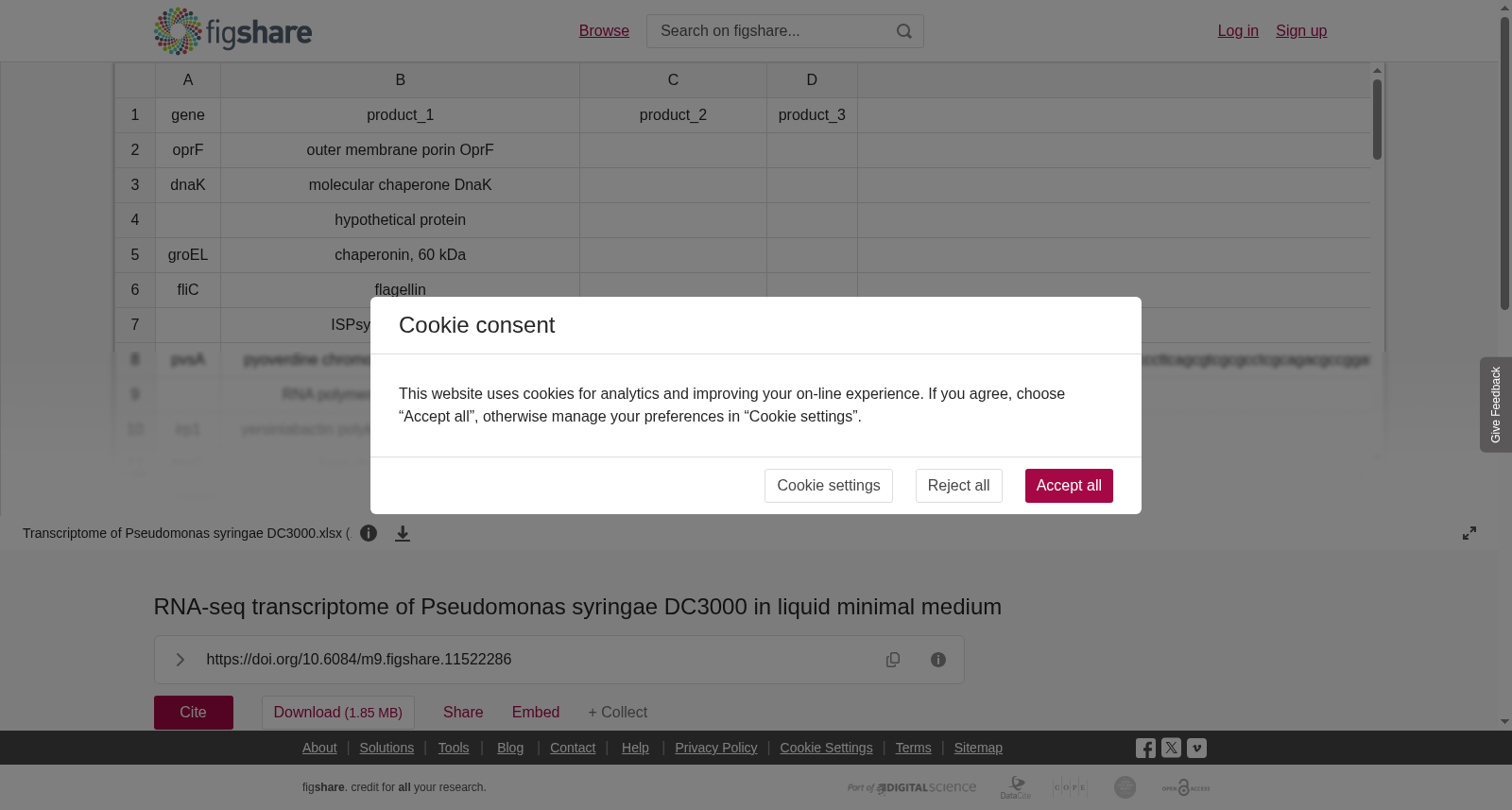
Known as a plant pathogen able to infect a multitude of plant species, <i>Pseudomonas syringae</i> is attracting much research interest from the plant biology community, particularly with respect to the development of methods for preventing <i>P. syringae</i> infection, and understanding its pathogenesis mechanisms. This work presents an analysis of the RNA-seq transcriptome of <i>P. syringae</i> DC3000 in liquid minimal medium (ArrayExpress accession number: E-MTAB-3779). Analysed by an in-house MATLAB transcriptome analysis software, RNA-seq transcriptome of <i>P. syringae</i>’s growth in liquid minimal medium holds biological relevance given the oligotrophic nature of plant surfaces on which this bacterium thrives and exerts its pathogenetic effects. Through processing 1.5 million reads, the transcriptional picture reveals a set of highly transcribed genes that include outer membrane porin OprF, molecular chaperone DnaK, groEL chaperonin, fliC flagellin, ISPsy5 transposase, pyoverdine chromophore precursor synthetase, RNA polymerase sigma factor SigX, yersiniabactin polyketide/non-ribosomal peptide, and heat shock protein HtpG. Such a gene expression programme speaks of the importance of maintaining the cell envelope as well as protein conformational fidelity to the proper functioning of the cell. In addition, high level expression of the transposase genes as well as other transposase helper proteins point to a source of genetic instability in the species, which may have ramifications on the species pathogenicity. Overall, the RNA-seq transcriptome of <i>P. syringae</i> DC3000 reveals that the cell expends significant resources to maintain proper protein folding and the integrity of the cell envelope. But, the transcriptome also highlights one area in which CRISPR-Cas9 might help in reducing genetic instability of the bacterium that otherwise aids the species in evading plant host’s immune system. In essence, transposase genes can be candidate genes to be inactivated to help reduce pathogenicity potential of this plant pathogen.<br><br>
作为一种可侵染多种植物物种的植物病原菌,丁香假单胞菌(*Pseudomonas syringae*)正受到植物生物学界的广泛研究关注,尤其是在开发防治该菌侵染的方法、解析其致病机制方面。本研究对液体基本培养基中培养的丁香假单胞菌DC3000的RNA测序(RNA-seq)转录组进行了分析(ArrayExpress数据库登录号:E-MTAB-3779)。本研究使用自研的MATLAB转录组分析软件对该菌在液体基本培养基中的生长转录组进行分析;鉴于植物表面属于寡营养环境,而该菌正是在此类环境中定殖并发挥致病作用,因此该转录组数据具有明确的生物学相关性。通过对150万条测序读段(reads)的处理分析,本研究得到的转录谱显示了一组高表达基因,包括外膜孔蛋白OprF、分子伴侣DnaK、GroEL伴侣蛋白、fliC鞭毛蛋白、ISPsy5转座酶、pyoverdine生色团前体合成酶、RNA聚合酶σ因子SigX、耶尔森菌铁载体聚酮/非核糖体肽以及热休克蛋白HtpG。该基因表达程序表明,维持细胞包膜完整性以及蛋白质构象保真度,对于细胞正常功能发挥至关重要。此外,转座酶基因及其他转座酶辅助蛋白的高表达,提示该菌种存在遗传不稳定性的潜在来源,这可能对其致病力产生影响。总体而言,丁香假单胞菌DC3000的RNA-seq转录组分析结果显示,该菌会消耗大量资源以维持蛋白质的正确折叠以及细胞包膜的完整性。不过,该转录组同时也指出了一个可通过CRISPR-Cas9系统降低该菌遗传不稳定性的方向——若不加以干预,该遗传不稳定性可帮助该菌逃避植物宿主的免疫系统。
本质而言,转座酶基因可作为候选靶基因,通过敲除该类基因以降低该植物病原菌的致病潜力。
提供机构:
figshare创建时间:
2020-01-06
搜集汇总
数据集介绍
以上内容由遇见数据集搜集并总结生成

暂无相关数据集


