A diagnostic signatures for intervertebral disc degeneration using TNFAIP6 and COL6A2 based on single-cell RNA-seq and bulk RNA-seq analyses
收藏资源简介:
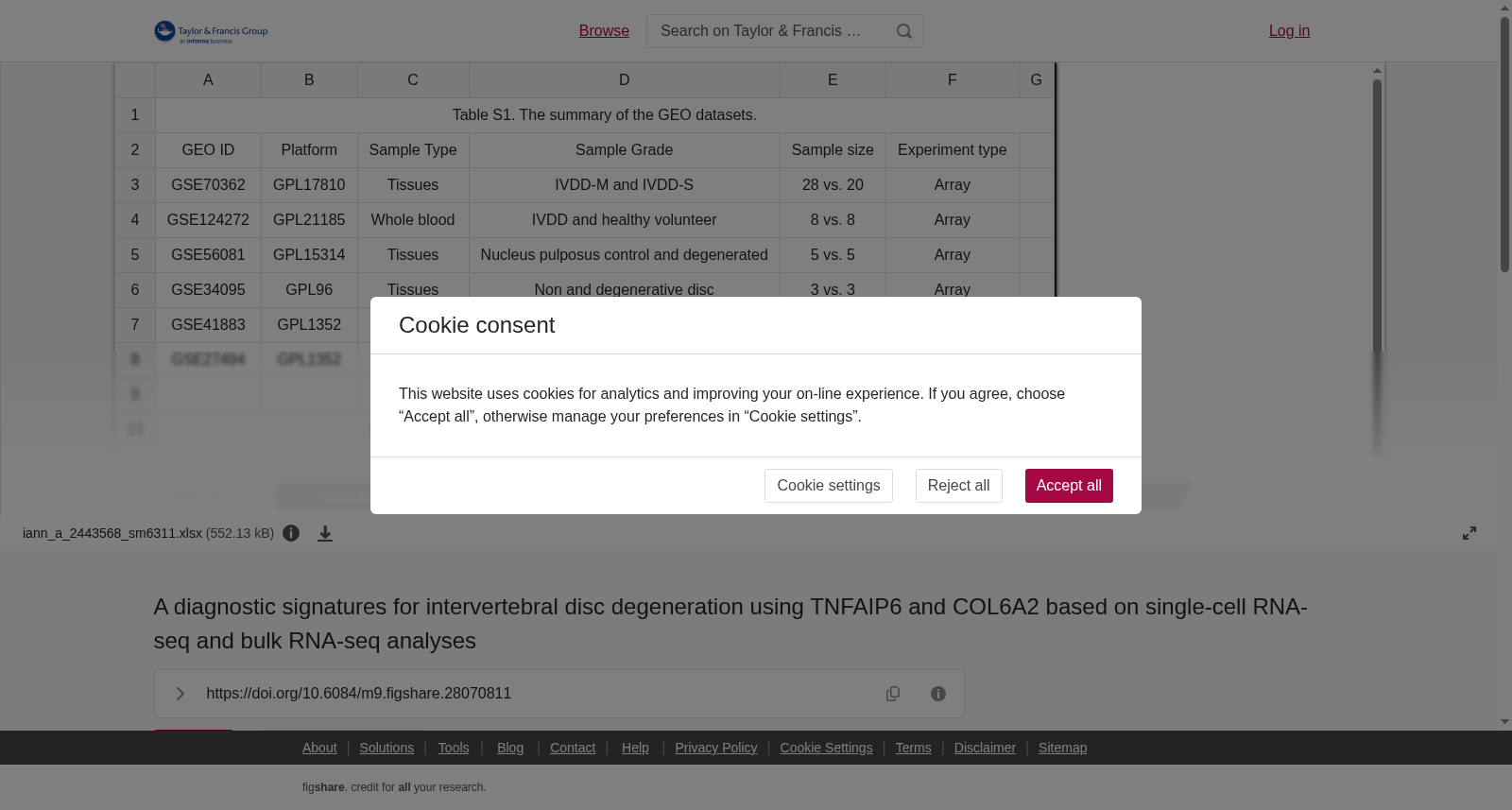
Intervertebral disc degeneration (IVDD) is a prevalent degenerative condition associated with a high incidence rate of low back pain and disability. This study aimed to identify potential biomarkers and signaling pathways associated with IVDD. Biomarkers were discerned through bulk-RNA and single-cell RNA sequencing (scRNA-Seq) investigations of IVDD cases from the Gene Expression Omnibus (GEO) database. Following this, two central genes were identified. Furthermore, gene set enrichment analysis (GSEA) and receiver operating characteristic (ROC) curve analysis were conducted. The transcriptional factor (TF) derived from nucleus pulposus (NP) cells was examined through the DoRothEA R package. RT-qPCR and IHC techniques were employed to confirm the expression of the two hub genes and their associated genes in tissue samples. The proteins Tumor necrosis factor-inducible gene 6 protein (TNFAIP6) and collagen VI-α2 (COL6A2) were frequently analyzed using a combination of DEGs from datasets GSE70362, GSE124272, and scRNA-seq. Examination of gene expression across multiple datasets indicated significant differences in TNFAIP6 and COL6A2 levels in IVDD compared to control or normal groups (<i>p</i> < 0.05). These two central genes demonstrated strong diagnostic utility in the training cohort and reliable predictive value in the validation datasets. Our study verified the potential role of ZEB2 as a TF in regulating two key genes associated with IVDD. Furthermore, qPCR and IHC confirmed elevated expression levels of the hub genes and transcription factor. We identified biomarkers, specifically TNFAIP6 and COL6A2, that have the potential to predict disease activity and aid in the diagnosis of IVDD.
椎间盘退变(Intervertebral disc degeneration, IVDD)是一种高发的退行性疾病,与腰痛和残疾的高发生率密切相关。本研究旨在筛选与椎间盘退变相关的潜在生物标志物及信号通路。研究通过对基因表达综合数据库(Gene Expression Omnibus, GEO)中椎间盘退变样本的批量RNA测序(bulk-RNA)与单细胞RNA测序(single-cell RNA sequencing, scRNA-Seq)分析,筛选得到潜在生物标志物。在此基础上,本研究进一步鉴定出两个核心基因。此外,本研究还开展了基因集富集分析(gene set enrichment analysis, GSEA)与受试者工作特征(receiver operating characteristic, ROC)曲线分析。本研究借助DoRothEA R包,对髓核(nucleus pulposus, NP)细胞来源的转录因子(transcriptional factor, TF)进行了分析。本研究采用实时定量聚合酶链反应(reverse transcription quantitative polymerase chain reaction, RT-qPCR)与免疫组化(immunohistochemistry, IHC)技术,验证了两个核心基因及其关联基因在组织样本中的表达水平。本研究结合数据集GSE70362、GSE124272的差异表达基因(differentially expressed genes, DEGs)与单细胞RNA测序数据,对肿瘤坏死因子诱导蛋白6(Tumor necrosis factor-inducible gene 6 protein, TNFAIP6)及Ⅵ型胶原α2链(collagen VI-α2, COL6A2)进行了重点分析。多数据集基因表达分析结果显示,与对照组或正常组相比,椎间盘退变组中TNFAIP6与COL6A2的表达水平存在显著差异(P<0.05)。这两个核心基因在训练队列中表现出良好的诊断效能,且在验证数据集中具备可靠的预测价值。本研究证实了ZEB2作为转录因子在调控椎间盘退变相关两个关键基因中的潜在作用。此外,实时定量聚合酶链反应与免疫组化结果证实,核心基因与转录因子的表达水平均显著升高。本研究筛选得到的TNFAIP6与COL6A2可作为潜在生物标志物,用于预测椎间盘退变的疾病活动度并辅助疾病诊断。