生物3D打印导电神经支架促进神经干细胞向神经元分化及脊髓损伤修复
收藏资源简介:
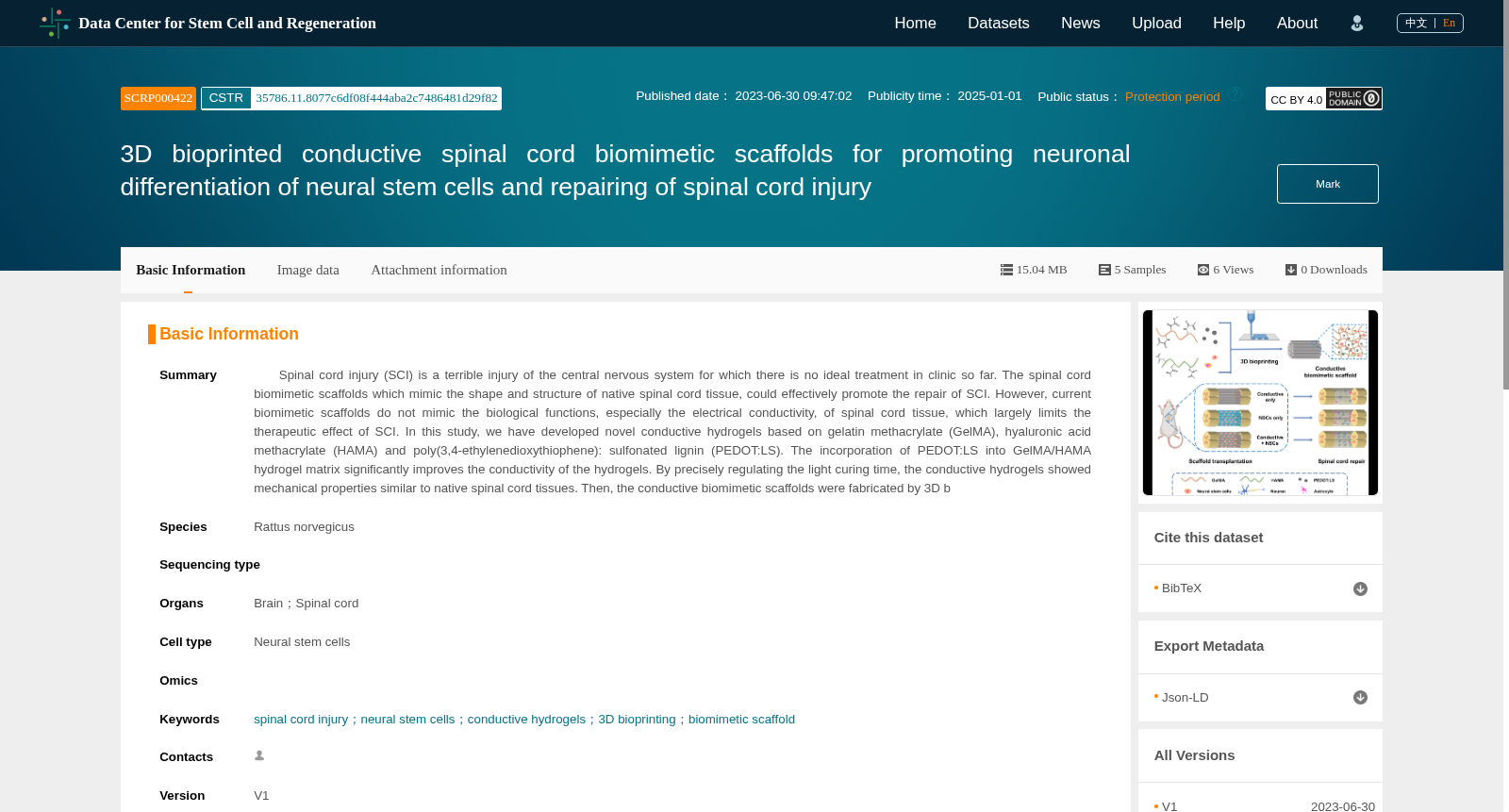
脊髓损伤(SCI)是一种可怕的中枢神经系统损伤,到目前为止,临床上还没有理想的治疗方法。脊髓仿生支架模仿了原生脊髓组织的形状和结构,可以有效促进SCI的修复。然而,目前的仿生支架并不能模仿脊髓组织的生物功能,尤其是导电性,这在很大程度上限制了SCI的治疗效果。在这项研究中,我们开发了基于甲基丙烯酸明胶(GelMA)、甲基丙烯酸透明质酸(HAMA)和聚(3,4-乙烯二氧噻吩):磺化木质素(PEDOT:LS)的新型导电水凝胶。在GelMA/HAMA水凝胶基质中加入PEDOT:LS,可以显著提高水凝胶的导电性。通过精确调节光固化时间,导电水凝胶显示出与本地脊髓组织相似的机械性能。然后,通过3D生物打印技术制造了导电的仿生支架,封装在支架中的神经干细胞(NSCs)表现出良好的存活率(高于90%)。与报道的非导电支架相比,导电支架明显促进了NSCs在体外的神经元分化。在大鼠脊髓完全横断模型中,导电生物模拟支架极大地促进了后肢运动功能的恢复。免疫荧光染色结果进一步表明,导电仿生支架有效地促进了损伤部位神经元的再生,减少了胶质瘢痕的沉积,并促进了神经轴突的再生和髓鞘化。总的来说,本工作中开发的导电性脊髓仿生支架的3D生物打印代表了一种基于干细胞的SCI治疗的有前途的方法。
Spinal cord injury (SCI) is a devastating central nervous system injury for which no ideal clinical therapeutic strategy has been developed to date. Spinal cord biomimetic scaffolds mimic the shape and structure of native spinal cord tissue, which can effectively promote SCI repair. However, current biomimetic scaffolds fail to replicate the biological functions of spinal cord tissue, particularly its electrical conductivity, which largely limits the therapeutic efficacy of SCI treatments. In this study, we developed a novel conductive hydrogel based on methacrylated gelatin (GelMA), methacrylated hyaluronic acid (HAMA), and poly(3,4-ethylenedioxythiophene):sulfonated lignin (PEDOT:LS). Incorporating PEDOT:LS into the GelMA/HAMA hydrogel matrix significantly enhanced the electrical conductivity of the hydrogel. By precisely tuning the photocuring time, the conductive hydrogel exhibited mechanical properties similar to those of native spinal cord tissue. Subsequently, conductive biomimetic scaffolds were fabricated via 3D bioprinting, and neural stem cells (NSCs) encapsulated within the scaffolds showed a high survival rate (over 90%). Compared with previously reported non-conductive scaffolds, the conductive scaffolds significantly promoted neuronal differentiation of NSCs in vitro. In a rat complete spinal cord transection model, the conductive biomimetic scaffold greatly promoted the recovery of hindlimb motor function. Immunofluorescence staining results further demonstrated that the conductive biomimetic scaffold effectively promoted neuronal regeneration at the injury site, reduced glial scar deposition, and facilitated nerve axon regeneration and myelination. Collectively, 3D bioprinting of the conductive spinal cord biomimetic scaffold developed in this work represents a promising stem cell-based approach for SCI treatment.