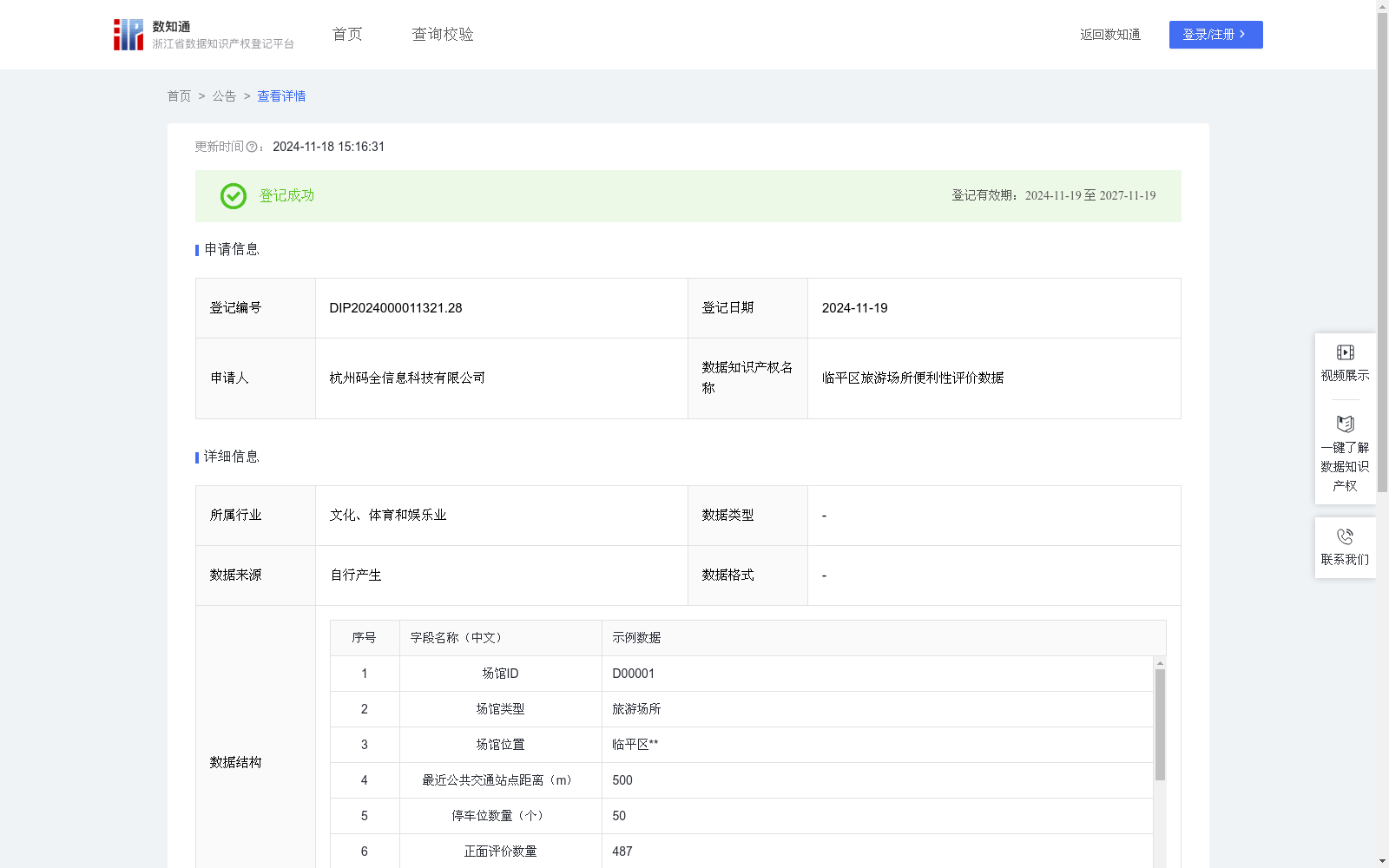
临平区旅游场所便利性评价数据
收藏资源简介:
本数据应用场景广泛,它不仅能够为临平区的旅游管理者提供关键的决策支持,还能促进临平区旅游产业的全面发展。具体来说:1.旅游场所管理者可以利用本数据识别并改善旅游景点的交通便利性,例如通过优化交通路线和提升服务质量,吸引更多游客到访。2.交通管理部门可以依据本数据来识别需要改进的交通设施,如增设公共交通站点或改善步行道,从而增强旅游区域的可达性和便利性。3.活动组织者可以参照便利性评价,选择最适宜的旅游场所举办活动,确保参与者能够轻松抵达并享受愉快的活动体验。4.对于旅游规划者而言,本数据是评估和提升旅游区域整体吸引力的重要资源,可以指导增加新的旅游项目或改善现有设施。步骤1,数据收集和预处理:从公司文化保障卡服务系统中自动抽取临平区域旅游场所相关数据,包括场馆ID、地理位置、最近公共交通站点距离、停车位数量、正面评价数量、总评价数量。通过数据清洗去除无效或错误记录,确保数据质量。 步骤2,公共交通可达性评分计算,按以下公式计算:公共交通可达性评分 = (1 - (距离 / 最大距离阈值)) × 频次系数 × 类型系数。 步骤3,停车设施评分计算,按以下公式计算:停车设施评分 = (停车位数量 / 最大停车位数量) × 费用可承受系数 步骤4,网络评价情感评分:使用自然语言处理(NLP)技术来评估每条评论的情感倾向,并按以下公式计算网络评价情感评分:网络评价情感分数 = 正面评价数量 / 总评价数量 步骤5,便利性评分计算,按以下公式:便利性评分=α× 公共交通可达性评分 + β× 停车设施评分 + γ× 网络评价情感评分,其中,α、β、γ 是权重因子,根据实际重要性分配和调整。
This dataset has a wide range of application scenarios. It not only provides key decision-making support for tourism managers in Linping District, but also promotes the comprehensive development of the tourism industry in Linping District. The specific applications are as follows: 1. Tourism venue managers can use this dataset to identify and improve the traffic convenience of tourist attractions, such as optimizing traffic routes and upgrading service quality to attract more visiting tourists. 2. Traffic management departments can rely on this dataset to identify traffic facilities in need of improvement, such as adding public transit stops or upgrading sidewalks, thereby enhancing the accessibility and convenience of tourist zones. 3. Event organizers can refer to the convenience evaluation results to select the most suitable tourist venues for holding activities, ensuring that participants can easily reach the venue and enjoy a pleasant event experience. 4. For tourism planners, this dataset serves as an important resource for evaluating and enhancing the overall attractiveness of tourist areas, and can guide the development of new tourism projects or the improvement of existing facilities. Step 1: Data Collection and Preprocessing Automatically extract data related to tourist venues in Linping District from the corporate cultural security card service system, including venue ID, geographic location, distance to the nearest public transit stop, number of parking spaces, number of positive reviews, and total number of reviews. Conduct data cleaning to remove invalid or erroneous records and ensure data quality. Step 2: Public Transit Accessibility Score Calculation Calculate the score using the following formula: Public Transit Accessibility Score = (1 - (Distance / Maximum Distance Threshold)) × Frequency Coefficient × Type Coefficient Step 3: Parking Facility Score Calculation Calculate the score using the following formula: Parking Facility Score = (Number of Parking Spaces / Maximum Number of Parking Spaces) × Affordability Coefficient Step 4: Online Review Sentiment Score Use natural language processing (NLP) technology to assess the sentiment orientation of each review, and calculate the online review sentiment score using the following formula: Online Review Sentiment Score = Number of Positive Reviews / Total Number of Reviews Step 5: Convenience Score Calculation Calculate the score using the following formula: Convenience Score = α × Public Transit Accessibility Score + β × Parking Facility Score + γ × Online Review Sentiment Score Where α, β, and γ are weight factors that are allocated and adjusted based on their actual importance.