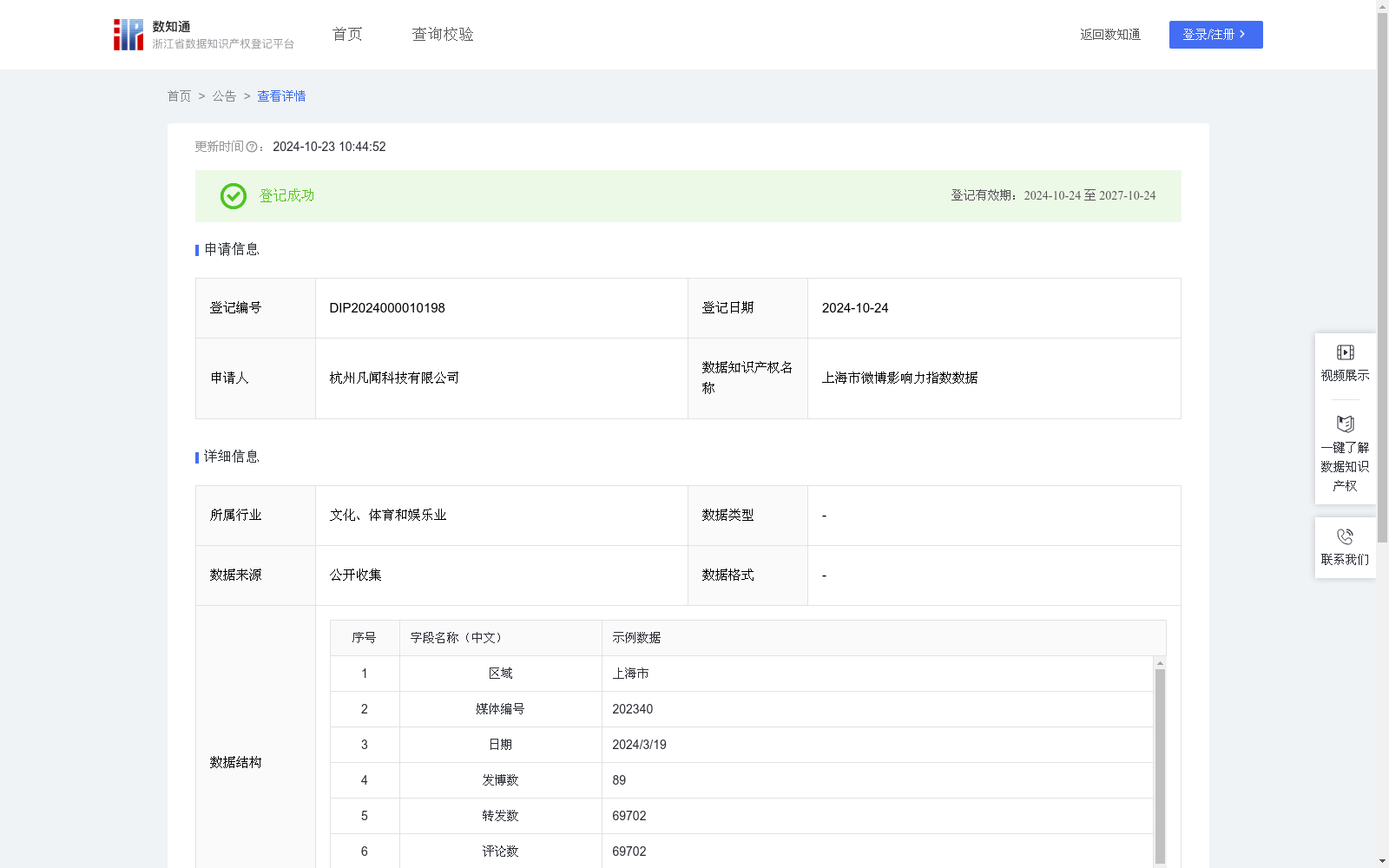
上海市微博影响力指数数据
收藏资源简介:
作为社交媒体平台,微博已经成为热点事件和网络舆情的重要策源地,科学准确评估微博的影响力对于明晰微博信息传播特点,深入挖掘微博传播潜力,进一步规范和指导微博平台的传播行为具有较大的理论和实践意义。但单纯地通过转发量、评论量等数据对微博影响力进行分析过于片面,因此系统通过微博影响力指数这个统一的数据指标来评定上海市微博所发稿件在微博用户的传播影响力,为评估上海市微博影响力、深入挖掘微博传播力提供数据参考。微博影响力指数通过微博的活跃度和传播度来反映账号的传播能力和传播效果 指标体系: 采用数据:发博数、转发数、评论数、点赞数。 采用指标:主要通过活跃度W1和传播度W2两大维度来进行评价。 影响力计算: BCI(影响力指数)=(20% × W1 +80% × W2 )× 160 W1(活跃度) = ln(发博数 +1) W2(传播度)=40% × ln(转发数 +1)+ 40% × ln( 评论数+1)+ 20% × ln(点赞 +1) BCI数据越高,说明该账号传播影响力越大,反之则影响力越小
As a social media platform, Weibo has become an important source of hot events and online public opinion. Scientifically and accurately assessing the influence of Weibo is of great theoretical and practical significance for clarifying the characteristics of Weibo's information dissemination, deeply exploring its dissemination potential, and further standardizing and guiding the dissemination behaviors on the Weibo platform. However, analyzing the influence of Weibo solely using metrics such as repost count and comment count is overly one-sided. Therefore, this system uses the unified data indicator named Weibo Influence Index to evaluate the dissemination influence of posts published by Shanghai municipal Weibo accounts among Weibo users, providing data references for assessing the influence of Shanghai's Weibo accounts and deeply excavating their dissemination capabilities. The Weibo Influence Index reflects the dissemination capability and effect of an account based on its activity and dissemination degree. Indicator System: Collected Data: Number of posts published, repost count, comment count, like count. Adopted Evaluation Indicators: The evaluation is mainly conducted from two dimensions: Activity (W1) and Dissemination Degree (W2). Influence Calculation: BCI (Influence Index) = (20% × W1 + 80% × W2) × 160 W1 (Activity) = ln(number of posts published + 1) W2 (Dissemination Degree) = 40% × ln(repost count + 1) + 40% × ln(comment count + 1) + 20% × ln(like count + 1) The higher the BCI value, the greater the dissemination influence of the corresponding account, and vice versa.