
Supplementary Material for: Protective Effects of Baicalin on Lipopolysaccharide-Induced Injury in <b><i>Caenorhabditis elegans</i></b>
收藏DataCite Commons2020-08-26 更新2024-07-27 收录
下载链接:
https://karger.figshare.com/articles/Supplementary_Material_for_Protective_Effects_of_Baicalin_on_Lipopolysaccharide-Induced_Injury_in_b_i_Caenorhabditis_elegans_i_b_/10095890
下载链接
链接失效反馈官方服务:
资源简介:
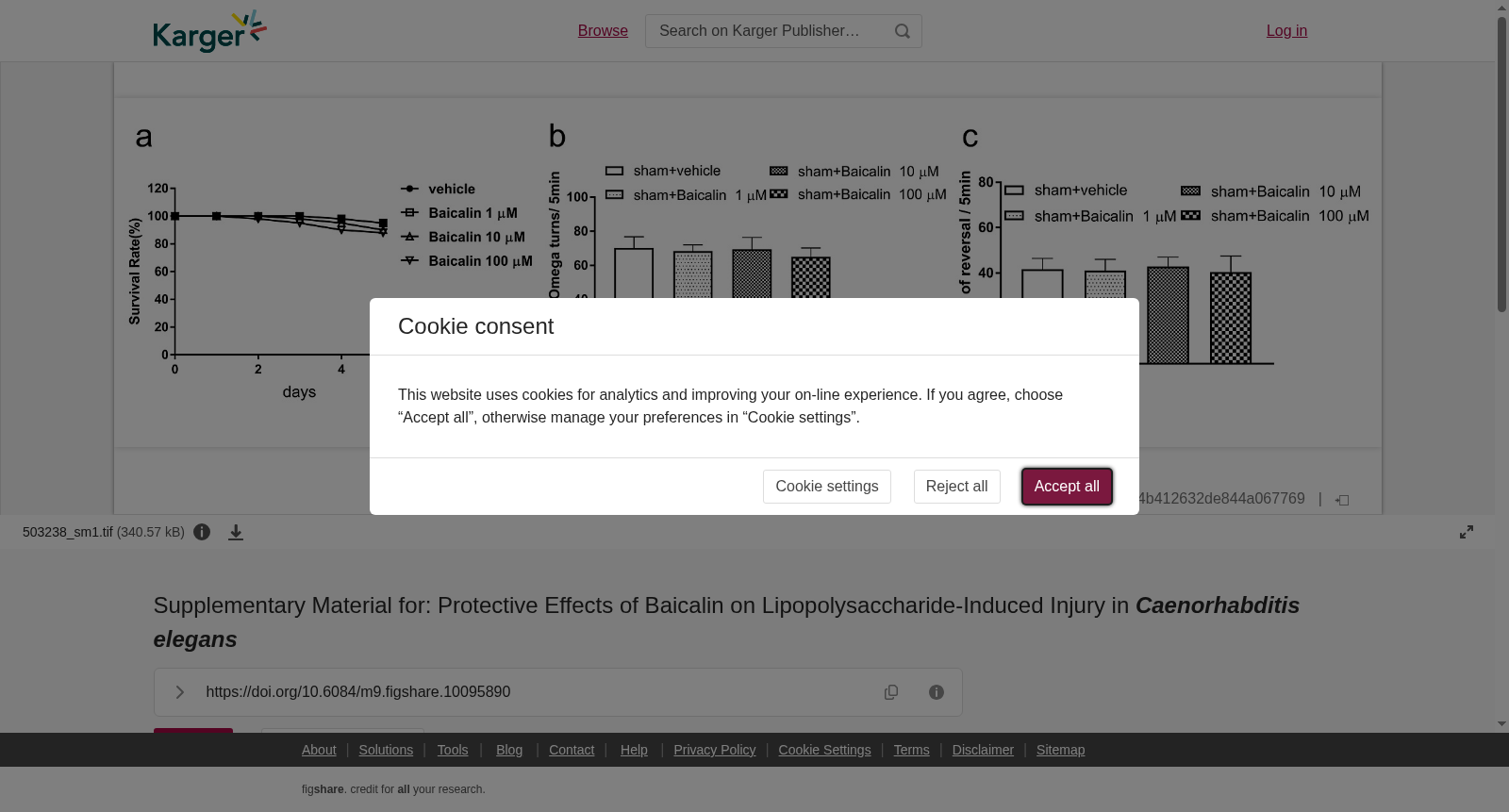
<b><i>Objectives:</i></b> Sepsis-induced inflammation injury and oxidative stress are well known causes of mortality. The anti-inflammatory effects of baicalin have been proposed in a mouse model of experimental sepsis. Here, we investigated its protective effects and associated mechanisms with respect to lipopolysaccharide (LPS)-induced injury in <i>Caenorhabditis elegans</i>. <b><i>Methods:</i></b> Worms were stimulated by LPS (100 μg/mL), with baicalin (1, 10, 100 μmol/L), for 24 h. Animal survival rates and behaviors (reversal and omega turn) were then determined. Further, levels of the inflammatory cytokines interleukin 6 (IL-6), IL-1, and tumor necrosis factor (TNF)-α were detected by enzyme-linked immunosorbent assay. Western blotting was also performed to determine the protein expression levels of Toll-like receptor 4 (TLR4), nuclear factor-κB (NF-κB), Bax, and Bcl-2. The activities of malondialdehyde (MDA) and superoxide dismutase (SOD) contents were determined using corresponding kits. <b><i>Results:</i></b> Baicalin (10, 100 μmol/L) improved LPS-stimulated <i>C. elegans</i> survival and rescued behavioral phenotypes. It also suppressed the oxidative stress related to LPS injury by decreasing MDA levels and increasing SOD activity. Moreover, the inflammatory response was inhibited as evidenced by decreased levels of cytokines including IL-6, IL-1, and TNF-α. In addition, baicalin treatment significantly decreased cleaved Bax levels and increased Bcl-2 expression in<i> C. elegans</i> treated with LPS. Simultaneously, the expression of NF-κB and TLR4 was significantly decreased. <b><i>Conclusion:</i></b> Baicalin treatment protects against LPS-induced injury by decreasing oxidative stress, repressing the inflammatory cascade, and inhibiting apoptosis.
**研究目的**:脓毒症诱导的炎症损伤与氧化应激是公认的致死诱因。黄芩苷(baicalin)的抗炎作用已在实验性脓毒症小鼠模型中得到证实。本研究以脂多糖(lipopolysaccharide, LPS)诱导损伤的秀丽隐杆线虫(Caenorhabditis elegans)为模型,探究黄芩苷的保护作用及其潜在分子机制。
**研究方法**:将秀丽隐杆线虫以脂多糖(LPS, 100 μg/mL)联合不同浓度黄芩苷(1、10、100 μmol/L)处理24小时。随后检测线虫的存活率及行为学表型(倒退运动与Ω形扭转)。采用酶联免疫吸附试验检测炎症细胞因子白细胞介素6(interleukin 6, IL-6)、IL-1及肿瘤坏死因子α(tumor necrosis factor-α, TNF-α)的表达水平;通过蛋白质印迹法(Western blotting)检测Toll样受体4(Toll-like receptor 4, TLR4)、核因子κB(nuclear factor-κB, NF-κB)、Bax及Bcl-2的蛋白表达量;使用对应检测试剂盒测定丙二醛(malondialdehyde, MDA)含量与超氧化物歧化酶(superoxide dismutase, SOD)活性。
**研究结果**:10、100 μmol/L浓度的黄芩苷可提升脂多糖诱导损伤的秀丽隐杆线虫存活率,并改善其行为学异常。同时,黄芩苷可降低MDA含量、提升SOD活性,缓解脂多糖诱导的氧化应激损伤。此外,黄芩苷可显著下调IL-6、IL-1及TNF-α等炎症细胞因子的表达水平,抑制炎症级联反应。在脂多糖处理的秀丽隐杆线虫中,黄芩苷干预可显著降低剪切型Bax的蛋白水平并上调Bcl-2的表达,同时显著降低NF-κB与TLR4的表达量。
**研究结论**:黄芩苷可通过减轻氧化应激、抑制炎症级联反应及阻断细胞凋亡,发挥对脂多糖诱导损伤的保护作用。
提供机构:
Karger Publishers创建时间:
2019-10-31
搜集汇总
数据集介绍
背景与挑战
背景概述
该数据集是研究黄芩苷对脂多糖诱导的秀丽隐杆线虫损伤保护作用的补充材料,包含实验数据如生存率、行为、炎症因子和氧化应激指标。数据集展示了黄芩苷通过减少氧化应激、抑制炎症反应和细胞凋亡来发挥保护作用,为相关药理研究提供支持。
以上内容由遇见数据集搜集并总结生成


