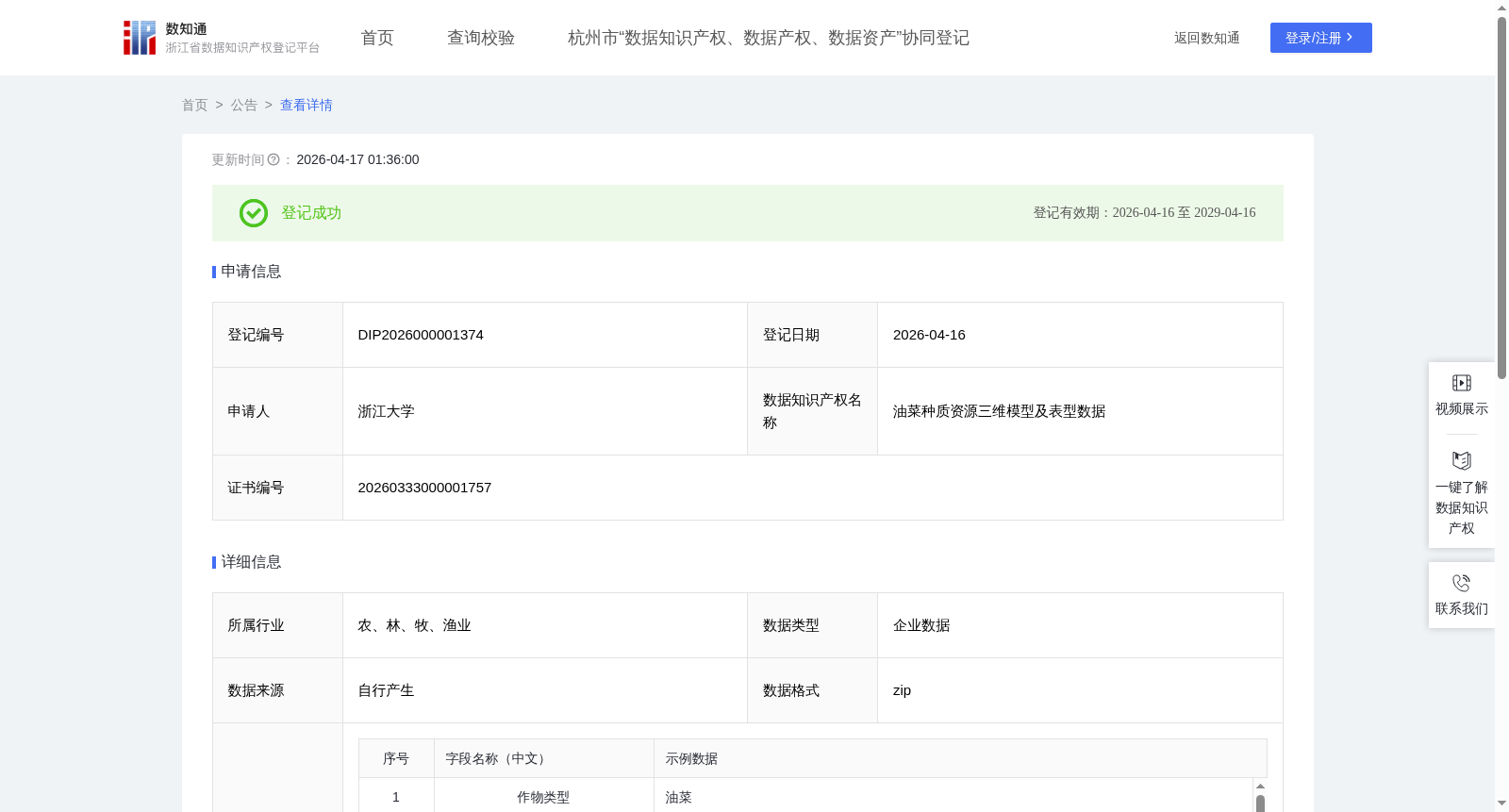
油菜种质资源三维模型及表型数据
收藏资源简介:
适用范围:适用于油菜种质资源保护与创制、遗传分析、作物育种、作物表型组学等 适用对象:高校、科研院所、种业及智慧农业等相关企业 数据应用能解决的主要问题:通过本数据库解析的作物单株及群体三维表型信息,帮助作物育种、遗传分析、作物科学、栽培管理等获取领域高质量表型数据,支撑精准育种决策。本数据分析的核心算法规则旨在将三维点云数据转化为可指导育种的遗传见解,主要包括以下流程: 1. 三维表型智能提取: 基于点云分割与特征识别算法(如基于深度学习的器官分割、几何与形态学计量),从单株及群体三维模型中自动提取株高、分枝角度、叶面积、角果数量与空间分布、生物量估算等数十项关键农艺性状参数。 2. 表型-基因型关联分析: 将提取的高维表型数据与对应的种质基因组数据(如SNP芯片数据)结合,利用全基因组关联分析(GWAS)统计模型,定位控制重要性状(如株型结构、产量构成因子)的关键遗传位点(QTL)。 3. 育种价值预测与筛选模型: 基于历史表型与遗传数据,构建机器学习模型(如随机森林、支持向量机等),对种质的综合表现(如理想株型、抗倒伏性、潜在产量)进行预测和排序,实现优质种质资源的快速筛选。 综上,本规则通过“性状数字化解析→遗传位点定位→育种价值预测”的分析链条,将三维表型数据转化为用于品种改良的定向筛选指标和基因挖掘目标。
Scope of Application: Applicable to rapeseed germplasm resource conservation and creation, genetic analysis, crop breeding, crop phenomics, and other related fields. Target Users: Universities, scientific research institutes, seed industry enterprises, and relevant enterprises engaged in smart agriculture and other related fields. Main Problems Addressed by Data Application: The 3D phenotype information of individual plants and crop populations analyzed via this database helps researchers in crop breeding, genetic analysis, crop science, cultivation management and other fields obtain high-quality phenotypic data, supporting precise breeding decision-making. The core algorithmic rules of this data analysis are designed to convert 3D point cloud data into genetic insights that can guide breeding, which mainly includes the following processes: 1. Intelligent Extraction of 3D Phenotypes: Based on point cloud segmentation and feature recognition algorithms (such as deep learning-based organ segmentation, geometric and morphological measurements), dozens of key agronomic trait parameters including plant height, branch angle, leaf area, silique quantity and spatial distribution, biomass estimation and more can be automatically extracted from 3D models of individual plants and crop populations. 2. Phenotype-Genotype Association Analysis: Combine the extracted high-dimensional phenotypic data with corresponding germplasm genomic data (such as SNP chip data), and use genome-wide association study (GWAS) statistical models to locate key genetic loci (QTL) that control important traits such as plant architecture and yield components. 3. Breeding Value Prediction and Screening Model: Based on historical phenotypic and genetic data, construct machine learning models (such as Random Forest, Support Vector Machine, etc.) to predict and rank the comprehensive performance of germplasm (such as ideal plant architecture, lodging resistance, potential yield), thereby realizing rapid screening of high-quality germplasm resources. In summary, through the analysis chain of "trait digital analysis → genetic locus localization → breeding value prediction", this workflow transforms 3D phenotypic data into targeted screening indicators and gene mining targets for variety improvement.