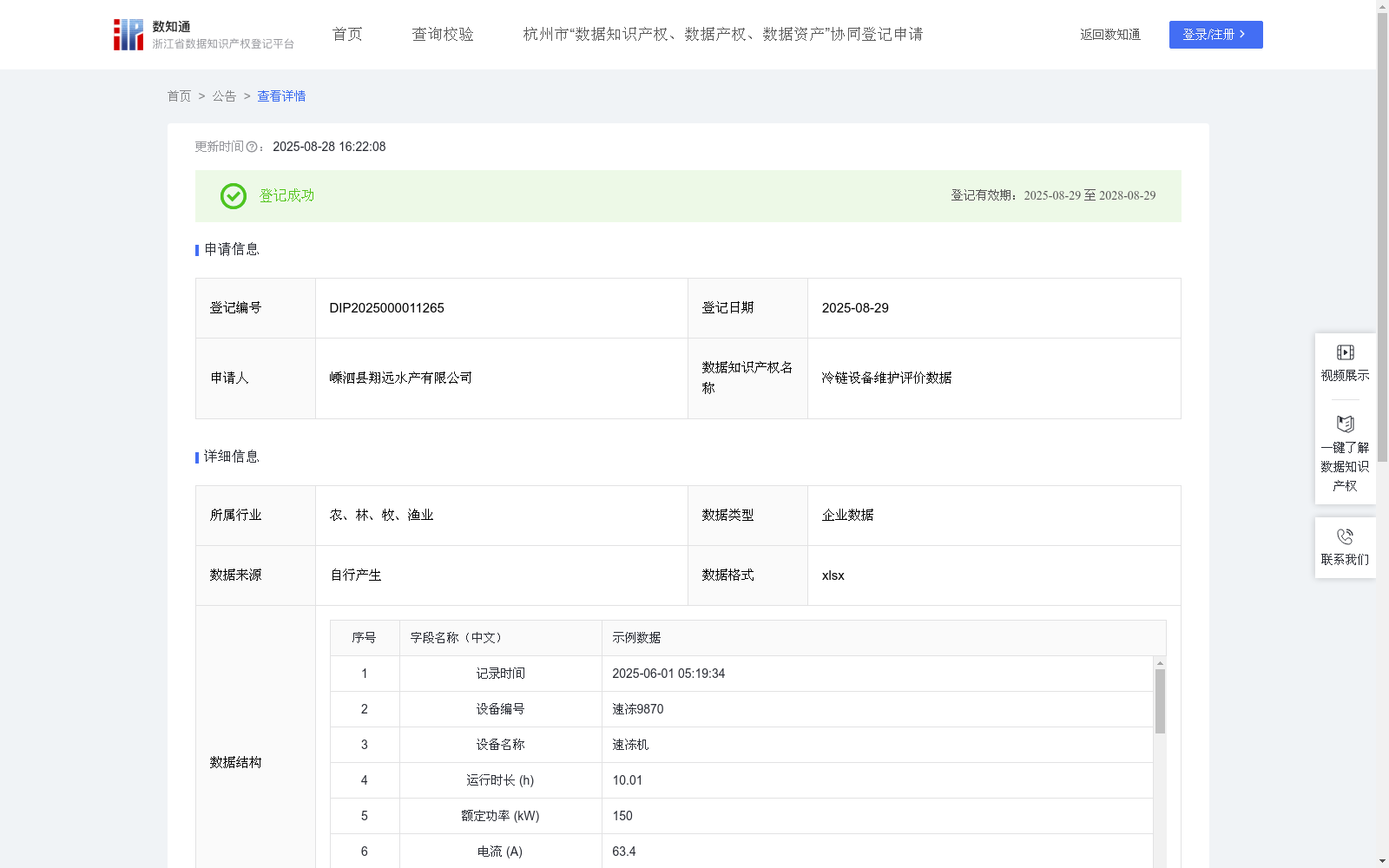
冷链设备维护评价数据
收藏资源简介:
冷链设备维护评价数据,通过系统化采集设备运行过程中的设备外壳温度 (℃)、振动值 (mm/s)、电流 (A)、电压 (V)、累计运行时间 (h)、故障次数 (次)、响应周期 (day) 等关键状态参数,并结合算法模型实时计算温度偏离度 (%)、振动严重度 (%)、维保超期度 (%)、设备老化度 (%) 和综合风险指数,企业能够实现对设备健康状况的量化评估和动态监控。数据驱动的运维机制可显著降低设备突发故障率 30%–50%,减少因冷链中断造成的货品损失,同时优化整体维保资源配置,降低运维成本 15%–25%,并有效延长关键设备的生命周期。基于上述标准化健康评估模型所形成的高质量设备风险档案与历史运行数据,不仅可为企业制定更科学的维保策略和资产配置方案,设备制造商可基于大数据分析优化产品结构、迭代设计方案,并打造更精准的远程维保与服务订阅模式;第三方运维机构可利用该数据实现服务定价、资源调度和绩效管控的数字化升级。一、数据获取 冷链系统相关设备维护评价系统所采集的关键数据字段包括:设备编号、设备外壳温度 (℃)、振动值 (mm/s)、温度正常上限 (℃)、温度危险阈值 (℃)、振动危险阈值 (mm/s)、距上次维护时间 (day)、建议维护周期 (day)、累计运行时间 (h)、设计累计运行寿命 (h)、故障次数 (次)。 这些数据通过智能监测系统实时采集,支持设备运行状态评估、故障预警及维护决策优化。。 二、核心风险指标计算 1、温度偏离度 (%):温度偏离度 = MAX(0,(设备外壳温度 (℃) − 温度正常上限 (℃))÷(温度危险阈值 (℃) − 温度正常上限 (℃))× 100; 2、振动严重度 (%):振动严重度 =(振动值 (mm/s) ÷ 振动危险阈值 (mm/s))² × 100; 3、维保超期度 (%):维保超期度 = MAX(0,(距上次维护时间 (day) − 建议维护周期 (day))÷ 建议维护周期 (day) × 100; 4、设备老化度 (%):设备老化度 =(累计运行时间 (h) ÷ 设计累计运行寿命 (h))×(1 + 故障次数 (次) × 0.5)× 100; 5、综合风险指数:综合风险指数 = 振动严重度 × 0.4 + 温度偏离度 × 0.3 + 维保超期度 × 0.2 + 设备老化度 × 0.1。 三、维护等级评定 综合风险指数 ≤ 20:一级 - 状态健康 综合风险指数 > 20 且 ≤ 40:二级 - 需要关注 综合风险指数 > 40 且 ≤ 70:三级 - 预警状态 综合风险指数 > 70:四级 - 高危状态。
Cold chain equipment maintenance evaluation data. By systematically collecting key operating status parameters during equipment operation, including equipment shell temperature (℃), vibration value (mm/s), current (A), voltage (V), cumulative operating time (h), number of faults (times), response cycle (day), and other critical metrics, and leveraging algorithmic models to calculate temperature deviation (%), vibration severity (%), maintenance overdue degree (%), equipment aging degree (%), and comprehensive risk index in real time, enterprises can achieve quantitative evaluation and dynamic monitoring of equipment health conditions. The data-driven operation and maintenance mechanism can significantly reduce the sudden equipment failure rate by 30%–50%, mitigate cargo losses caused by cold chain disruptions, optimize overall maintenance resource allocation, cut operation and maintenance costs by 15%–25%, and effectively extend the service lifecycle of key equipment. High-quality equipment risk profiles and historical operational data derived from the aforementioned standardized health assessment model can not only help enterprises formulate more scientific maintenance strategies and asset allocation plans, but also enable equipment manufacturers to optimize product structures, iterate design schemes, and develop more precise remote maintenance and service subscription models via big data analysis. Third-party operation and maintenance institutions can use this data to realize the digital upgrading of service pricing, resource scheduling, and performance management and control. 1. Data Acquisition The key data fields collected by the cold chain system-related equipment maintenance evaluation system include: equipment number, equipment shell temperature (℃), vibration value (mm/s), normal upper temperature limit (℃), temperature danger threshold (℃), vibration danger threshold (mm/s), time since last maintenance (day), recommended maintenance cycle (day), cumulative operating time (h), designed cumulative operating lifespan (h), and number of faults (times). This data is collected in real time through an intelligent monitoring system, supporting equipment operating status assessment, fault early warning, and maintenance decision optimization. 2. Core Risk Index Calculation 1. Temperature Deviation (%): Temperature Deviation = MAX(0, (Equipment Shell Temperature (℃) − Normal Upper Temperature Limit (℃)) / (Temperature Danger Threshold (℃) − Normal Upper Temperature Limit (℃)) × 100); 2. Vibration Severity (%): Vibration Severity = (Vibration Value (mm/s) / Vibration Danger Threshold (mm/s))^2 × 100; 3. Maintenance Overdue Degree (%): Maintenance Overdue Degree = MAX(0, (Time Since Last Maintenance (day) − Recommended Maintenance Cycle (day)) / Recommended Maintenance Cycle (day) × 100); 4. Equipment Aging Degree (%): Equipment Aging Degree = (Cumulative Operating Time (h) / Designed Cumulative Operating Lifespan (h)) × (1 + Number of Faults (times) × 0.5) × 100; 5. Comprehensive Risk Index: Comprehensive Risk Index = Vibration Severity × 0.4 + Temperature Deviation × 0.3 + Maintenance Overdue Degree × 0.2 + Equipment Aging Degree × 0.1. 3. Maintenance Level Assessment - Comprehensive Risk Index ≤ 20: Level 1 - Healthy Status - Comprehensive Risk Index > 20 and ≤ 40: Level 2 - Requires Attention - Comprehensive Risk Index > 40 and ≤ 70: Level 3 - Early Warning Status - Comprehensive Risk Index > 70: Level 4 - High-Risk Status.