
长沙市开福区低速电动车换电柜节能减排分析数据
收藏浙江省数据知识产权登记平台2024-12-31 更新2025-01-01 收录
下载链接:
https://www.zjip.org.cn/home/announce/trends/109599
下载链接
链接失效反馈官方服务:
资源简介:
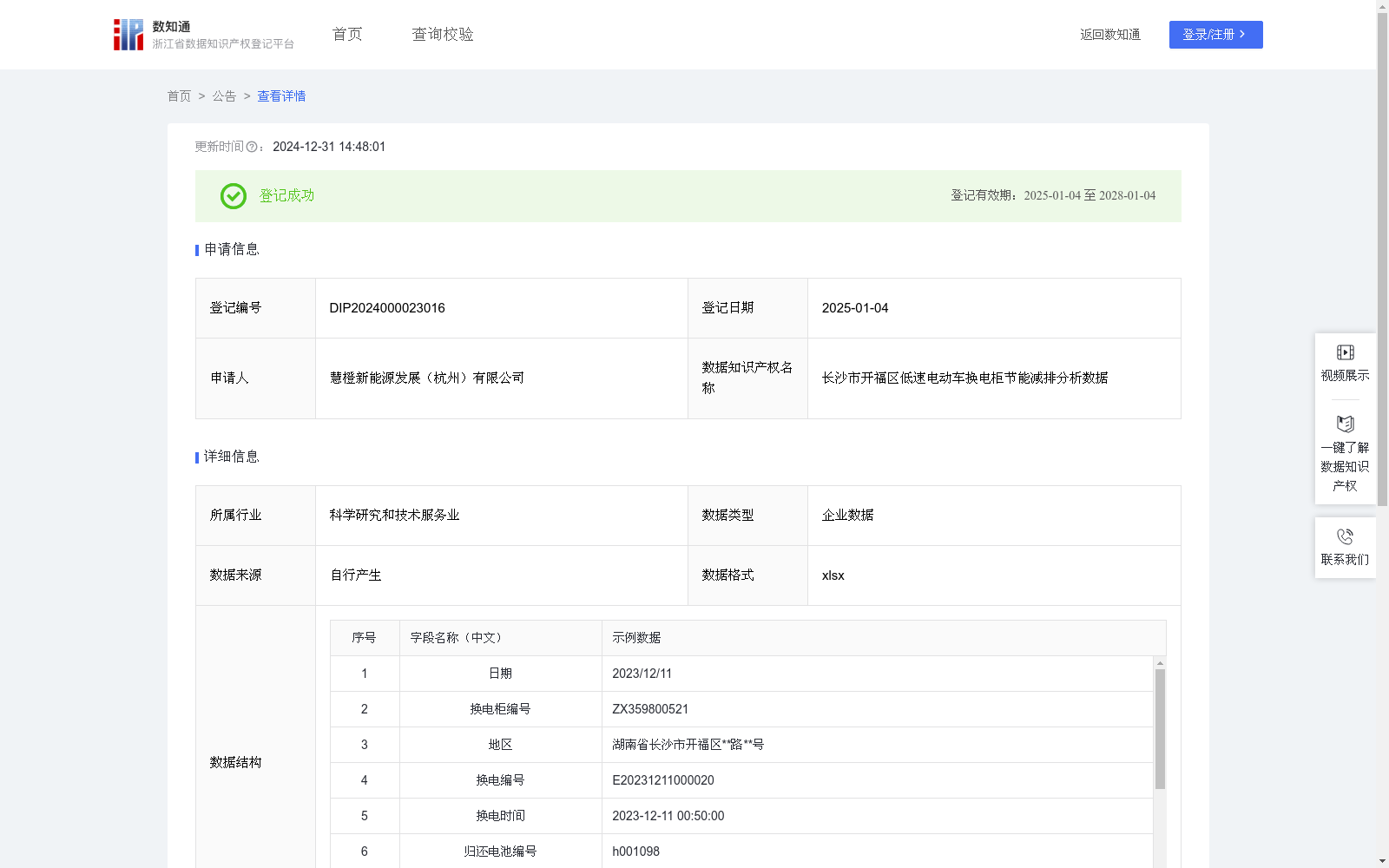
长沙市开福区低速电动车换电柜节能减排分析数据主要记录换电柜的日期、区域、耗电量、行驶里程等运营信息,并通过对比电动车与传统交通工具的碳排放数据,直观展示节能减排效果。这些数据不仅能帮助企业优化换电柜布局、改进服务设计、提升用户体验,还能展示企业在可持续发展领域的努力成果,获取政策支持和社会认可。同时,数据分析结果可为智慧城市的能源管理和新能源交通规划提供重要参考。通过长期积累的节能减排数据,企业可以向社会展示其在可持续发展领域的努力和成效,增强品牌的绿色形象。此外,该分析数据具有良好的推广价值,可应用于物流、外卖、共享出行等领域,帮助相关行业通过低速电动车实现节能减排目标,支持碳中和战略的实施。一、数据采集与隐私处理: 1)数据来源:数据统一存储和管理于杭州慧橙新能源发展有限公司总平台系统,长沙市开福区运营数据作为子系统接入总平台进行统一管理; 2)基础采集字段:日期、换电柜编号、换电时间、换电编号、地区、归还电池编号、原始电量、归还电量、行驶里程等; 3)数据脱敏处理:保留省市区,具体路名和门牌号以*代替。
一、算法模型构建:
1、耗电量(kWh) = 原始电量 - 归还电量;
2、行驶里程(km):基于电池管理系统采集;
3、电动车碳排放(kg) = 耗电量(kWh) × 电网碳排放因子,其中电网碳排放因子:0.8547 kg CO2/kWh;
4、传统车碳排放(kg) = 行驶里程(km) × 传统车碳排放因子,其中传统车碳排放因子:0.23 kg CO2/km;
5、碳减排量(kg) = 传统车碳排放(kg) - 电动车碳排放(kg)。
The energy conservation and emission reduction analysis data of low-speed electric vehicle battery swap cabinets in Kaifu District, Changsha mainly records operational information such as the date, region, power consumption, and driving mileage of the battery swap cabinets. By comparing the carbon emission data of electric vehicles and traditional transportation tools, it intuitively demonstrates the effects of energy conservation and emission reduction. This data can not only help enterprises optimize the layout of battery swap cabinets, improve service design and enhance user experience, but also showcase the enterprises' efforts and achievements in the field of sustainable development to obtain policy support and social recognition. Meanwhile, the analysis results can provide important references for energy management of smart cities and new energy transportation planning. Through long-term accumulated energy conservation and emission reduction data, enterprises can demonstrate their efforts and effects in the field of sustainable development to the public, enhancing the brand's green image. In addition, this analysis data has good promotion value, and can be applied to logistics, food delivery, shared travel and other fields, helping relevant industries achieve energy conservation and emission reduction targets through low-speed electric vehicles and supporting the implementation of the carbon neutrality strategy.
1. Data Collection and Privacy Processing:
1) Data Source: All data is uniformly stored and managed on the general platform system of Hangzhou Huicheng New Energy Development Co., Ltd., and the operational data of Kaifu District, Changsha is connected to the general platform as a subsystem for unified management;
2) Basic Collection Fields: Date, battery swap cabinet number, battery swap time, battery swap number, region, returned battery number, original battery power, returned battery power, driving mileage, etc.;
3) Data Desensitization Processing: Provinces, cities and districts are retained, while specific road names and house numbers are replaced with *.
2. Algorithm Model Construction:
1) Power consumption (kWh) = Original battery power - Returned battery power;
2) Driving mileage (km): Collected via the Battery Management System (BMS);
3) Electric vehicle carbon emissions (kg) = Power consumption (kWh) × Grid carbon emission factor, where the grid carbon emission factor is 0.8547 kg CO₂/kWh;
4) Traditional vehicle carbon emissions (kg) = Driving mileage (km) × Traditional vehicle carbon emission factor, where the traditional vehicle carbon emission factor is 0.23 kg CO₂/km;
5) Carbon emission reduction (kg) = Traditional vehicle carbon emissions (kg) - Electric vehicle carbon emissions (kg).
提供机构:
浙江慧橙云能科技有限公司
创建时间:
2024-12-12
搜集汇总
数据集介绍
以上内容由遇见数据集搜集并总结生成


