Creativity and Innovation
收藏资源简介:
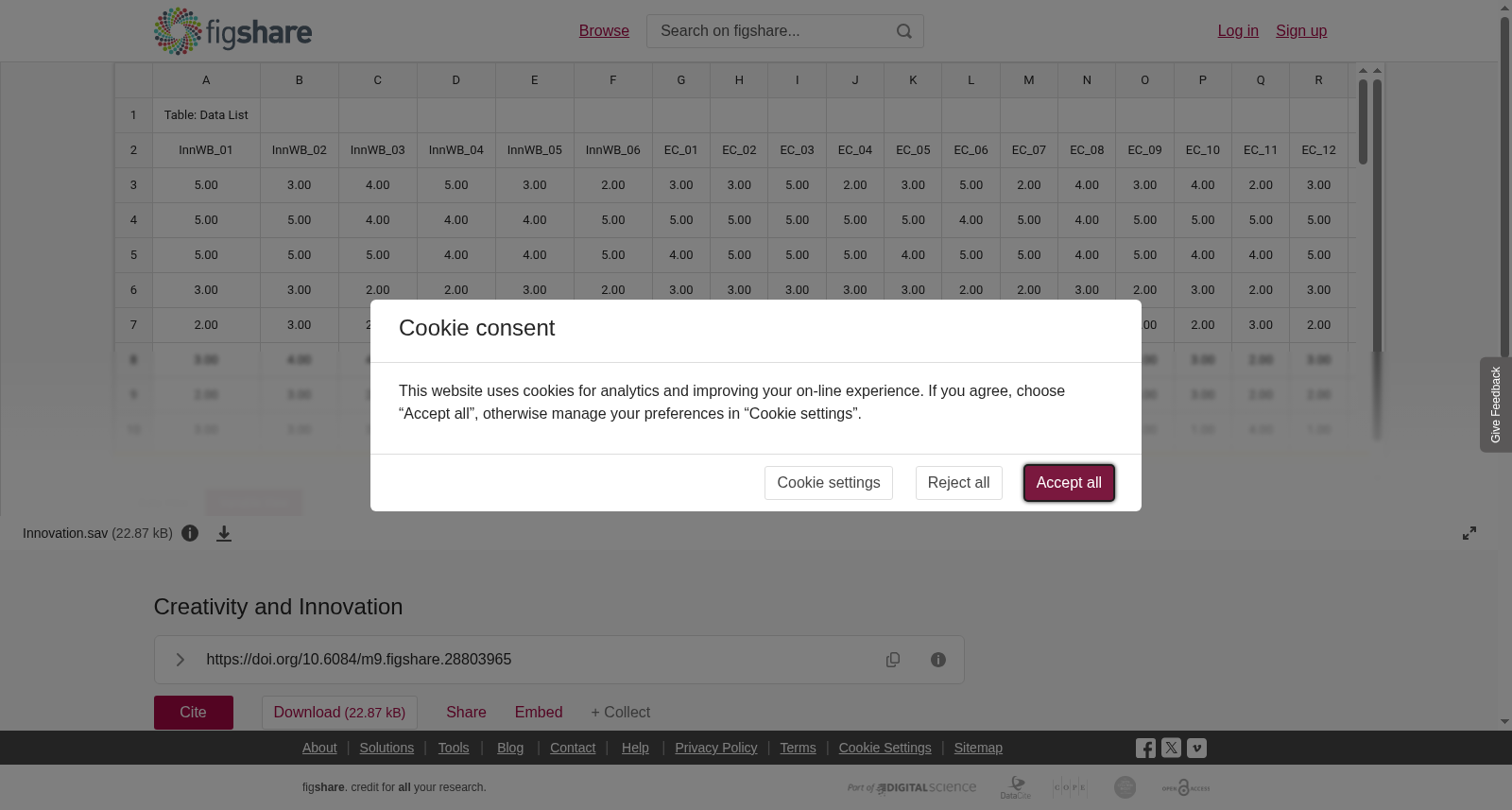
In the current competitive climate, higher education institutions (HEIs) must embrace innovation to flourish and grow. The active participation of academic staff is crucial for innovation to occur. Therefore, examining personal attributes such as employee resilience and emotional intelligence, along with workplace factors like job autonomy, is vital. These elements contribute to innovative practices and, subsequently, academic excellence. The research suggests that employee creativity serves as a mediating factor, linking these elements to innovation, and represents another significant influence in the process. This study extends previous studies by utilizing a structural equation model to examine various influences collectively. Data were gathered from 307 academic staff members at federal and state universities in South-Western Nigeria. The proposed hypotheses were empirically tested using SmartPLS4. Results indicated that employee resilience, emotional intelligence, and job autonomy had significant positive direct effects on employee innovation. Furthermore, the analysis of mediating effects revealed that employee resilience and job autonomy indirectly enhanced employee innovation through employee creativity. These insights provide universities with a strategic approach to boost faculty innovation. Limitations of the study and directions for further research are also stated.
在当前竞争激烈的大环境下,高等教育机构(Higher Education Institutions, HEIs)必须拥抱创新以实现繁荣发展。学术人员的积极参与是创新得以落地的核心前提。因此,探析员工韧性、情绪智力等个人特质,以及工作自主性这类职场因素,具有重要意义。上述要素均有助于创新实践的推进,进而助力学术卓越目标的达成。本研究提出,员工创造力作为中介变量,可将前述要素与创新行为相联结,同时也是该过程中的另一关键影响因素。本研究采用结构方程模型(Structural Equation Model, SEM)对各类影响因素进行综合考察,以此拓展了以往相关研究的范畴。研究数据采集自尼日利亚西南部联邦及州立大学的307名学术人员,通过SmartPLS4对所提出的研究假设开展实证检验。结果表明,员工韧性、情绪智力与工作自主性均对员工创新行为存在显著的正向直接影响。此外,中介效应分析结果显示,员工韧性与工作自主性可通过员工创造力这一中介路径,间接提升员工的创新行为水平。上述研究结论可为高校提供提升教师创新能力的战略方案。本研究同时阐明了研究局限与未来研究方向。