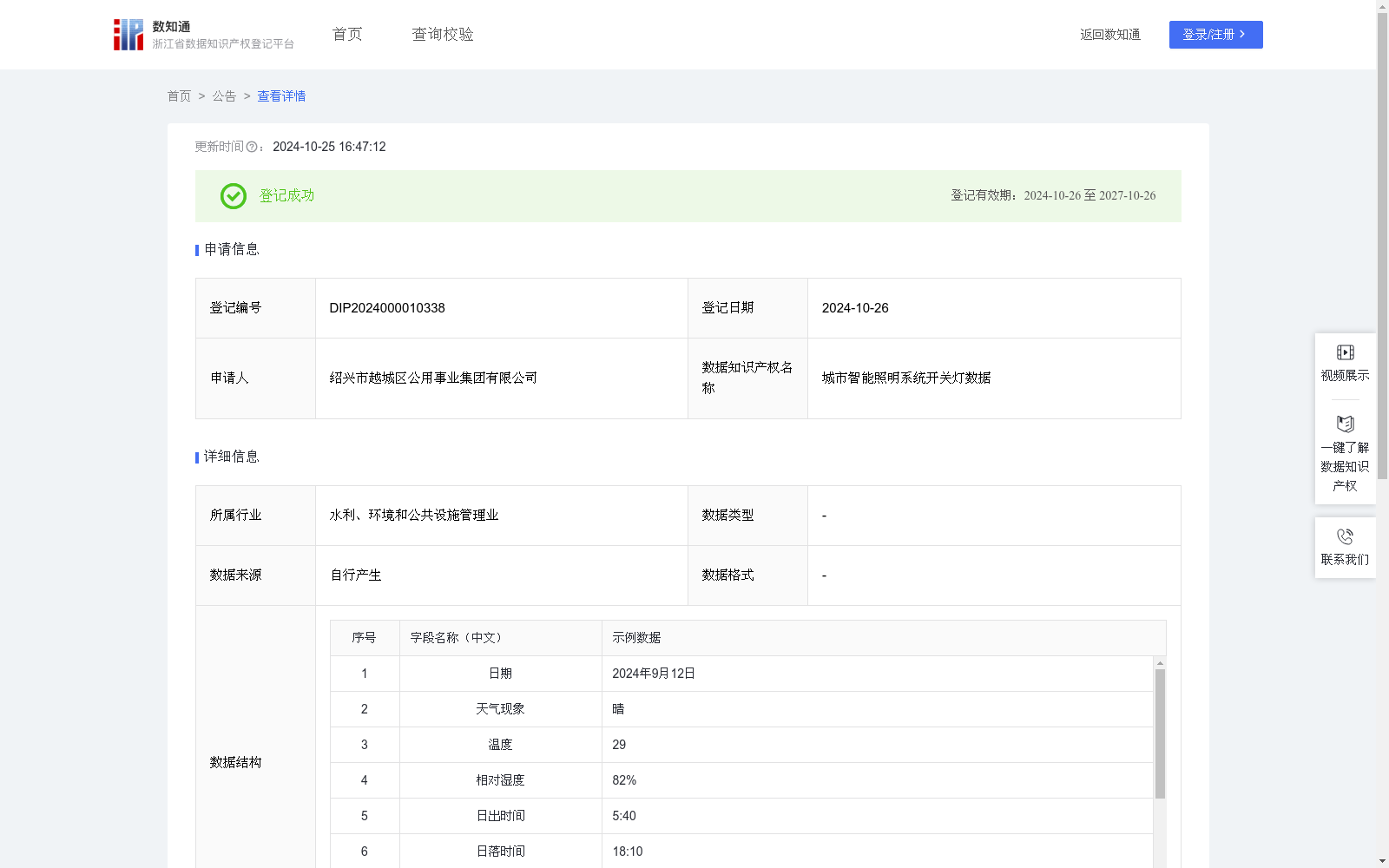
城市智能照明系统开关灯数据
收藏资源简介:
随着城市化的发展,城市照明系统作为城市基础设施的重要组成部分,其智能化管理变得尤为重要。通过精准预测开关灯时间,不仅能够提高能源效率,还能提升市民的生活质量,减少光污染。 一、提升能源效率,减少浪费 基于天气现象、湿度、温度等多维度数据,结合太阳高度角和光照亮度预测模型,可以实现智能化的照明开关控制。例如,当预测到某天早晨光照亮度达到30 lx时,自动关闭城市道路照明;当晚间光照亮度低于100 lx时,提前开启路灯。通过这种动态调整开关灯时间的方法,可以避免过早或过晚开启照明设备,减少能源浪费。 二、提升市民生活质量 通过对天气状况和光照条件的实时分析,系统可以在多云、雨天等光线较差的情况下适当延长照明时间,确保行人和车辆的安全。同时,系统还可以根据不同的城市区域和时段,智能调节照明亮度,避免过度照明引起的光污染,提升居住环境的舒适度。 三、辅助城市管理 结合智能照明系统的开关灯预测数据,城市管理者可以对照明设备的能耗和运行情况进行实时监控和调度,实现更加高效的城市管理。1. 预测关灯时间的计算:预测关灯时间需确保光照亮度达到 30lx 时关灯。通过光照强度公式,设定阈值为 30lx,结合天气、温度和湿度计算出达到该亮度的时间点: I(t)=Io⋅cos(θ)⋅天气现象修正因子⋅湿度修正因子⋅温度修正因子=30,解出t1,即预测关灯时间。 2. 预测开灯时间的计算: 预测开灯时间需确保光照亮度降至 100lx 时开灯。通过光照强度公式,设定阈值为 100lx,结合天气、温度和湿度计算出达到该亮度的时间点: I(t)=Io⋅cos(θ)⋅天气现象修正因子⋅湿度修正因子⋅温度修正因子=100,解出 t2,即预测开灯时间。 3.关灯时间预测差值 关灯时间预测差值为预测关灯时间与实际关灯时间tc(场地光照亮度计达到30lx手动关灯的时间)。t3=t1-tc 4.开灯时间预测差值 开灯时间预测差值为预测开灯时间与实际开灯时间tc(场地光照亮度计达到100lx手动关灯的时间)。t4=t2-to
With the advancement of urbanization, intelligent management of urban lighting systems, which are an important component of urban infrastructure, has become particularly critical. Accurate prediction of lighting on/off times not only improves energy efficiency but also enhances citizens' quality of life and reduces light pollution. I. Enhancing Energy Efficiency and Reducing Waste Based on multi-dimensional data such as weather conditions, humidity, and temperature, combined with solar elevation angle and illuminance prediction models, intelligent lighting on/off control can be realized. For example, the urban road lighting system will automatically shut down when the illuminance is predicted to reach 30 lx in the morning; while it will activate streetlights in advance when the evening illuminance drops below 100 lx. This method of dynamically adjusting lighting on/off times avoids turning on lighting equipment too early or too late, thereby reducing energy waste. II. Improving Citizens' Quality of Life Through real-time analysis of weather conditions and illuminance, the system can appropriately extend lighting duration in poor lighting scenarios such as cloudy or rainy days, ensuring the safety of pedestrians and vehicles. Additionally, the system can intelligently adjust lighting brightness based on different urban zones and time periods, avoiding light pollution caused by over-illumination and enhancing the comfort of living environments. III. Supporting Urban Management Combined with the lighting on/off time prediction data from the intelligent lighting system, urban managers can monitor and dispatch the energy consumption and operation status of lighting equipment in real time, enabling more efficient urban management. 1. Calculation of Predicted Lights-Off Time The predicted lights-off time is determined when the illuminance reaches 30 lx. Using the illuminance intensity formula, set the threshold to 30 lx, and calculate the time point when this illuminance is reached by combining weather, temperature, and humidity factors: I(t)=Io⋅cos(θ)⋅Weather Correction Factor⋅Humidity Correction Factor⋅Temperature Correction Factor=30, solve for t1, which is the predicted lights-off time. 2. Calculation of Predicted Lights-On Time The predicted lights-on time is determined when the illuminance drops to 100 lx. Using the illuminance intensity formula, set the threshold to 100 lx, and calculate the time point when this illuminance is reached by combining weather, temperature, and humidity factors: I(t)=Io⋅cos(θ)⋅Weather Correction Factor⋅Humidity Correction Factor⋅Temperature Correction Factor=100, solve for t2, which is the predicted lights-on time. 3. Deviation of Predicted Lights-Off Time The deviation of predicted lights-off time is the difference between the predicted lights-off time t1 and the actual lights-off time tc (the time when the illuminance measured by the on-site illuminometer reaches 30 lx and the lights are manually turned off). t3 = t1 - tc 4. Deviation of Predicted Lights-On Time The deviation of predicted lights-on time is the difference between the predicted lights-on time t2 and the actual lights-on time tc (the time when the illuminance measured by the on-site illuminometer reaches 100 lx and the lights are manually turned off). t4 = t2 - to