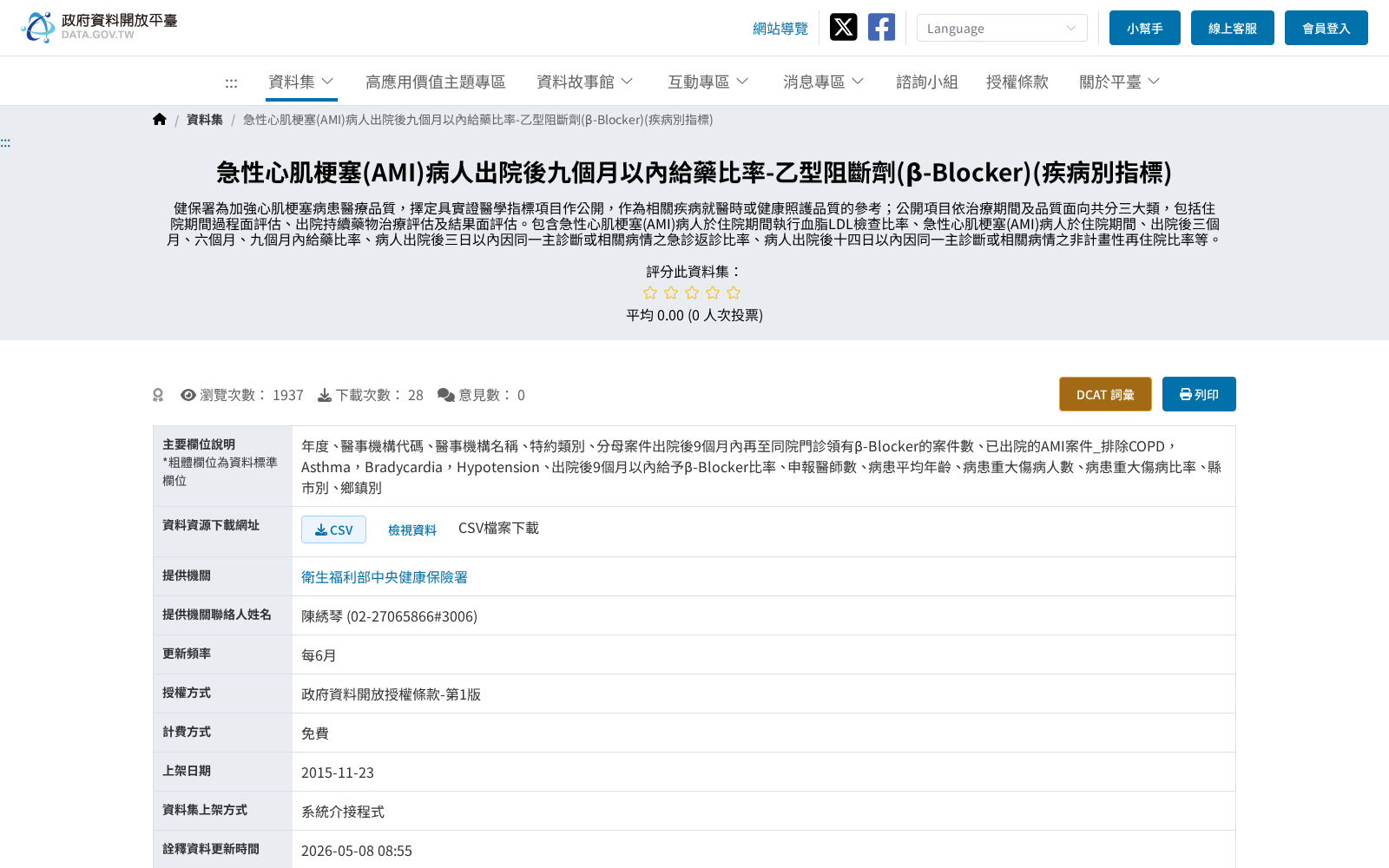
急性心肌梗塞(AMI)病人出院後九個月以內給藥比率-乙型阻斷劑(β-Blocker)(疾病別指標)
收藏资源简介:
健保署為加強心肌梗塞病患醫療品質,擇定具實證醫學指標項目作公開,作為相關疾病就醫時或健康照護品質的參考;公開項目依治療期間及品質面向共分三大類,包括住院期間過程面評估、出院持續藥物治療評估及結果面評估。包含急性心肌梗塞(AMI)病人於住院期間執行血脂LDL檢查比率、急性心肌梗塞(AMI)病人於住院期間、出院後三個月、六個月、九個月內給藥比率、病人出院後三日以內因同一主診斷或相關病情之急診返診比率、病人出院後十四日以內因同一主診斷或相關病情之非計畫性再住院比率等。
To improve the quality of medical care for patients with myocardial infarction, the National Health Insurance Administration (NHIA) of Taiwan has selected evidence-based medical indicators for public disclosure, which serve as a reference for medical treatment of related diseases and health care quality evaluation. The disclosed indicators are divided into three major categories based on treatment stages and quality dimensions: in-hospital process evaluation, post-discharge continuous medication therapy evaluation, and outcome evaluation. These indicators include: the ratio of acute myocardial infarction (AMI) patients who received serum lipid LDL testing during hospitalization; the medication administration rates for AMI patients during hospitalization, and within 3, 6, and 9 months after discharge; the rate of patients returning to the emergency department within 3 days after discharge due to the same primary diagnosis or related conditions; and the rate of unplanned readmissions within 14 days after discharge due to the same primary diagnosis or related conditions, among others.