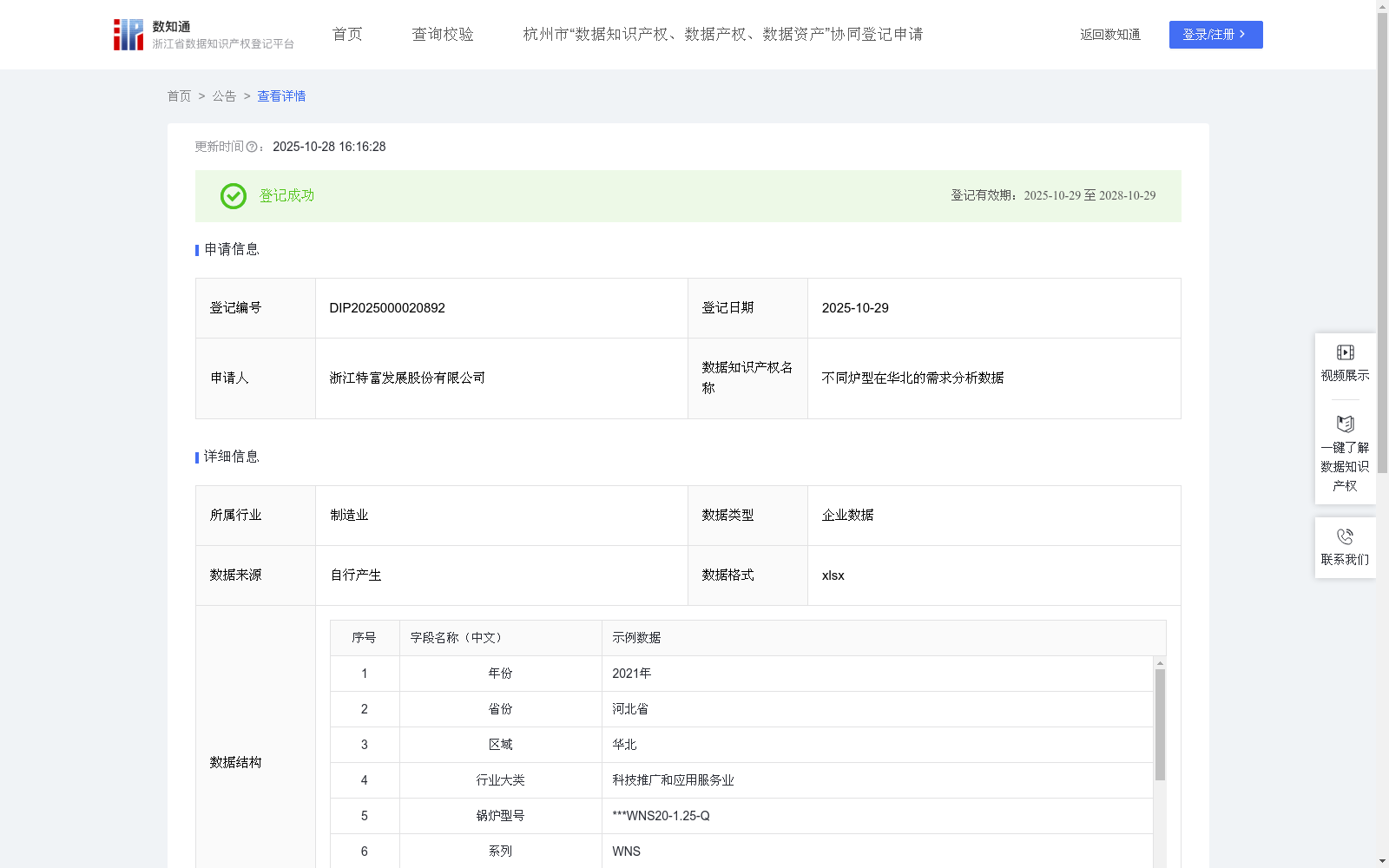
不同炉型在华北的需求分析数据
收藏资源简介:
为洞察华北地区锅炉市场需求,需结合近三年各炉型需求数量、蒸发量差异梳理发展脉络。受京津冀协同环保政策、重工业升级与冬季供暖刚需影响,当地需求呈现 “强环保约束 + 存量改造 + 民生保供” 的鲜明特征,清洁化与高效化成为核心方向。河北、山西作为钢铁、焦化产业重镇,老旧锅炉改造需求迫切:唐山钢铁园区近三年替换 200 余台 15-30t/h 循环流化床锅炉,热效率提升至 88% 以上;山西焦化企业受 “超低排放” 政策倒逼,适配清洁燃煤的 10-25t/h 锅炉采购量年均增长 16%。北京、天津环保标准严苛,低氮燃气锅炉成主流:北京通州集中供暖项目采用 30-50MW 低氮燃气热水炉,氮排≤30mg/m³;天津滨海新区电子产业园普及 6-15t/h 燃气锅炉,契合轻工业低污染需求。 内蒙古依托煤炭资源,20-40t/h 高效煤粉锅炉仍有稳定需求,但鄂尔多斯、包头等城市推进 “煤改气”,燃气锅炉采购量年增 22%;赤峰农村则用秸秆生物质炉替代散煤,年新增超百台小型机型。传统燃煤炉虽有存量,但低氮燃气炉、高效循环流化床炉的增长已明确转型路径,要求制造企业紧扣华北 “环保硬指标 + 产业改造 一:数据采集:企业CRM系统中采集近3年工业锅炉不同炉型在华北的需求数量和用热蒸发量数据。 二:算法规则:对采集得到的数据按照如下公式进行计算: 0、说明(当前锅炉型号总蒸发量=蒸发量*锅炉数量) 1、按照年份,省份进行数据透析,得出各个省份三年的总蒸发量 1、对三年的总蒸发量计算平均值x, 2、计算每个数据与平均值的绝对差, 3、计算平均绝对偏差MAD 4:计算相对平均偏差RMD 5、计算相对平均偏差RMD 三、数据分析:根据RMD的数值可分析不同炉型在东北的需求量和用热蒸发量。根据计算得出的RMD值对炉型进行分级:亮点系列(RMD≤10%),重点系列(10%<RMD≤35%),普通系列(35%<RMD≤80%),低表现系列(RMD>80%)。
To gain insights into the boiler market demand in North China, it is necessary to sort out the development trajectory by combining the demand volume and evaporation capacity differences of various boiler types over the past three years. Affected by the coordinated environmental protection policies of the Beijing-Tianjin-Hebei region, heavy industry upgrading, and rigid demand for winter heating, local demand presents distinct characteristics of "strict environmental constraints + stock retrofitting + people's livelihood security", with cleaning and efficiency upgrading as the core direction. Hebei and Shanxi, as major hubs for steel and coking industries, have urgent demand for old boiler retrofitting: over 200 15-30t/h circulating fluidized bed (CFB) boilers have been replaced in Tangshan Steel Park over the past three years, with thermal efficiency increased to over 88%; coking enterprises in Shanxi are forced by the "ultra-low emissions" policy, with the annual average growth rate of procurement volume of 10-25t/h boilers adapted to clean coal-fired reaching 16%. Beijing and Tianjin have strict environmental protection standards, making low-nitrogen gas-fired boilers the mainstream: the central heating project in Tongzhou District, Beijing adopts 30-50MW low-nitrogen gas-fired hot water boilers with nitrogen emissions ≤ 30mg/m³; the electronic industrial park in Binhai New Area, Tianjin popularizes 6-15t/h gas-fired boilers to meet the low-pollution demand of light industry. Inner Mongolia, relying on its rich coal resources, still has stable demand for 20-40t/h high-efficiency pulverized coal boilers, but cities such as Ordos and Baotou are promoting coal-to-gas transformation, with the annual growth rate of gas-fired boiler procurement reaching 22%; straw biomass boilers are used to replace bulk coal in rural Chifeng, with over 100 small-sized models added annually. Although traditional coal-fired boilers still have stock demand, the growth of low-nitrogen gas-fired boilers and high-efficiency CFB boilers has clarified the transformation path, requiring boiler manufacturing enterprises to closely align with North China's "strict environmental protection indicators + industrial transformation". ## I. Data Collection Collect data on the demand volume and heat supply evaporation capacity of different types of industrial boilers in North China over the past three years from the enterprise's CRM system. ## II. Algorithm Rules Calculate the collected data according to the following procedures and formulas: 0. Note: Total evaporation capacity of a single boiler model = evaporation capacity × number of boilers 1. Conduct data drill-down by year and province to obtain the total evaporation capacity of each province over the three-year period 1. Calculate the average value x of the three-year total evaporation capacities 2. Calculate the absolute difference between each data point and the average value x 3. Calculate the mean absolute deviation (MAD) 4. Calculate the relative mean deviation (RMD) 5. Calculate the relative mean deviation (RMD) ## III. Data Analysis Analyze the demand volume and heat supply evaporation capacity of different boiler types in Northeast China based on the calculated RMD values, and grade the boiler types as follows: - Highlight Series (RMD ≤ 10%) - Key Series (10% < RMD ≤ 35%) - General Series (35% < RMD ≤ 80%) - Low-performance Series (RMD > 80%)