印花棉布图像AI训练数据
收藏资源简介:
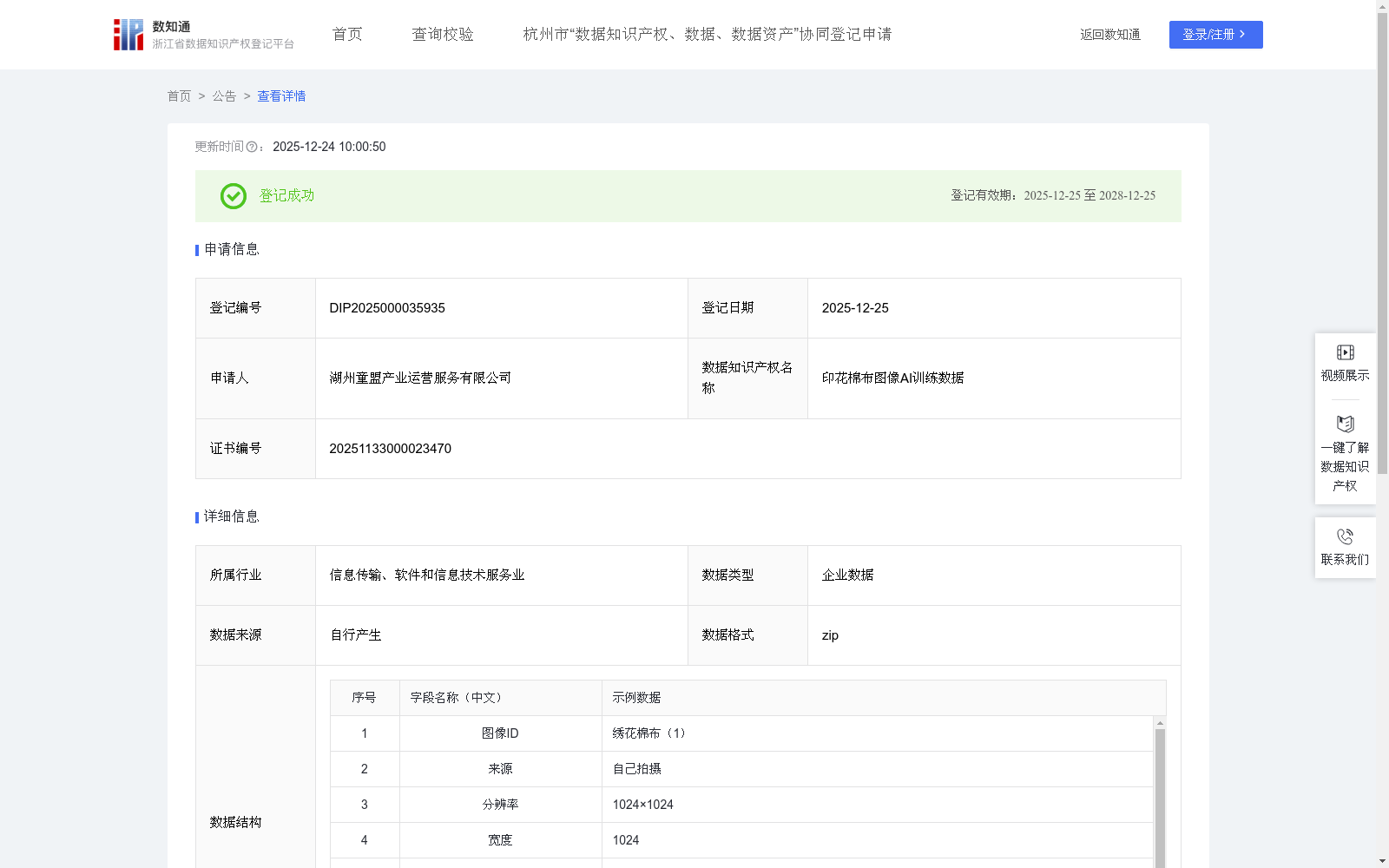
通过数据处理和数据加工流程,印花棉布图像AI训练数据被转化为高质量、高标注准确性的训练集。这些数据可提供给AI模型进行训练,帮助模型深入学习并理解不同印花棉布图像的风格特征,包括面料的款式设计、色彩搭配、图案元素、面料纹理等。经过训练的AI模型能够更准确地识别、分类和生成各种印花棉布图像。对于大数据公司通过数据标注、数据清洗、数据分析等服务,可以更好地利用数据资源,开发针对纺织行业的特定应用;训练生成的模型,可辅助设计师更好的进行面料花型设计,节省时间,帮助设计师提升设计方案的质量;生成的图像可用于赋能纺织产业的生产,降低企业在服装设计上的时间成本和人力成本,节省开支。 1.数据采集:原始图像数据来源于自行拍摄生成,记录每张图像的图像ID。2.图像预处理:对图像进行预处理,包括图像缩放、裁剪、去噪,调整分辨率等操作,以统一数据格式,确保图像质量适合后续处理。记录预处理后的图片文件名。3.模型训练:使用深度学习框架PyTorch,采用经本地化部署的 Stable Diffusion 图像识别模型,底层算法采用扩散算法,按“类型+颜色+材质+纹理+设计特征”的逻辑整合,生成结构化提示词,在AI生成的提示词中,增加系统标识以“【AI生成】”作为前缀,标识程度为轻量级、非侵入式显示,不影响提示词语义结构与可读性。抽取部分提示词进行人工校验,确保符合要求,再依据该提示词对预处理后的面料图片进行对应描述识别,精准匹配各属性维度,把这些描述信息总结为适合Stable Diffusion模型训练和使用的提示词格式。将识别结果与原始图像数据进行关联,形成一个包含图像ID、预处理后的图像路径和识别结果的记录。
Through data processing and refinement workflows, the AI training dataset for printed cotton fabric images is transformed into a high-quality training set with high annotation accuracy. These datasets can be provided for AI model training, enabling models to deeply learn and understand the stylistic features of various printed cotton fabric images, including fabric design styles, color matching, pattern elements, fabric texture, and more. The trained AI models can more accurately recognize, classify, and generate various printed cotton fabric images. For big data companies, through services such as data annotation, data cleaning, and data analysis, they can better utilize data resources to develop specific applications targeting the textile industry. The trained models can assist designers in fabric pattern design more effectively, saving time and improving the quality of their design proposals. The generated images can empower production in the textile industry, reducing the time and labor costs of enterprise clothing design and cutting down expenses. 1. Data Collection: The original image data is generated via self-shooting, and the image ID of each image is recorded. 2. Image Preprocessing: Preprocessing operations are performed on the images, including image scaling, cropping, denoising, resolution adjustment, etc., to unify the data format and ensure the image quality is suitable for subsequent processing. The file names of the preprocessed images are recorded. 3. Model Training: Using the PyTorch deep learning framework, a locally deployed Stable Diffusion image recognition model is adopted, with the underlying algorithm being the diffusion algorithm. Structured prompts are generated by integrating according to the logic of "type + color + material + texture + design features". A system identifier with the prefix 【AI Generated】 is added to the AI-generated prompts, which is displayed in a lightweight and non-intrusive manner without affecting the semantic structure and readability of the prompts. Some of the prompts are randomly sampled for manual verification to ensure they meet the specified requirements. Then, the preprocessed fabric images are correspondingly described and recognized based on these prompts, accurately matching each attribute dimension, and these description contents are summarized into a prompt format suitable for the training and deployment of the Stable Diffusion model. The obtained recognition results are associated with the original image data to form a record containing the image ID, preprocessed image path, and recognition results.