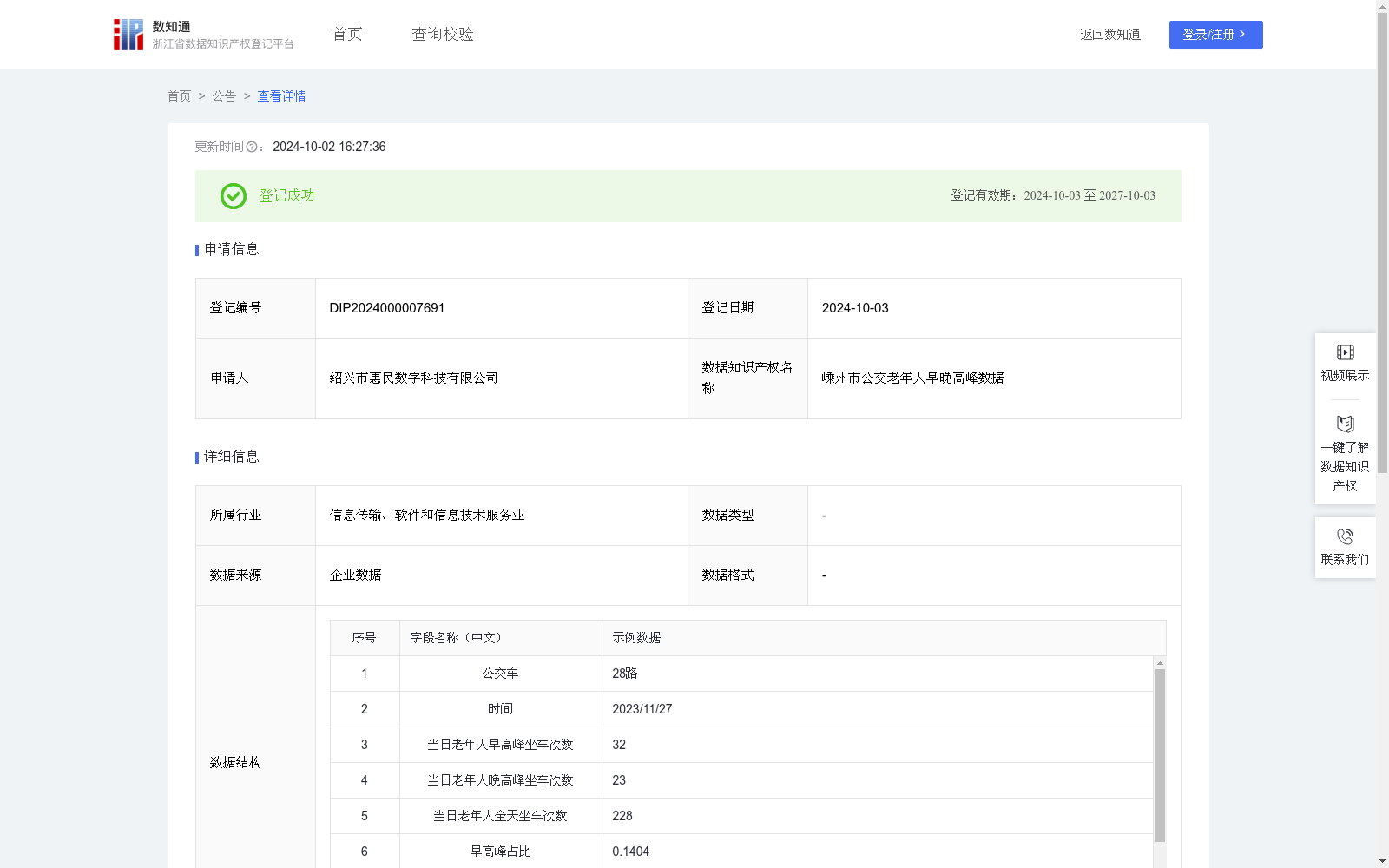
嵊州市公交老年人早晚高峰数据
收藏资源简介:
用来评估嵊州市老年人出行需求和交通政策的影响。首先,通过了解早高峰老年人坐车的比例,可以评估老年人的出行需求和偏好。例如,如果老年人在早高峰期间乘坐公交的比例较高,这可能表明老年人有较多的日常活动安排在早上,如购物、参加社交活动等。这样的数据有助于城市规划者更好地理解老年人的日常活动模式,从而优化公共交通服务,满足他们的出行需求。其次,通过比较不同时间段老年人的出行比例,可以分析交通政策对老年人出行的影响。例如,如果发现取消老年公交卡后,早高峰期间车内拥挤不堪,这可能说明免费公交政策对缓解老年人出行困难有所帮助,同时也反映了在制定交通政策时应考虑到老年人的特殊需求。此外,老年人出行特征的数据还可以用于评估城市公共服务设施的布局和功能。例如,老年群体出行目的以满足生活、文化和情感需求为主,这样的数据可以指导城市在规划老年大学、健身场所等公共服务设施时,更加注重其位置和功能的合理性,以满足老年人的实际需求。给交通政策的调整提供依据。根据早晚高峰不均衡数值,调整运营策略,如在早高峰期间车载电视投送针对老年人的广告。1.数据采集:通过线网分析平台,采集当日分时老年人的乘车数据 2.数据处理:统计当日早高峰和晚高峰的老年人乘车次数,并统计当日老年人的全部乘车次数。早高峰占比=当日老年人早高峰坐车次数/当日老年人全天坐车次数。晚高峰占比=当日老年人晚高峰坐车次数/当日老年人全天坐车次数。早晚高峰占比=早高峰占比+晚高峰占比。 早晚高峰不均衡数值=早高峰占比/晚高峰占比。
This dataset is designed to evaluate the travel demand of elderly residents in Shengzhou City and the impacts of local transportation policies. First, understanding the proportion of elderly people taking buses during morning peak hours can help assess their travel demand and preferences. For example, a high share of elderly bus riders during morning peak hours may indicate that the elderly have numerous daily activities arranged in the morning, such as shopping, participating in social activities, and other daily affairs. Such data assists urban planners in better understanding the daily activity patterns of the elderly, thereby optimizing public transportation services to meet their travel needs. Second, comparing the travel proportions of the elderly across different time periods can analyze the impact of transportation policies on their travel. For instance, if severe overcrowding is observed on buses during morning peak hours after the cancellation of senior citizen bus passes, this may suggest that the free public transportation policy has helped alleviate travel difficulties for the elderly, and also reflects that the special needs of the elderly should be considered when formulating transportation policies. Furthermore, data on the travel characteristics of the elderly can also be used to evaluate the layout and functionality of urban public service facilities. For example, the travel purposes of the elderly mainly focus on meeting daily living, cultural, and emotional needs. Such data can guide urban planning for public service facilities such as senior universities and fitness venues, paying more attention to the rationality of their locations and functions to meet the actual needs of the elderly, and providing a basis for adjusting transportation policies. Operational strategies can be adjusted based on the peak-hour imbalance value—for example, delivering targeted advertisements for the elderly on in-vehicle televisions during morning peak hours. 1. Data Collection: Collect time-segmented bus riding data of elderly residents on the current day via the urban transit network analysis platform. 2. Data Processing: Count the number of bus rides by elderly residents during the morning and evening peak hours on the current day, as well as their total bus rides for the entire day. - Morning peak proportion = Number of elderly bus rides during morning peak hours / Total number of elderly bus rides on the current day - Evening peak proportion = Number of elderly bus rides during evening peak hours / Total number of elderly bus rides on the current day - Total peak-hour proportion = Morning peak proportion + Evening peak proportion - Peak-hour imbalance value = Morning peak proportion / Evening peak proportion