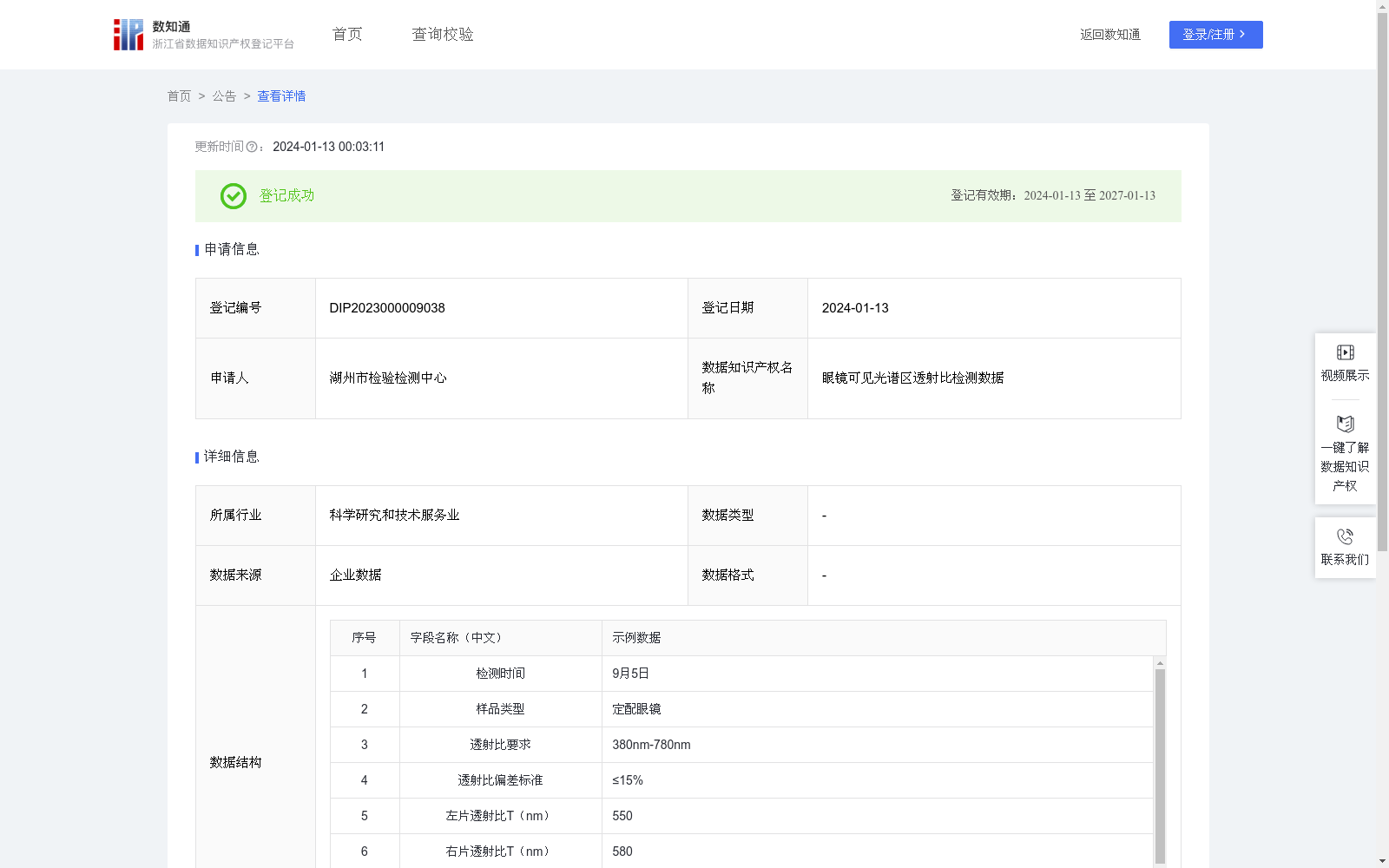
眼镜可见光谱区透射比检测数据
收藏资源简介:
眼镜的透射比是评价眼镜质量的一项重要指标,代表着眼镜的透光率,透射比越大,意味着眼镜的透光率越高,质量越好,对眼镜的透射比进行检测,计算左右镜片透射比的相对偏差,可以帮助企业把控质量关卡、提高生产工艺,为政府质量监管和消费者选择提供参考依据。1、数据采集:对眼镜左右镜片的透射比进行检测并记录实测数据,2、数据处理:根据透射比,计算该样本左右镜片的透射比相对偏差,相对偏差=|左片透射比-右片透射比|/左右镜片透射比的最大值,通过透射比实测值及向度偏差来判断该眼镜产品的质量,3、将相对偏差与国家标准进行对比,判断眼镜质量是否合格,为企业把控质量关卡、改进生产工艺提供参考,为政府质量监管和消费者选择提供依据。
The transmittance of eyeglasses is a critical quality indicator, representing the light transmission performance of the lenses. A higher transmittance value corresponds to better light transmittance and superior product quality. Detecting the transmittance of eyeglasses and calculating the relative deviation of transmittance between the left and right lenses can assist enterprises in quality control, production process optimization, and provide references for government quality supervision and consumer decision-making. 1. Data Collection: Detect and record the measured transmittance values of the left and right lenses of eyeglass samples. 2. Data Processing: Calculate the relative deviation of transmittance between the left and right lenses of the sample based on the measured transmittance data. The formula for relative deviation is: Relative Deviation = |Left Lens Transmittance - Right Lens Transmittance| / Maximum Transmittance Value of the Left and Right Lenses. The quality of the eyeglass product can be evaluated using the measured transmittance values and the calculated relative deviation. 3. Compare the calculated relative deviation with national standards to determine whether the eyeglass product is qualified. This work can provide references for enterprises to strengthen quality control and improve production processes, as well as support government quality supervision and consumer selection.