供应链协同运营数据集
收藏资源简介:
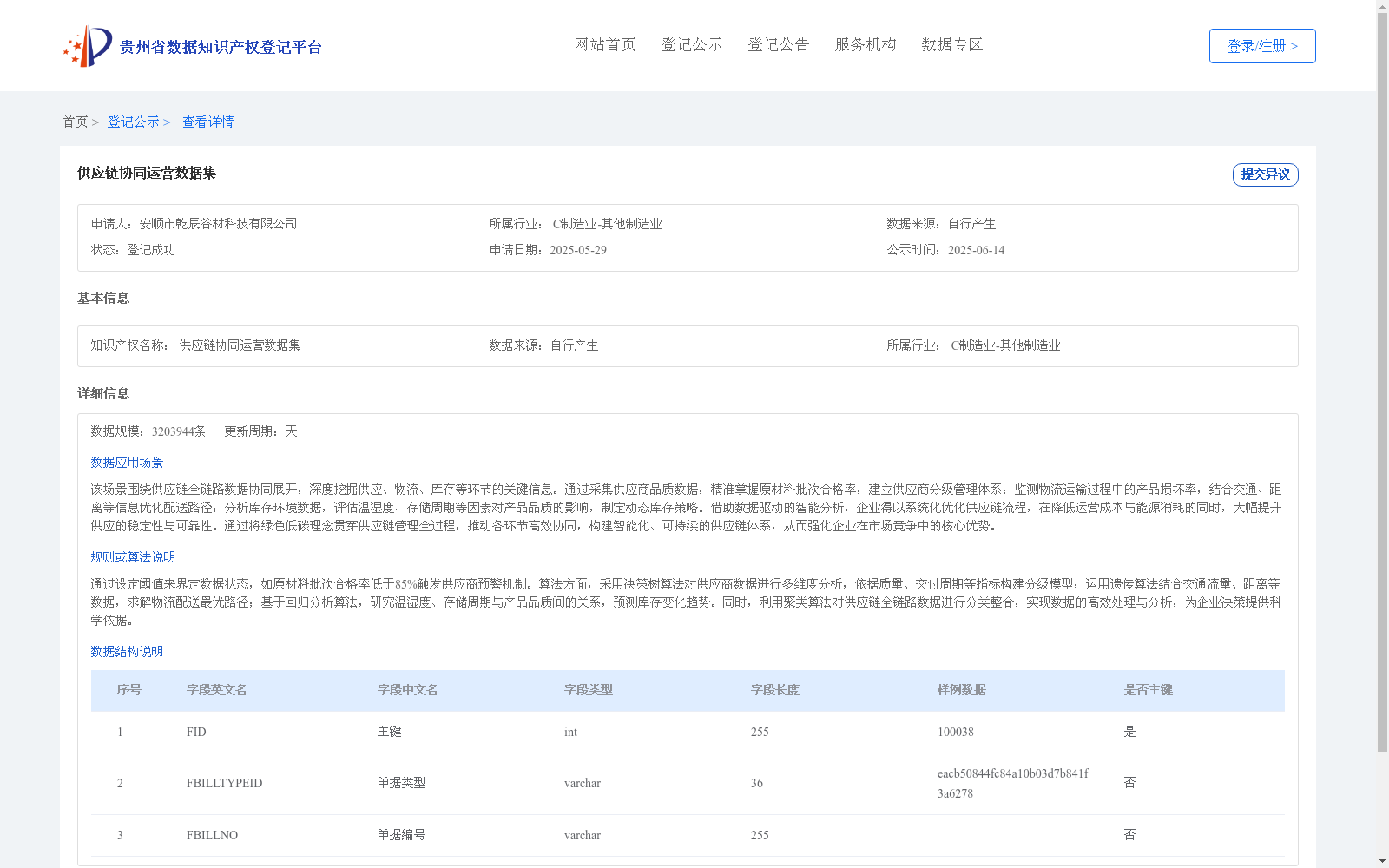
通过设定阈值来界定数据状态,如原材料批次合格率低于85%触发供应商预警机制。算法方面,采用决策树算法对供应商数据进行多维度分析,依据质量、交付周期等指标构建分级模型;运用遗传算法结合交通流量、距离等数据,求解物流配送最优路径;基于回归分析算法,研究温湿度、存储周期与产品品质间的关系,预测库存变化趋势。同时,利用聚类算法对供应链全链路数据进行分类整合,实现数据的高效处理与分析,为企业决策提供科学依据。
Thresholds are established to define data states: for instance, a raw material batch qualification rate below 85% triggers the supplier early warning mechanism. For algorithmic applications, the decision tree algorithm is employed to perform multi-dimensional analysis on supplier data and build a hierarchical model based on indicators including quality, delivery lead time and other metrics; the genetic algorithm is utilized to solve the optimal logistics distribution path by integrating data such as traffic flow and distance; the regression analysis algorithm is applied to investigate the correlation between temperature, humidity, storage period and product quality, so as to forecast inventory change trends. Meanwhile, the clustering algorithm is adopted to classify and integrate the full-link data of the supply chain, enabling efficient data processing and analysis, and providing a scientific foundation for enterprise decision-making.