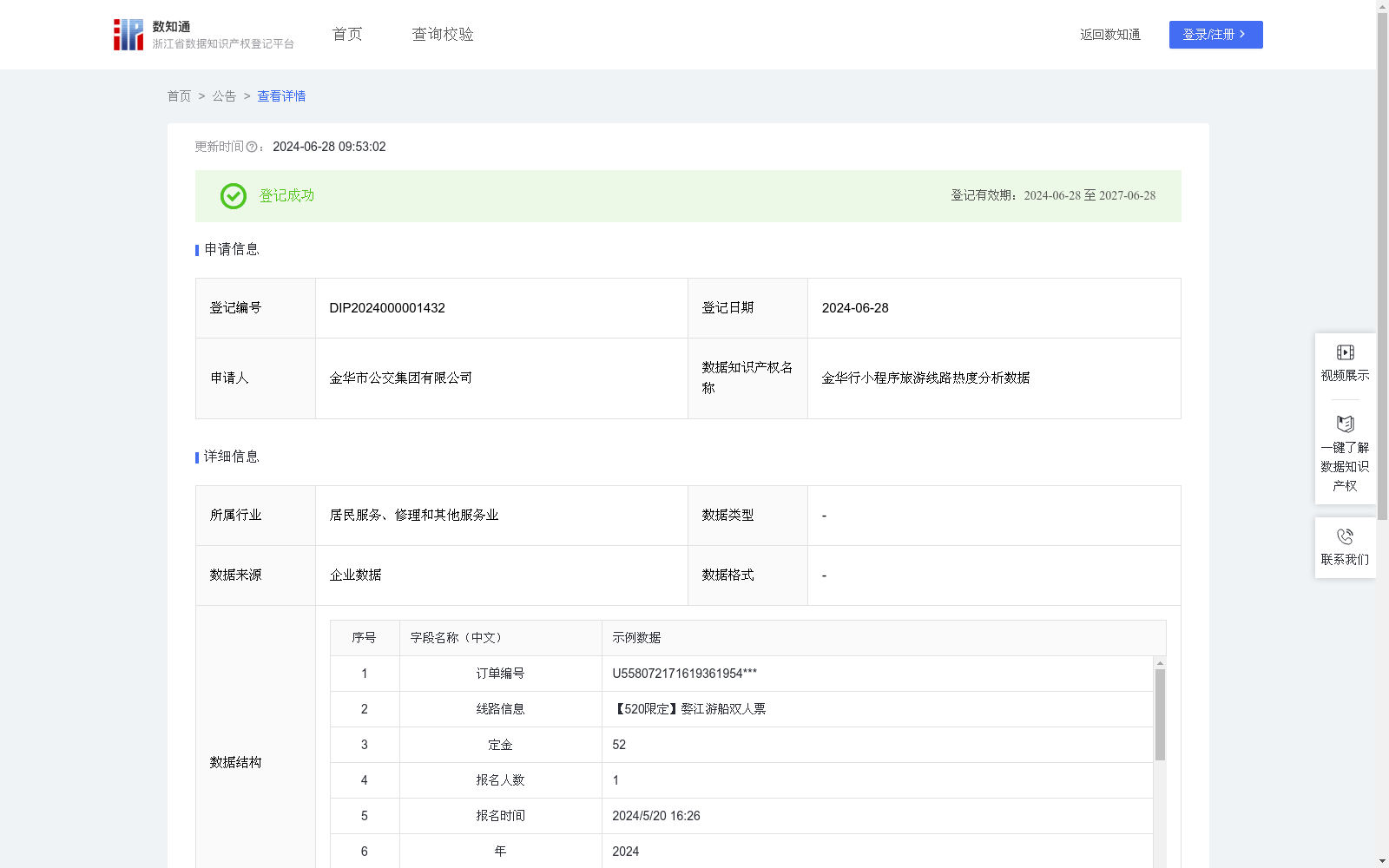
金华行小程序旅游线路热度分析数据
收藏资源简介:
通过分析不同旅游线路的订单量、报名人数和热度指数,可以了解哪些线路更受欢迎,进而优化产品组合,增加热门线路的供应,减少不受欢迎线路的供应,还可以针对热门线路或特定时间段(如节假日)策划营销活动,提高销售和品牌曝光度。1、数据采集:通过金华行小程序管理后台,订单编号、线路信息、定金、报名人数、报名时间、支付状态等数据。2、数据处理:去除无效或错误的数据记录,如重复的订单编号、不合理的报名人数等。3、数据加工:以时间为单位,通过SUMIFS函数和COUNTIFS函数计算本月总订单量、本月总撤单量、本月总报名人数、本月该线路订单量、本月该线路撤单量、本月该线路报名人数;热度指数=10000*(a1*((本月该线路订单量-本月该线路撤单量)/(本月总订单量-本月总撤单量))+a2*(本月该线路报名人数/本月总报名人数));a1、a2为权重系数。4、数据应用:将分析好的数据形成可视化报表,帮助企业基于数据驱动的决策。
By analyzing the order volume, number of registrants, and heat index of various tourism routes, enterprises can identify high-demand routes, optimize their product portfolio by increasing the supply of popular routes and reducing the supply of unpopular ones. Additionally, targeted marketing campaigns can be launched for popular routes or specific time periods (e.g., holidays) to boost sales and enhance brand exposure. 1. Data Collection: Gather data including order ID, route information, deposit, number of registrants, registration time, payment status and other relevant data via the management backend of the Jinhuaxing Mini Program. 2. Data Cleaning: Remove invalid or erroneous data records, such as duplicate order IDs, unreasonable numbers of registrants and other similar erroneous entries. 3. Data Calculation & Processing: Conduct time-based calculations using the SUMIFS and COUNTIFS functions to obtain the following metrics: total monthly order volume, total monthly order cancellations, total monthly registrants, monthly order volume for the target route, monthly order cancellations for the target route, and monthly registrants for the target route. The heat index is calculated as: Heat Index = 10000 * [a1 * ((monthly order volume for the target route - monthly order cancellations for the target route) / (total monthly order volume - total monthly order cancellations)) + a2 * (monthly registrants for the target route / total monthly registrants)], where a1 and a2 are predefined weight coefficients. 4. Data Application: Generate visualized reports from the analyzed data to enable enterprises to make data-driven decisions.