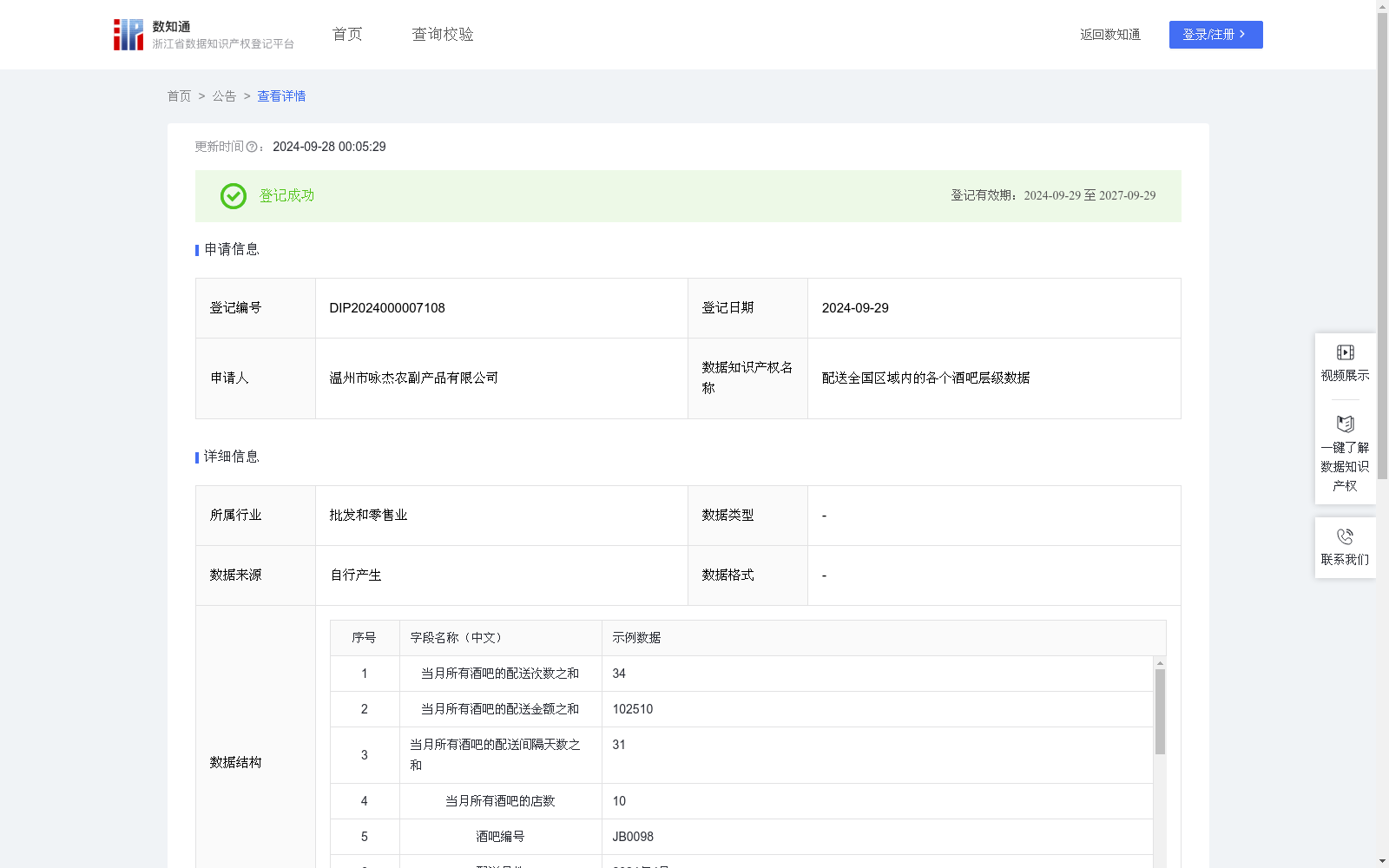
配送全国区域内的各个酒吧层级数据
收藏资源简介:
通过计算本公司与全国区域内的不同酒吧的配送消费信息,对不同的酒吧按照RFM模型进行分层,本行业所有配送企业可对不同层级的酒吧采取不同的运营策略。其次,本数据还能为配送行业相关如物流公司等提供整体性参考,从而有效洞察市场趋势,更好地做出科学的营销决策。1、数据采集:导出本公司与全国区域内的不同酒吧的配送消费信息。2、数据处理:以酒吧编号作为唯一标识,对数据进行清洗、去除无效数据和极限数据等操作。3、数据加工:通过LOOKUP函数计算出酒吧最近一次配送距离当月月底的天数,COUNTIF函数计算当月配送次数,SUMIF函数计算当月配送总金额,最近一次配送距离当月月底的天数大于或者等于当月平均配送间隔天数则R定档值为1,反之R定档值为0,当月配送次数大于或者等于当月平均配送次数则F定档值为1,反之F定档值为0,当月配送总金额大于或者等于当月配送平均金额则M定档值为1,反之M定档值为0,再根据RFM模型分层规则按RFM值将酒吧分为8个层级,即分为重要价值客户(RFM为111)、重要保持客户(RFM为101)、重要发展客户(RFM为011)、重要挽留客户(RFM为001)、一般价值客户(RFM为110)、一般保持客户(RFM为100)、一般发展客户(RFM为010)和一般挽留客户(RFM为000)。4、数据应用:通过对酒吧进行分层管理,所有酒吧可对不同层级的酒吧定制不同的运营策略。
This dataset is developed based on the delivery and consumption records between our company and various bars across the country. It applies the RFM model to stratify different bars, allowing all delivery enterprises in the industry to adopt differentiated operational strategies for bars at different tiers. Additionally, this dataset can provide holistic references for relevant stakeholders in the delivery sector such as logistics companies, enabling them to effectively identify market trends and make more scientific marketing decisions. 1. Data Collection: Export the delivery and consumption information between our company and various bars across the country. 2. Data Preprocessing: Take the bar number as the unique identifier, clean the dataset, and remove invalid data and outlier (extreme) data. 3. Data Enrichment and Stratification: Calculate core metrics via Excel functions: first, use the LOOKUP function to calculate the number of days between the last delivery and the end of the current month; use the COUNTIF function to calculate the total number of deliveries in the current month; use the SUMIF function to calculate the total delivery amount in the current month. Then, set the R score to 1 if the number of days from the last delivery to the month-end is greater than or equal to the average delivery interval of the current month, otherwise set it to 0; set the F score to 1 if the monthly delivery frequency is greater than or equal to the average monthly delivery frequency, otherwise set it to 0; set the M score to 1 if the total monthly delivery amount is greater than or equal to the average monthly delivery amount, otherwise set it to 0. Finally, stratify the bars into 8 tiers according to the RFM model stratification rules based on their RFM scores: High-Value Customers (RFM="111"), High-Value Loyal Customers (RFM="101"), High-Value Development Customers (RFM="011"), High-Value Retention Customers (RFM="001"), General Value Customers (RFM="110"), General Loyal Customers (RFM="100"), General Development Customers (RFM="010"), and General Retention Customers (RFM="000"). 4. Data Application: Through stratified management of bars, relevant enterprises can formulate customized operational strategies for bars at different tiers.