遵易停智慧停车管理模型
收藏资源简介:
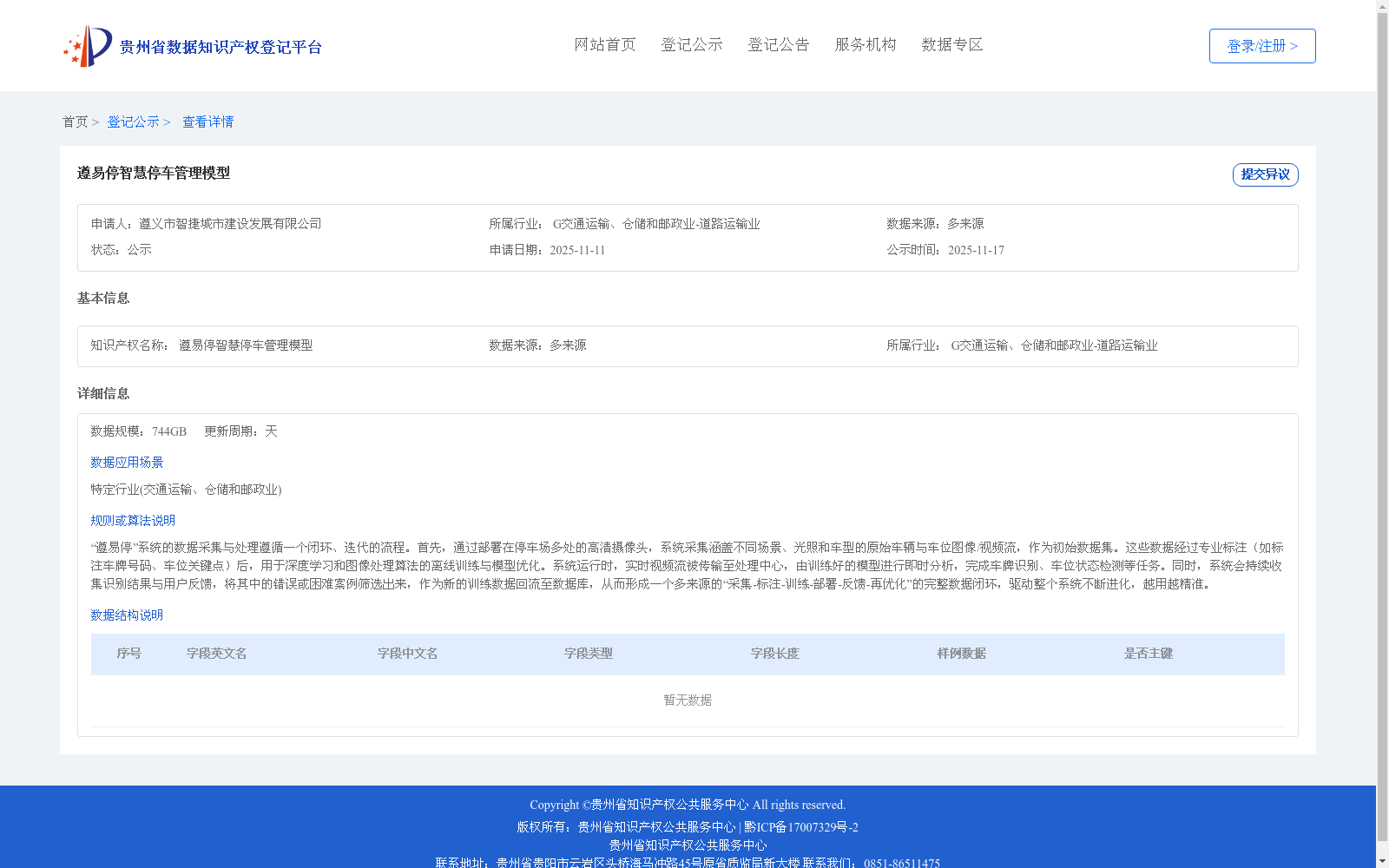
“遵易停”系统的数据采集与处理遵循一个闭环、迭代的流程。首先,通过部署在停车场多处的高清摄像头,系统采集涵盖不同场景、光照和车型的原始车辆与车位图像/视频流,作为初始数据集。这些数据经过专业标注(如标注车牌号码、车位关键点)后,用于深度学习和图像处理算法的离线训练与模型优化。系统运行时,实时视频流被传输至处理中心,由训练好的模型进行即时分析,完成车牌识别、车位状态检测等任务。同时,系统会持续收集识别结果与用户反馈,将其中的错误或困难案例筛选出来,作为新的训练数据回流至数据库,从而形成一个多来源的“采集-标注-训练-部署-反馈-再优化”的完整数据闭环,驱动整个系统不断进化,越用越精准。
"Zunyiting" system's data collection and processing follows a closed-loop, iterative workflow. First, high-definition cameras deployed at multiple locations in parking lots collect raw vehicle and parking space image/video streams covering diverse scenarios, lighting conditions and vehicle types, which serve as the initial dataset. These data undergo professional annotation (e.g., license plate numbers, parking space key points) and are then used for offline training and model optimization of deep learning and image processing algorithms. During system operation, real-time video streams are transmitted to the processing center, where the pre-trained models perform real-time analysis to complete tasks such as license plate recognition and parking space status detection. Meanwhile, the system continuously collects recognition results and user feedback, screens out erroneous or challenging cases, and feeds them back to the database as new training data, forming a complete multi-source closed-loop data pipeline following the sequence of "collection - annotation - training - deployment - feedback - re-optimization", which drives the continuous evolution of the entire system and enhances its accuracy with prolonged usage.