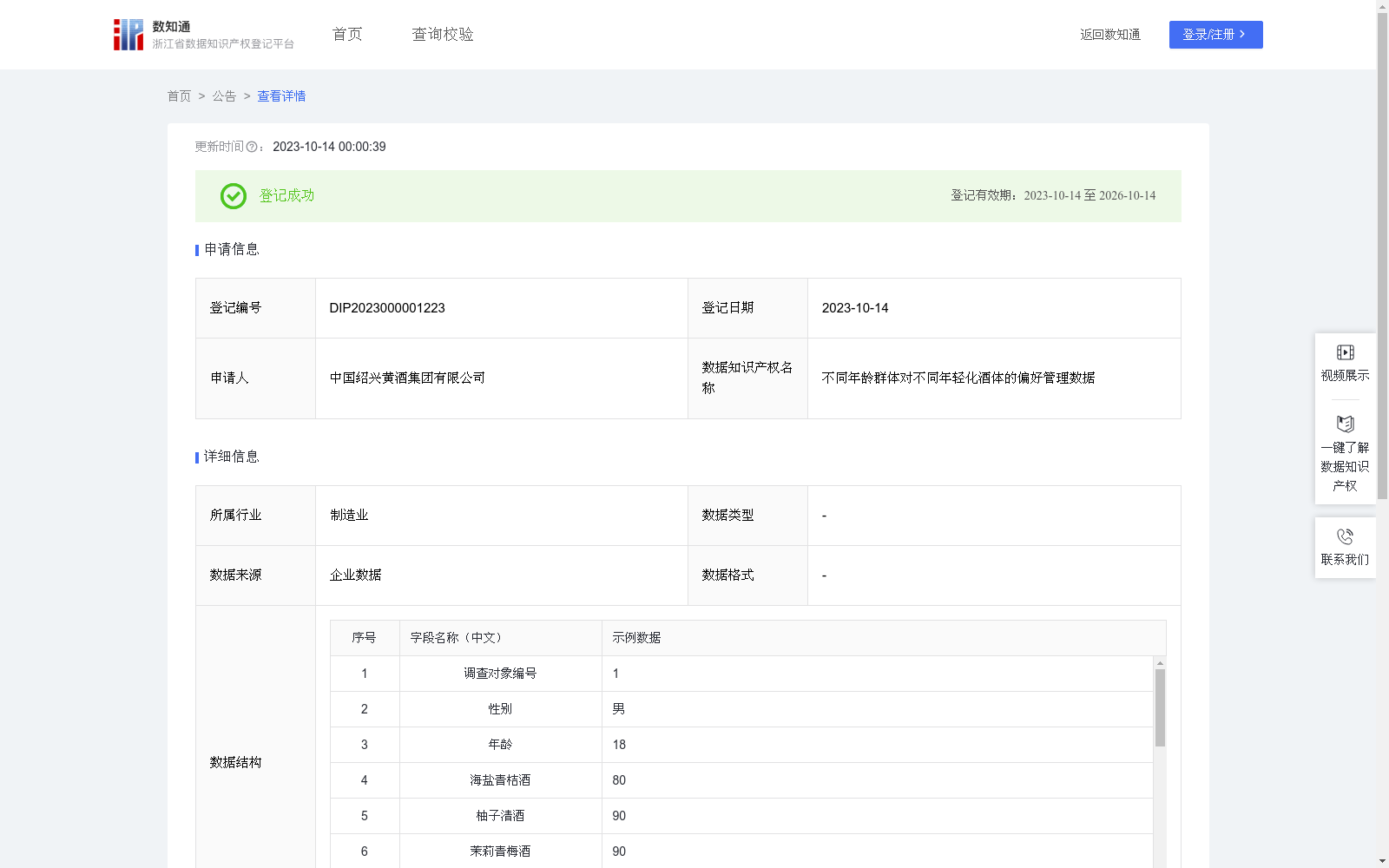
不同年龄群体对不同年轻化酒体的偏好管理数据
收藏资源简介:
分析不同年龄群体士对不同年轻化黄酒酒体的评鉴评分结果,进而得出相应的偏好结论,为年轻化黄酒产品开发方向提供依据。一、采集调查对象对10种测试酒体的品评打分,记录每个调查对象的年龄和打分结果。 二、将调查对象按照年龄分成25周岁以下、25-35周岁、35周岁以上三组,分别统计每个年龄组内的调查对象数量。 三、分别计算10种测试酒体的所有调查对象品评打分平均分,即将每个调查对象的打分结果求平均。同时计算平均偏差,即将每个调查对象的打分结果与平均分的差值求绝对值,然后求平均。 四、对每个年龄组内的10种测试酒体调查对象品评打分平均分进行排名,按照得分由高到低进行排列,并赋予排名值10-1分。计算每种测试酒体的加权排名值,即将每个年龄组内的排名值乘以权重1/3,然后求和。根据加权排名值进行排序,得出10种测试酒体的加权得分值排序。 结合各酒体平均偏差数值,判断各酒体的欢迎程度及评价争议。通常情况下,平均得分较高且平均偏差较小的酒体会被认为是受欢迎且评价一致的。
This study analyzes the sensory evaluation scores of different young-targeted rice wine varieties given by survey respondents across various age groups, derives corresponding preference conclusions, and provides a basis for the development direction of young-oriented rice wine products. 1. Collect the sensory evaluation scores of 10 tested rice wine varieties from survey respondents, and record each respondent’s age and their scoring results. 2. Divide the survey respondents into three age groups: under 25 years old, 25–35 years old, and over 35 years old, and count the number of respondents in each group respectively. 3. Calculate the average score of all respondents’ evaluations for each of the 10 tested rice wine varieties, i.e., take the average of all scoring results for each variety. Meanwhile, calculate the average deviation: first compute the absolute value of the difference between each respondent’s score and the average score of the corresponding variety, then take the average of these absolute differences. 4. For each age group, rank the average scores of the 10 tested rice wine varieties based on the respondents’ evaluations, assign ranking values from 10 to 1 in descending order of scores. Calculate the weighted ranking value for each tested variety: multiply the ranking value in each age group by a weight of 1/3, then sum these products. Sort the 10 tested varieties according to their weighted ranking values to obtain the weighted score ranking. Combine the average deviation values of each variety to judge the popularity and evaluation controversy of each rice wine variety. Generally, a variety with a higher average score and a smaller average deviation is considered popular and with consistent consumer evaluations.