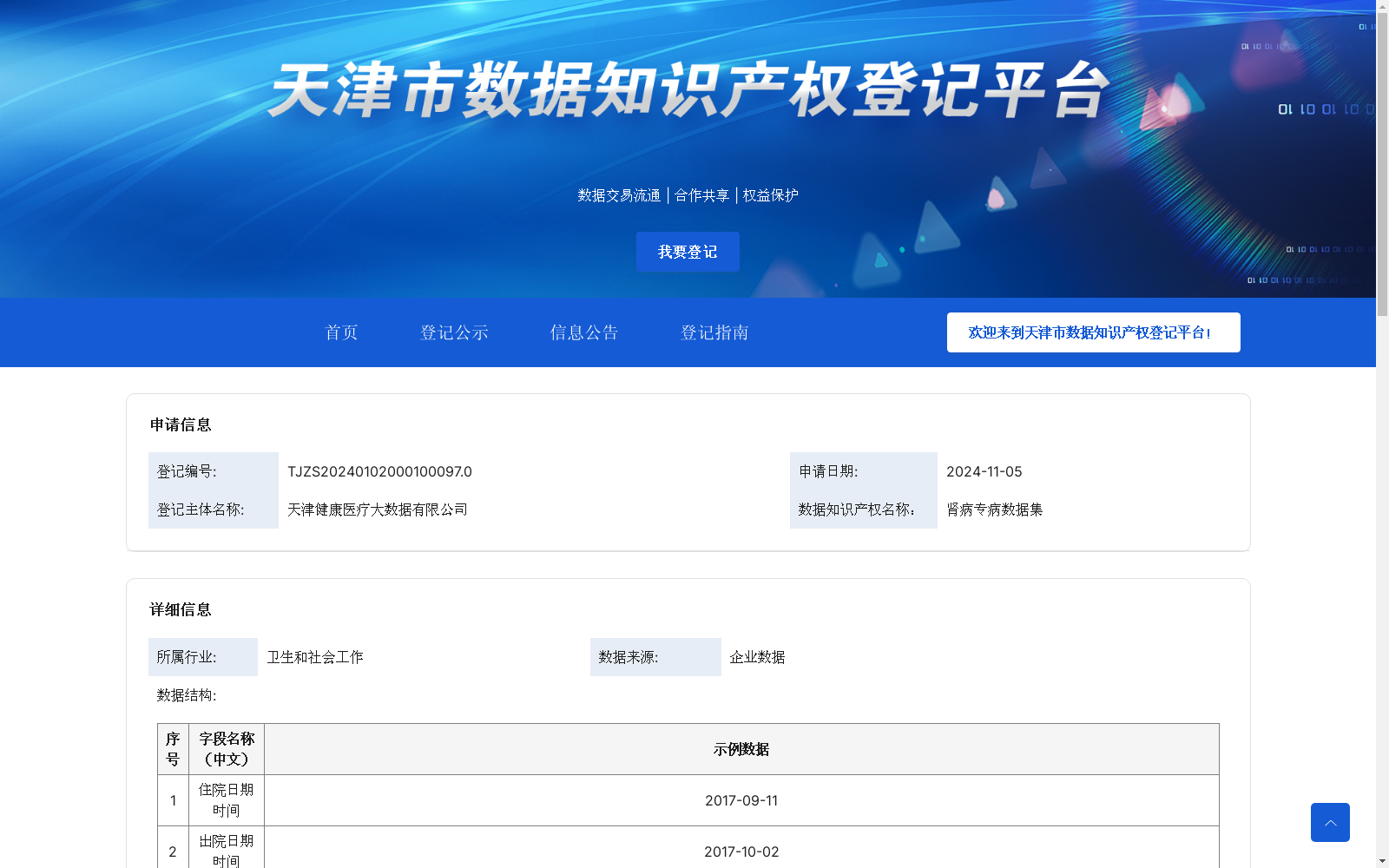
肾病专病数据集
收藏资源简介:
专病诊断名称分类模型:通过分析医学文献、临床数据和专家知识,建立一个诊断数据库。经过分词和打乱顺序的预处理后,使用 train_supervised 函数进行训练(迭代200次,学习率0.1,词N-grams长度为1,损失函数为"hs")。模型性能通过 classification_report 方法评估,表现良好。参数更新通过命令同步模型、标签和标签名,从而快速、准确地诊断专病类型。 电子病历质控分类模型:该模型通过自然语言处理技术对电子病历中的主诉、现病史、既往史等文本进行识别和分析,提取关键信息并进行分类。包含7个类别,每类250个样本。数据处理包括标签化、分词,并转换为TXT文件。用 BERT的分词器将病历文本转化为BERT所需的输入格式,质控标签转换为数值标签。训练集与测试集按9:1比例划分。使用 BertForSequenceClassification模型进行训练。模型评估通过 classification_report 方法进行。参数更新步骤包括将数据放入指定文件夹,运行训练和更新命令,确保模型、标签和标签名同步。
Specialized Disease Diagnosis Name Classification Model: A diagnostic database is constructed by analyzing medical literature, clinical data and expert knowledge. After preprocessing operations including word segmentation and random shuffling, the train_supervised function is employed for training (200 training iterations, learning rate set to 0.1, word N-grams length of 1, and the loss function configured as "hs"). The model performance is evaluated using the classification_report method, which yields satisfactory results. Parameter updates synchronize the model, labels and label names via dedicated commands, enabling fast and accurate diagnosis of specialized disease types. Electronic Medical Record Quality Control Classification Model: This model adopts natural language processing technologies to identify and analyze texts such as chief complaints, present medical histories and past medical histories in electronic medical records, extract key information and conduct classification tasks. The dataset consists of 7 categories, with 250 samples per category. Data processing steps include labelization, word segmentation and conversion to TXT format files. The BERT tokenizer is utilized to transform medical record texts into the input format required by BERT, while quality control labels are converted into numerical labels. The training set and test set are split at a ratio of 9:1. The BertForSequenceClassification model is used for model training. Model evaluation is performed via the classification_report method. The parameter update procedure involves placing the dataset into the designated folder, running training and update commands to ensure synchronization among the model, labels and label names.